


About us
By hand, with heart
How we make is as important as what we make. We believe that the world needs thoughtful consumers who look beyond the material into the cultural, environmental, and human aspects of a product. Crafted by our close-knit team of artisans and designers, every Oorjaa lamp is alive with the inimitable individuality of the handmade.
Materials

paper
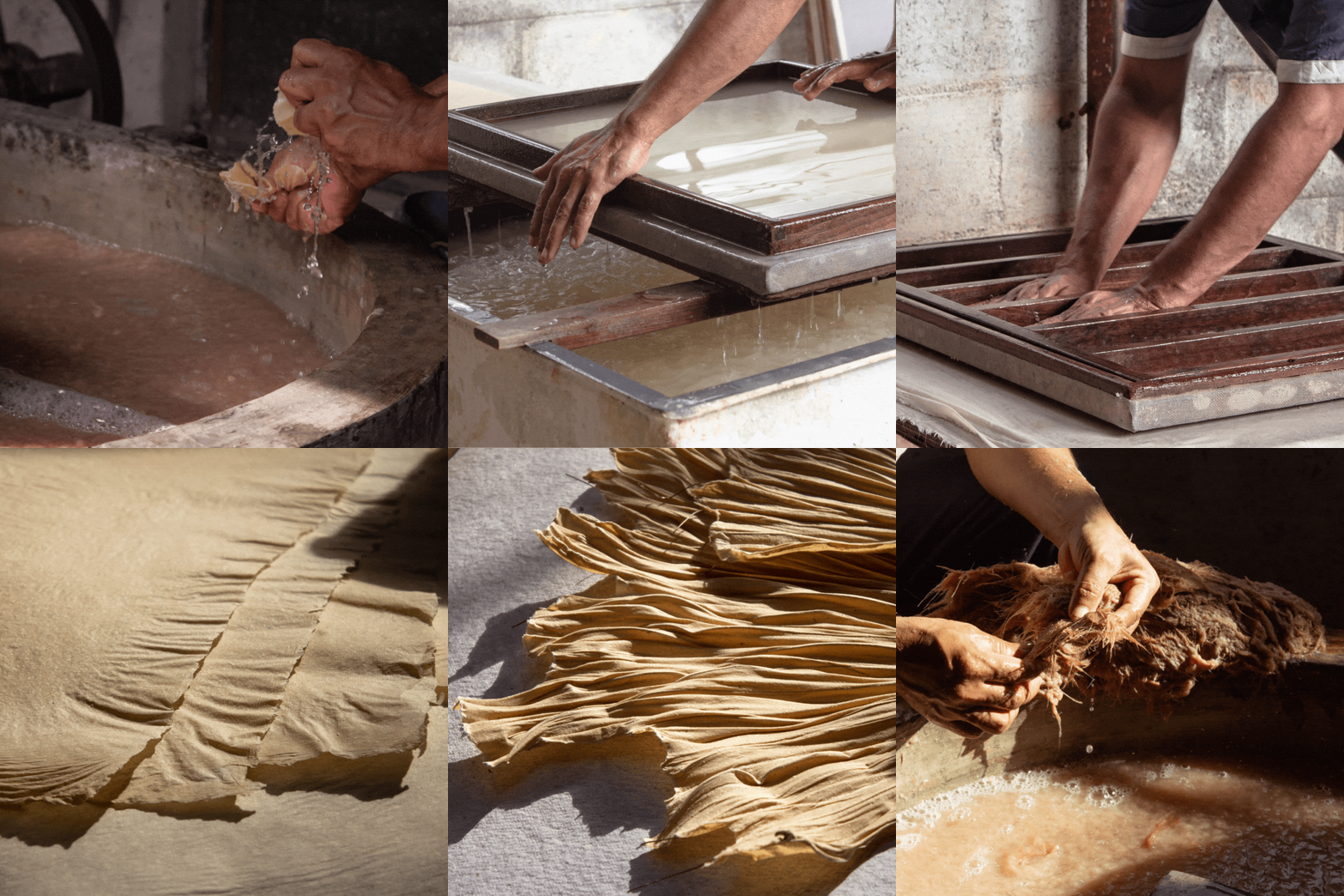
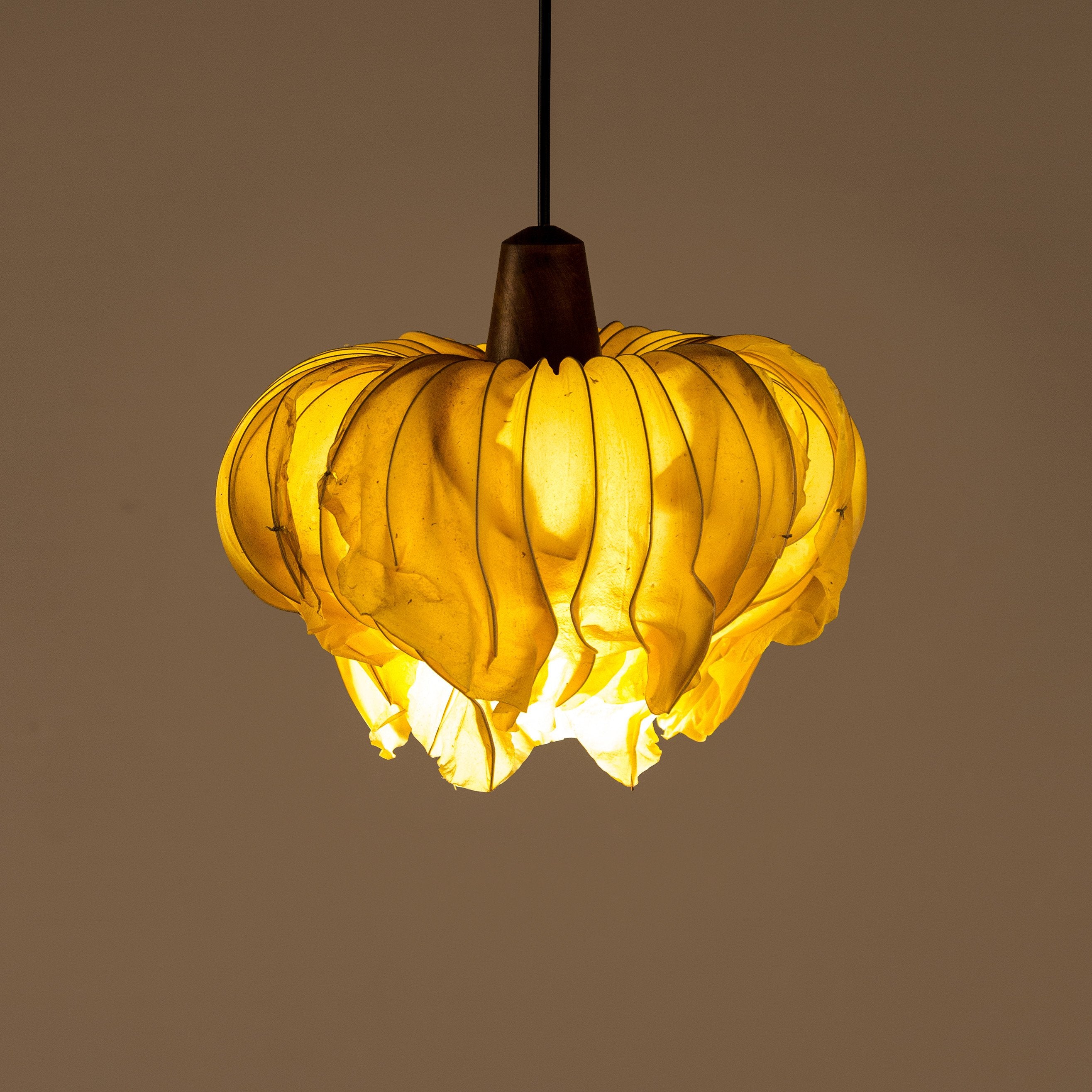
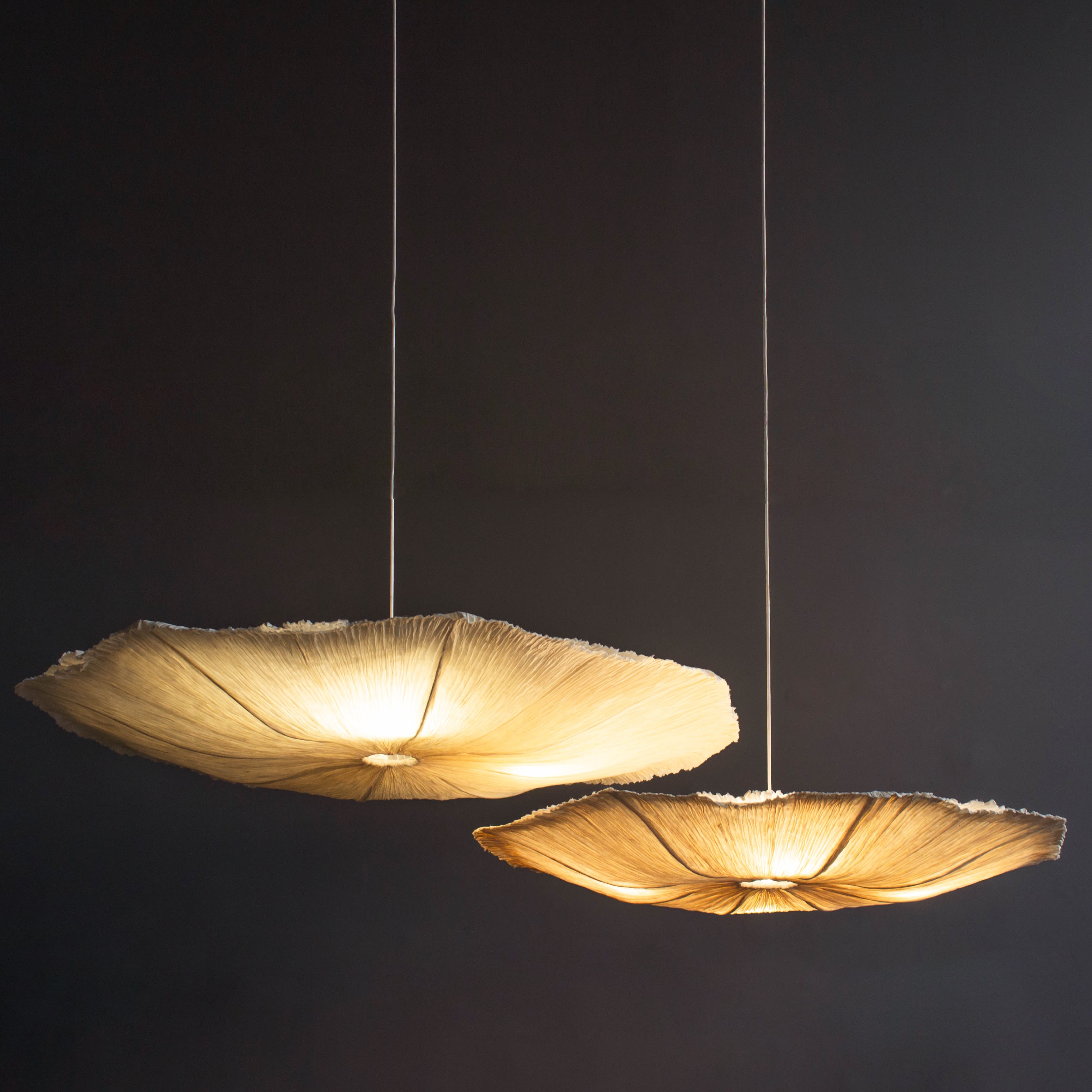
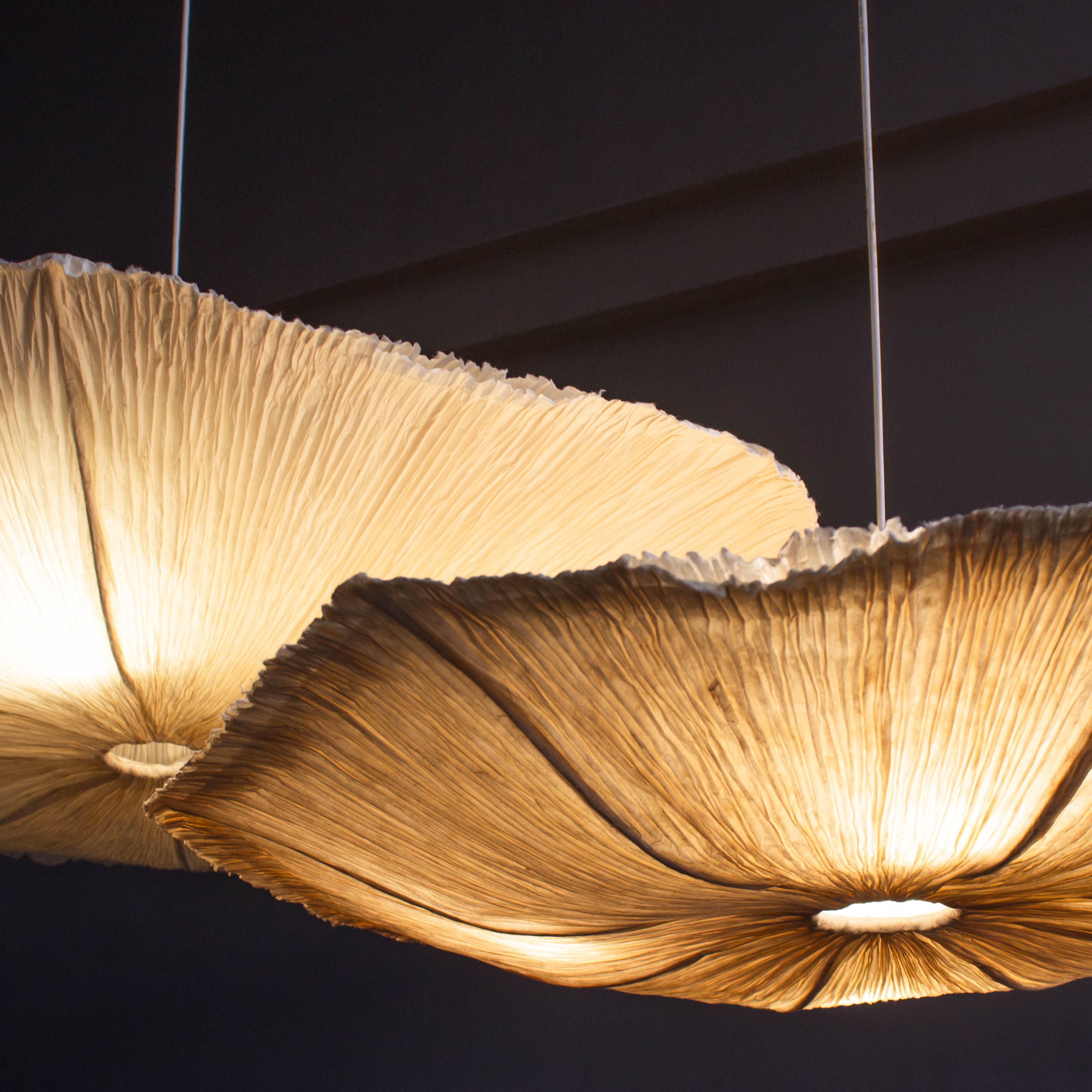
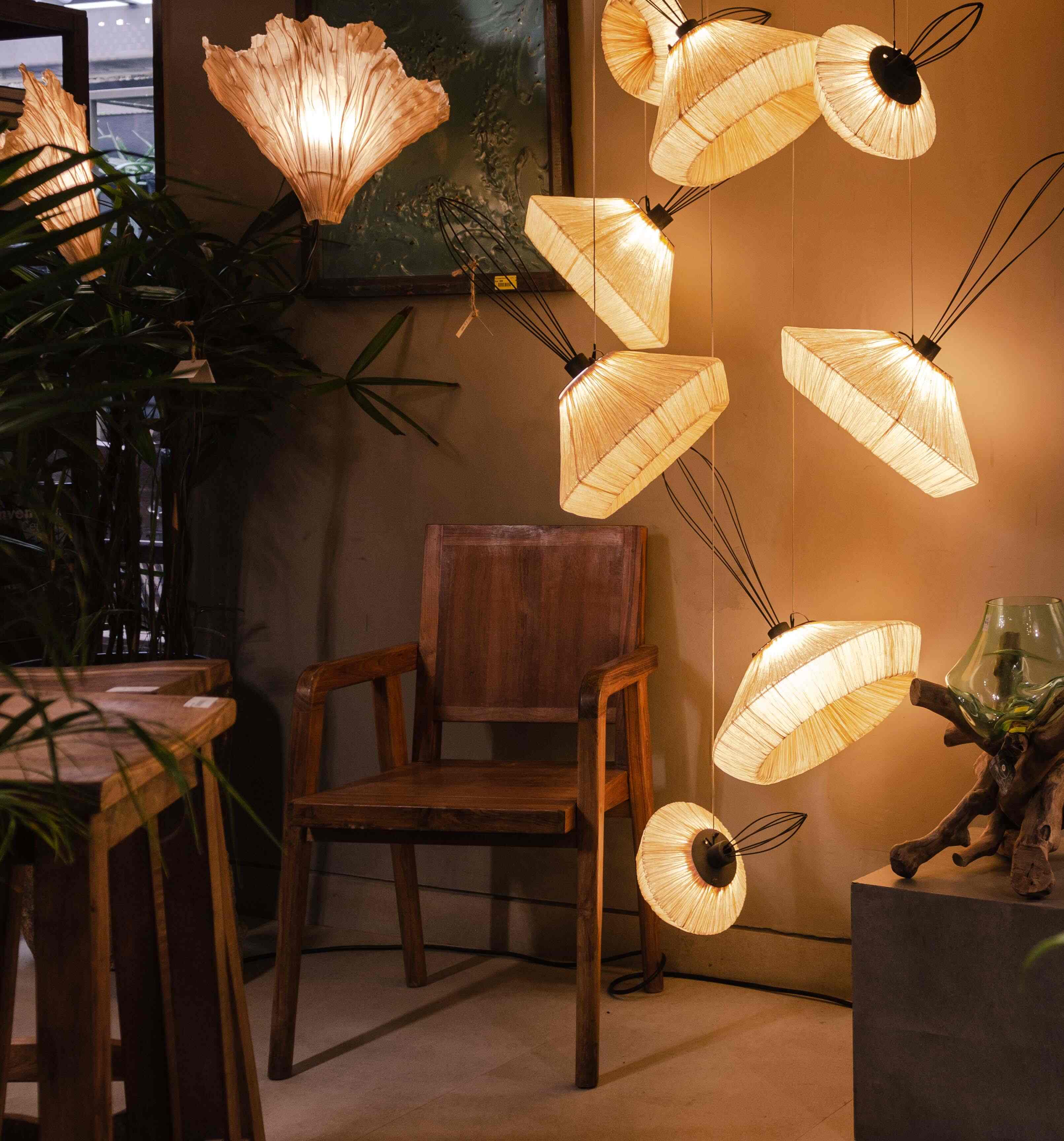
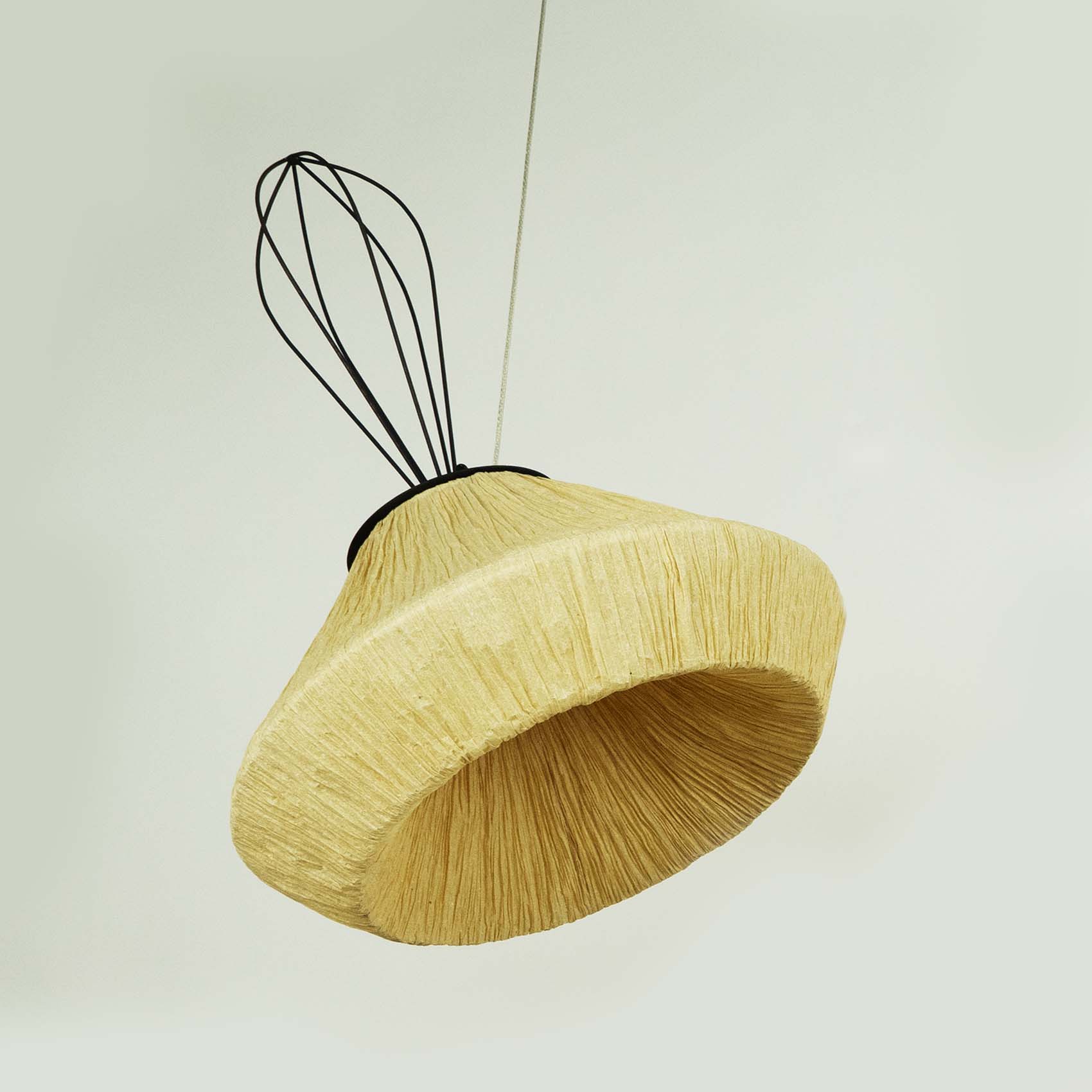
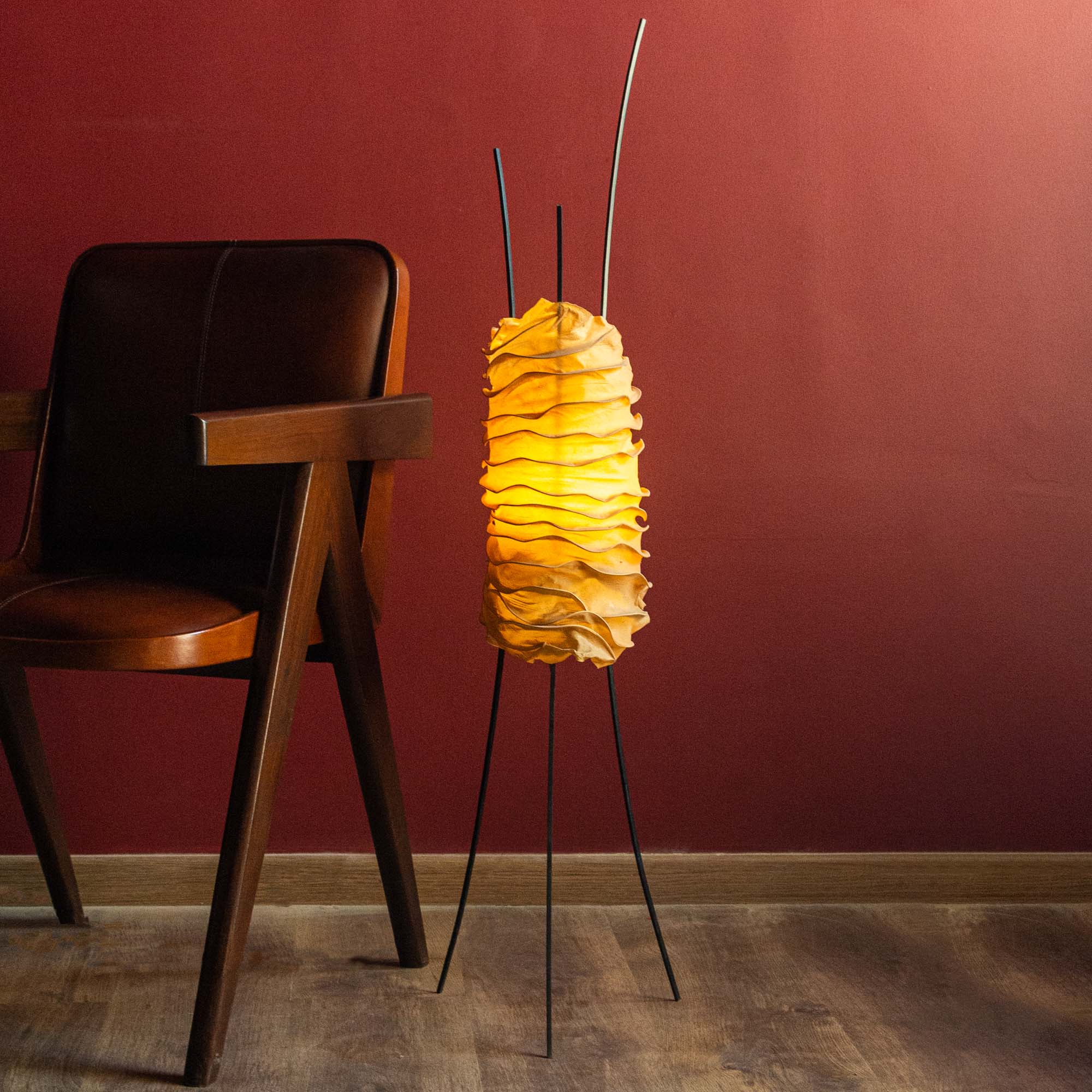
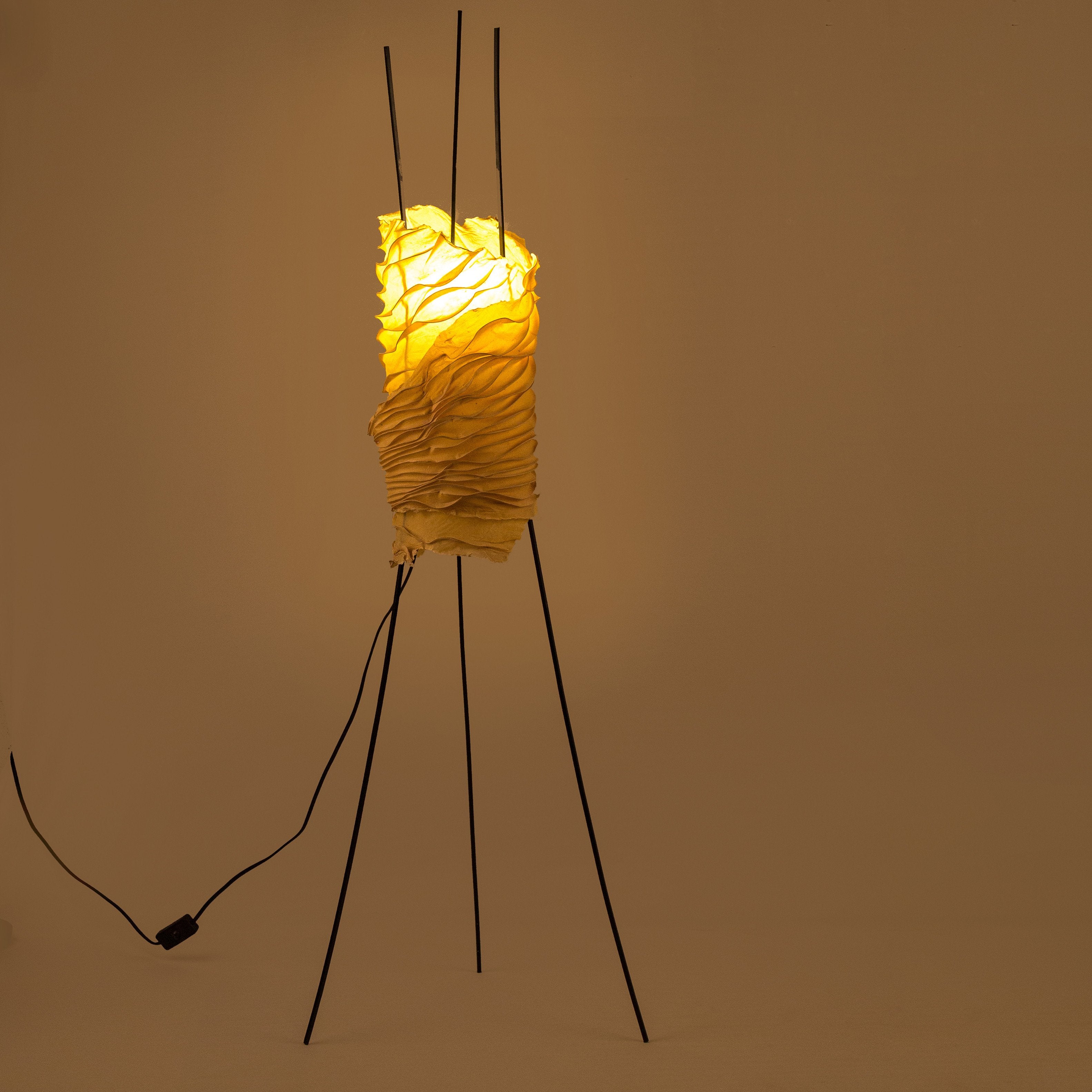
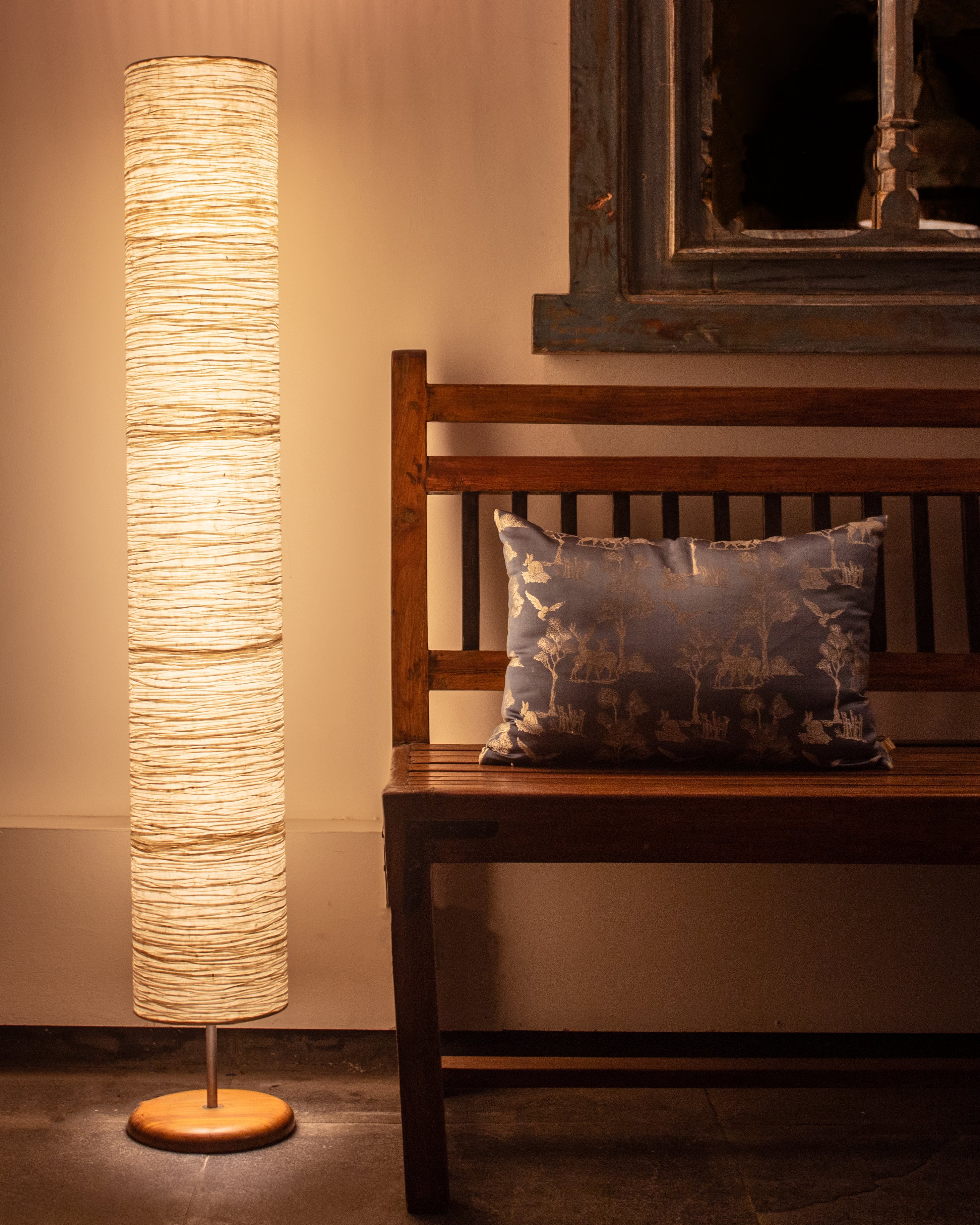
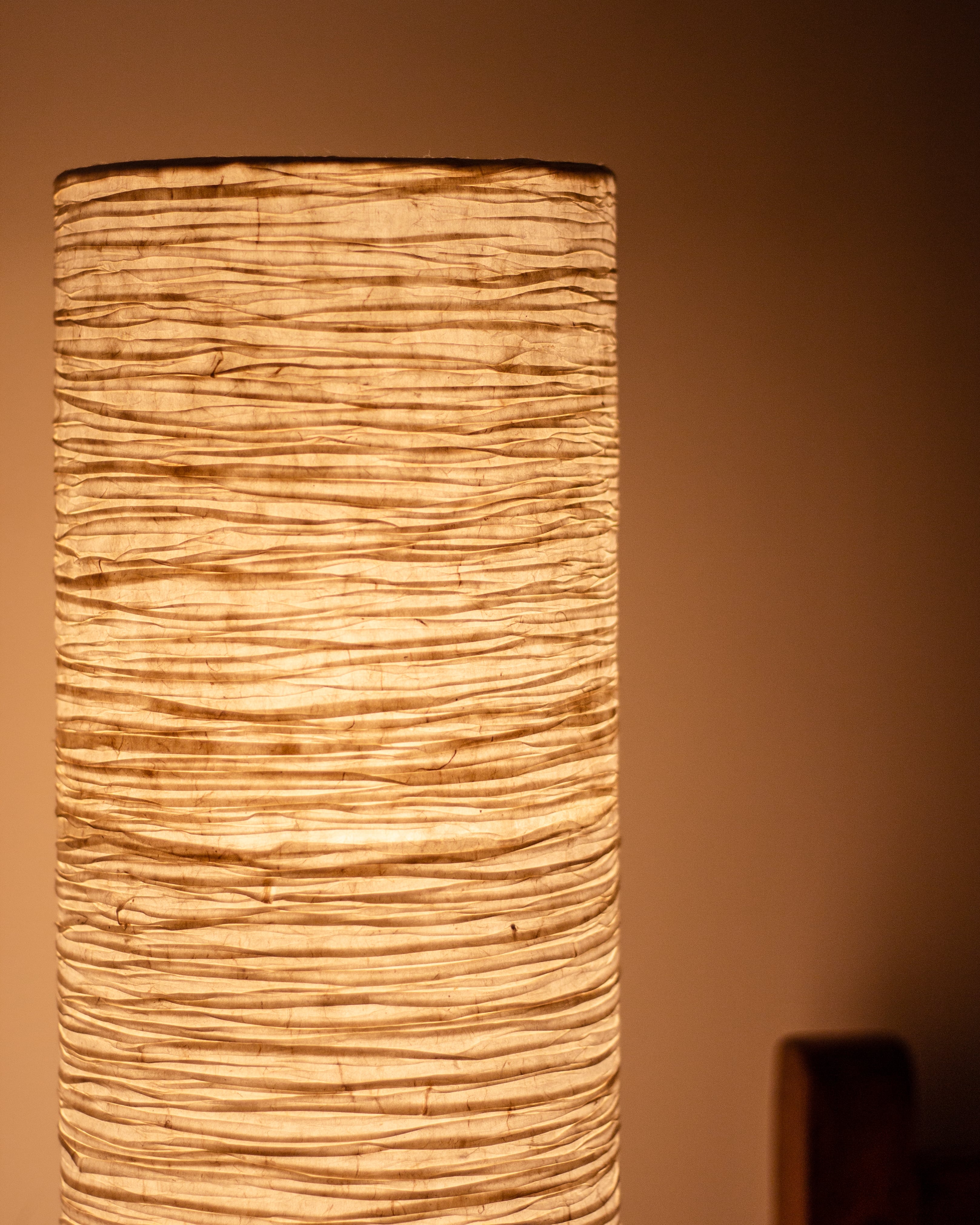
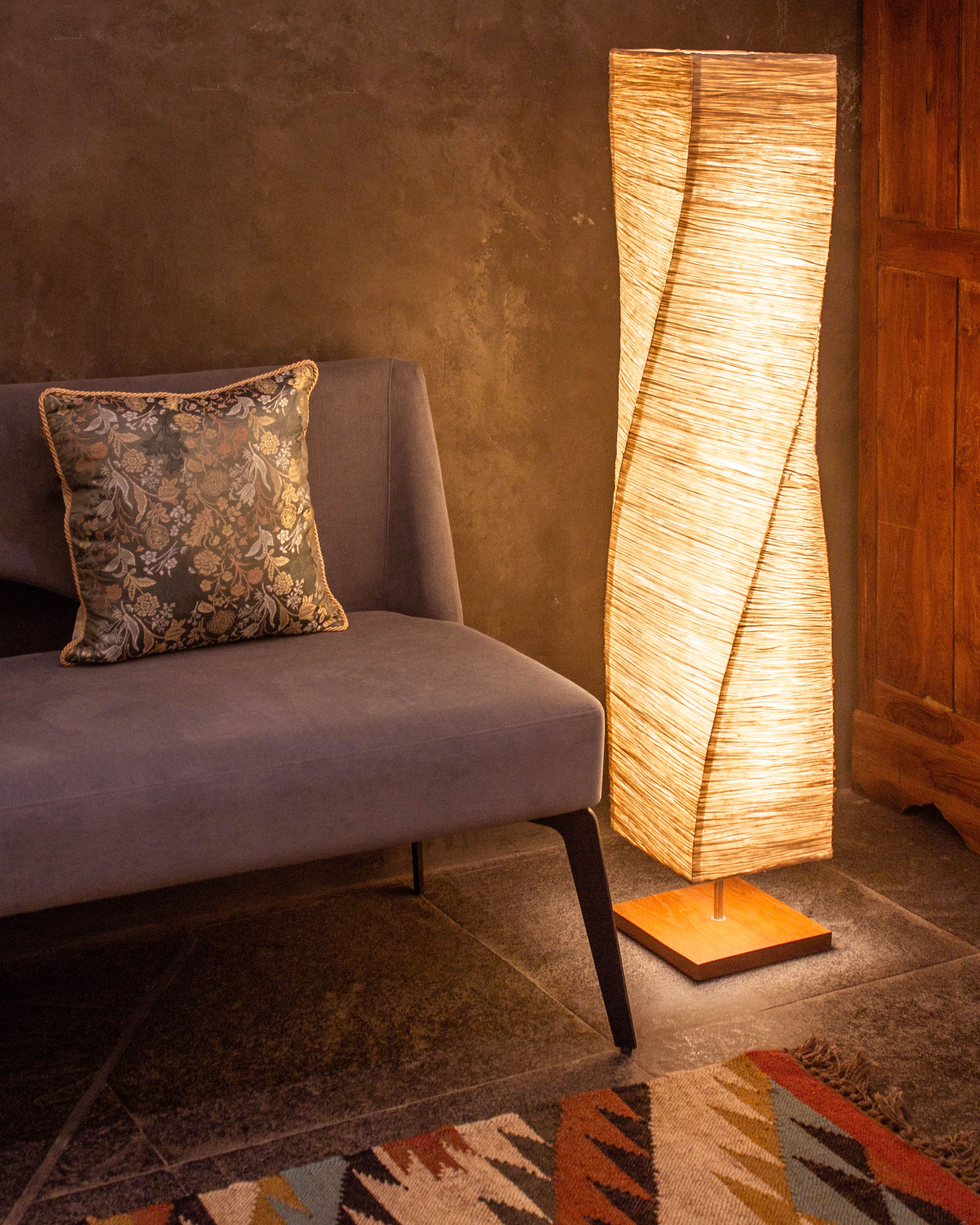
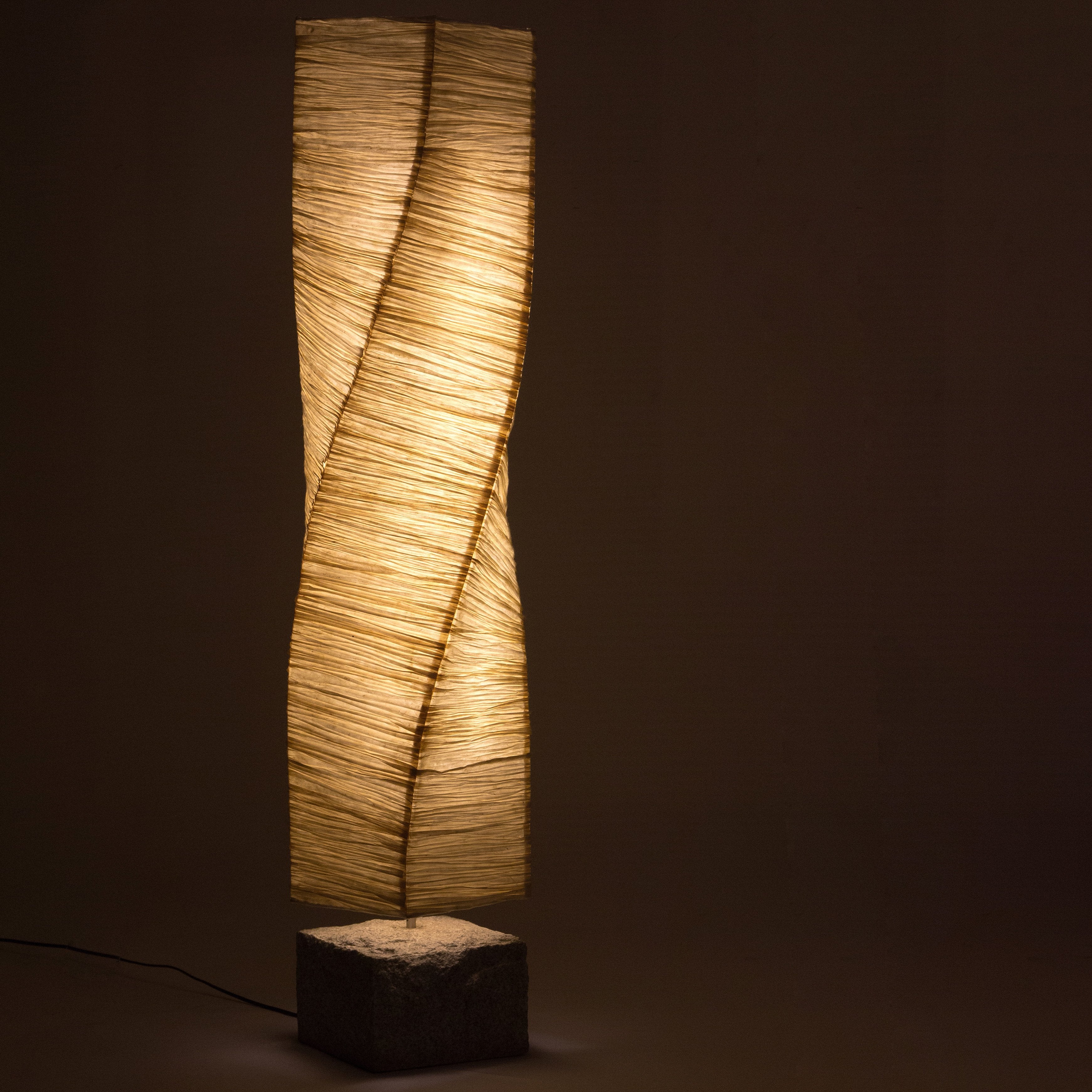
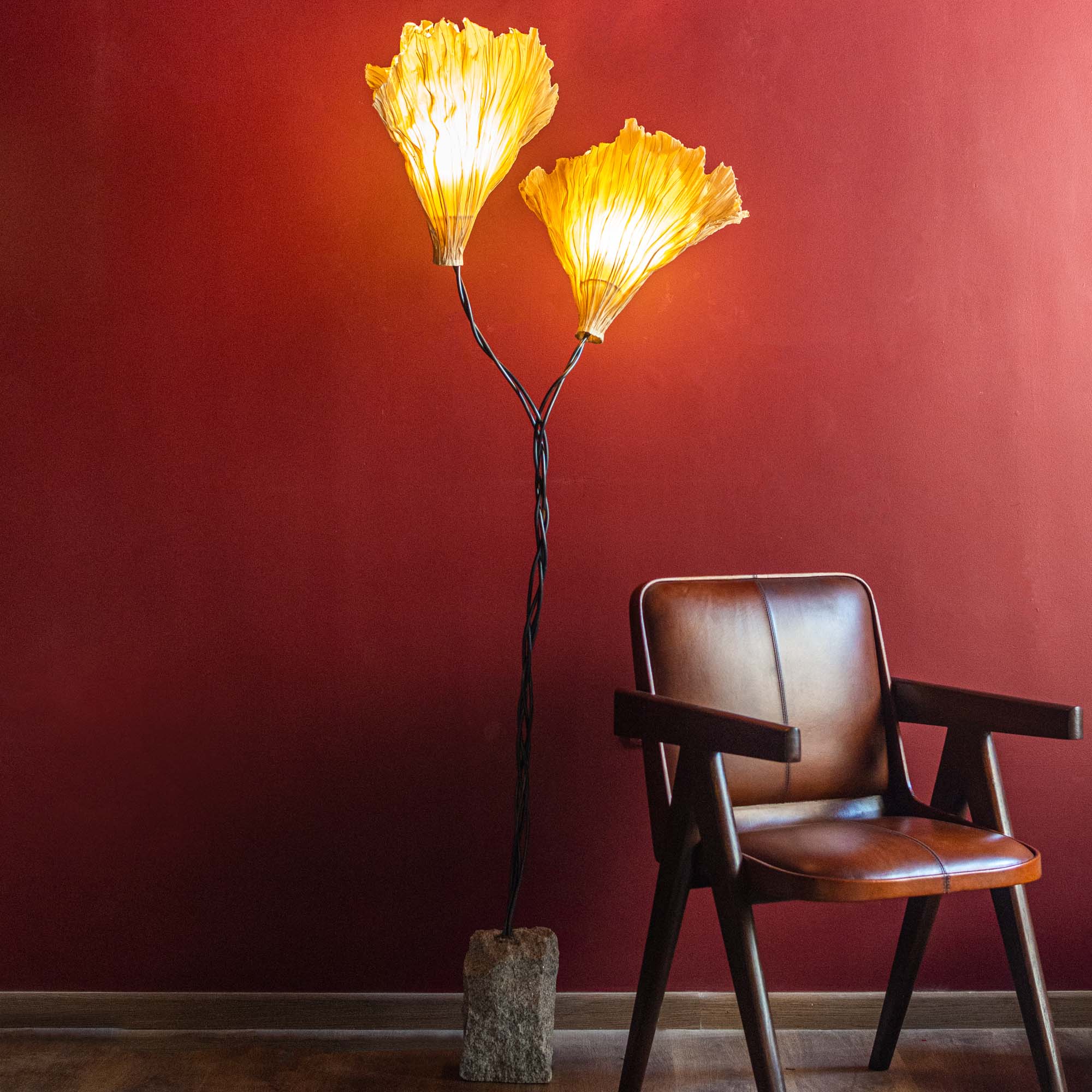
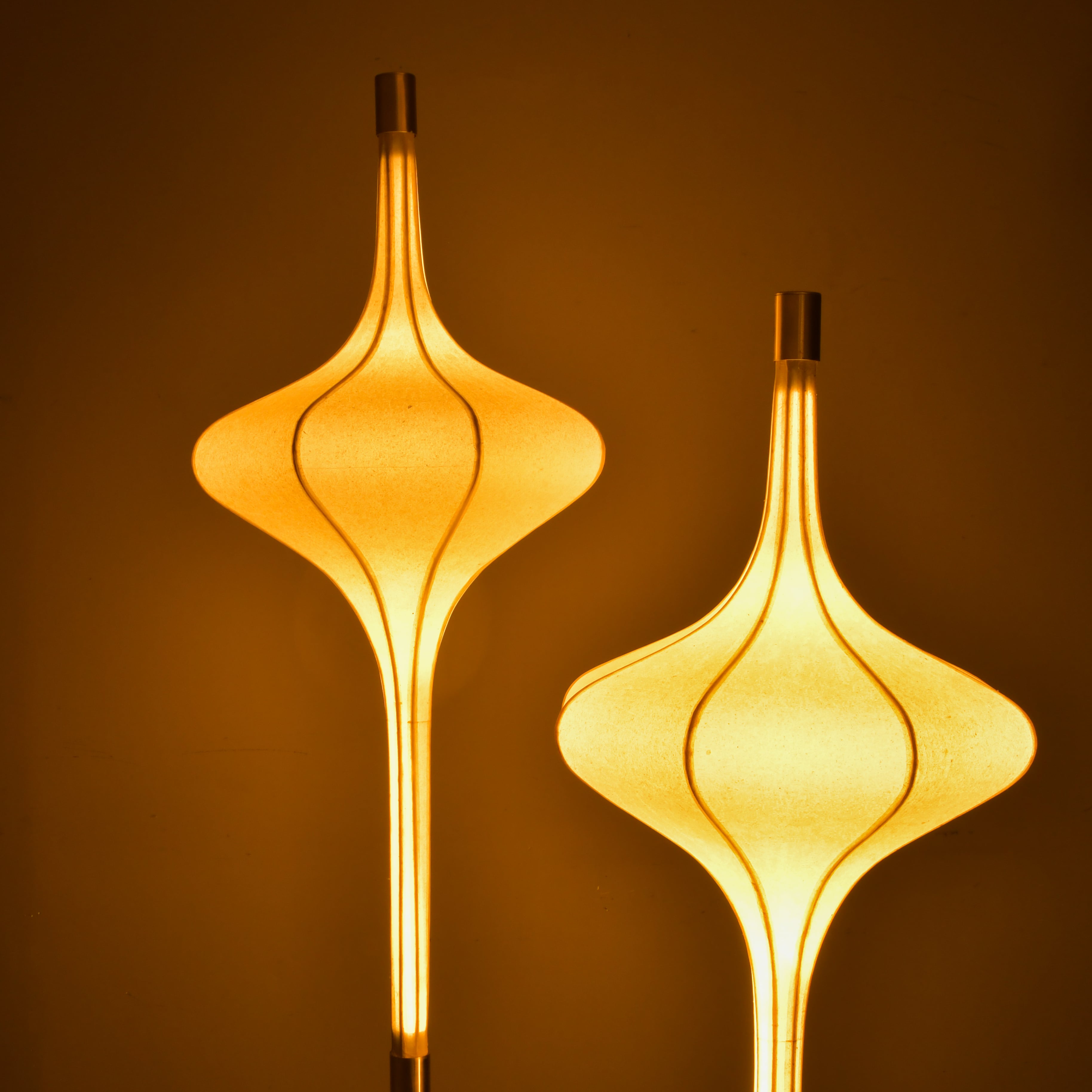
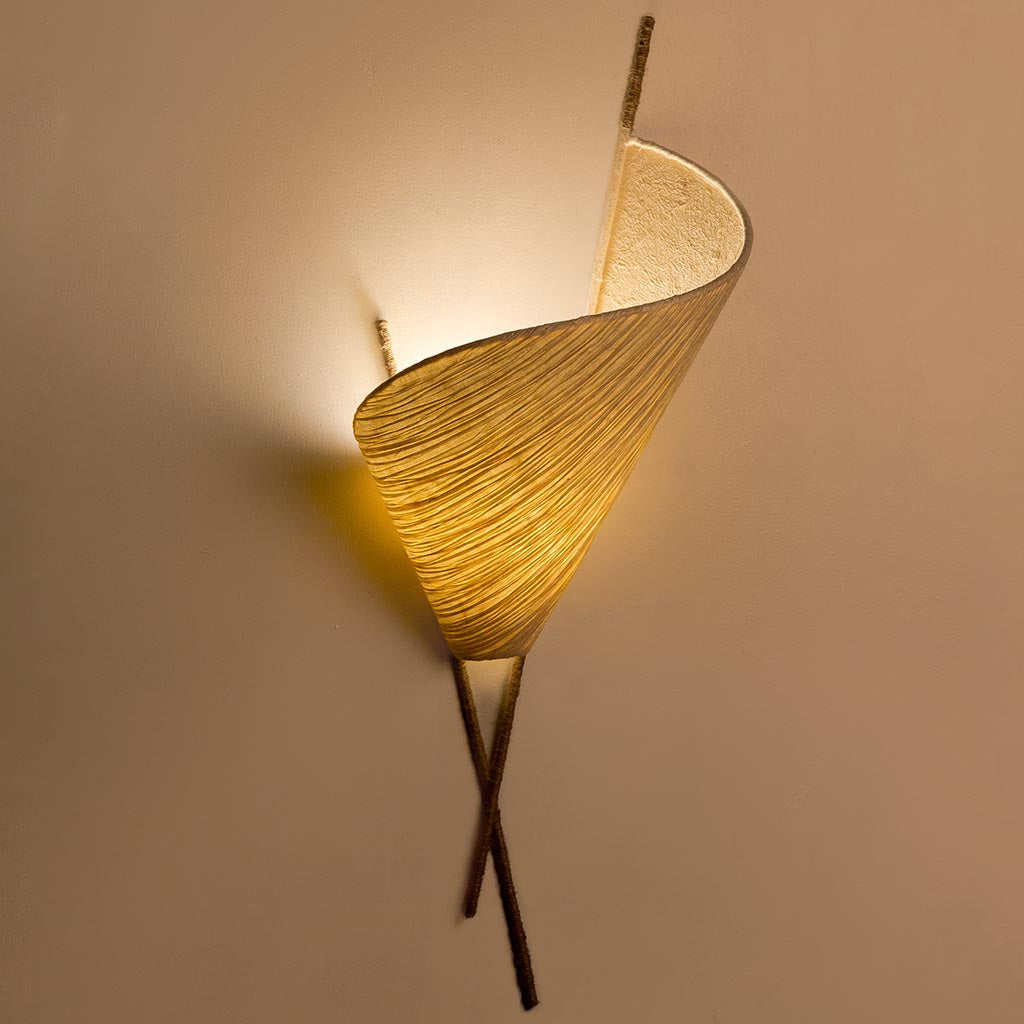
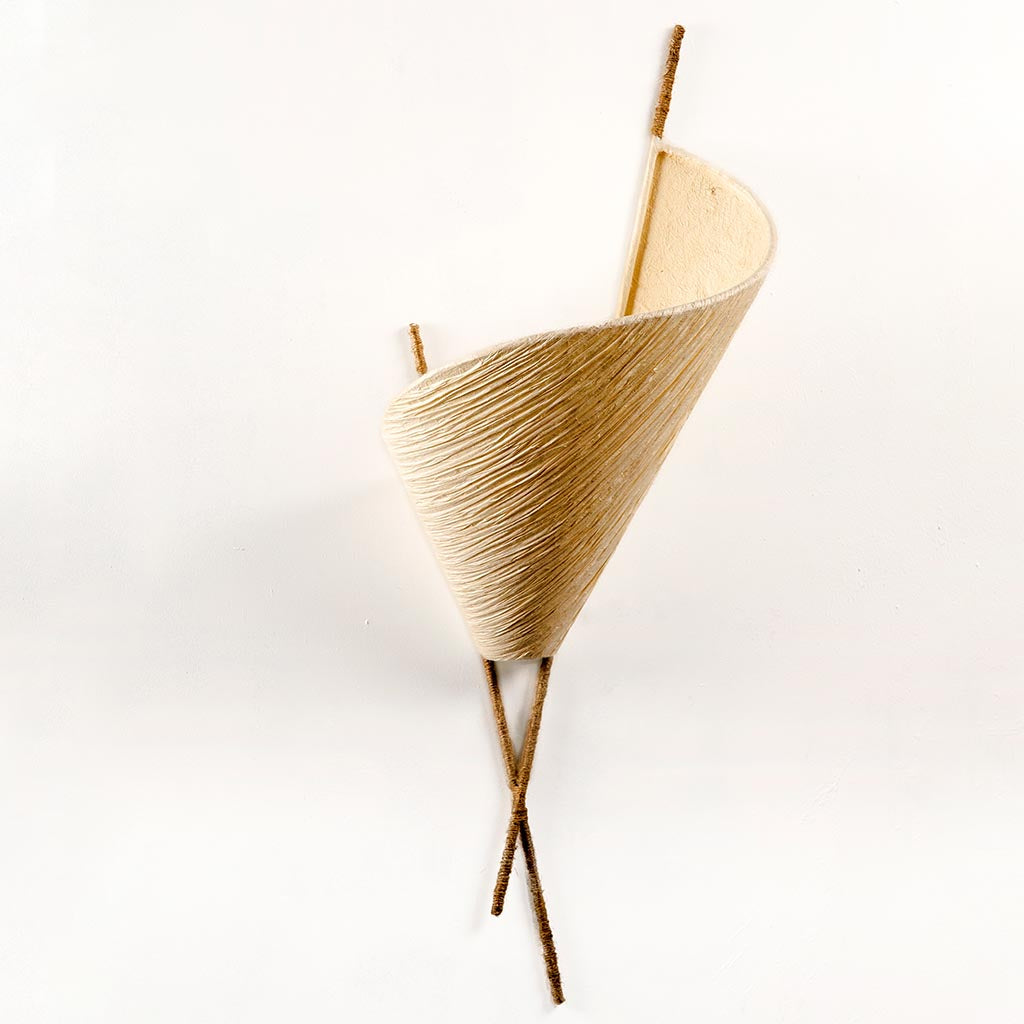
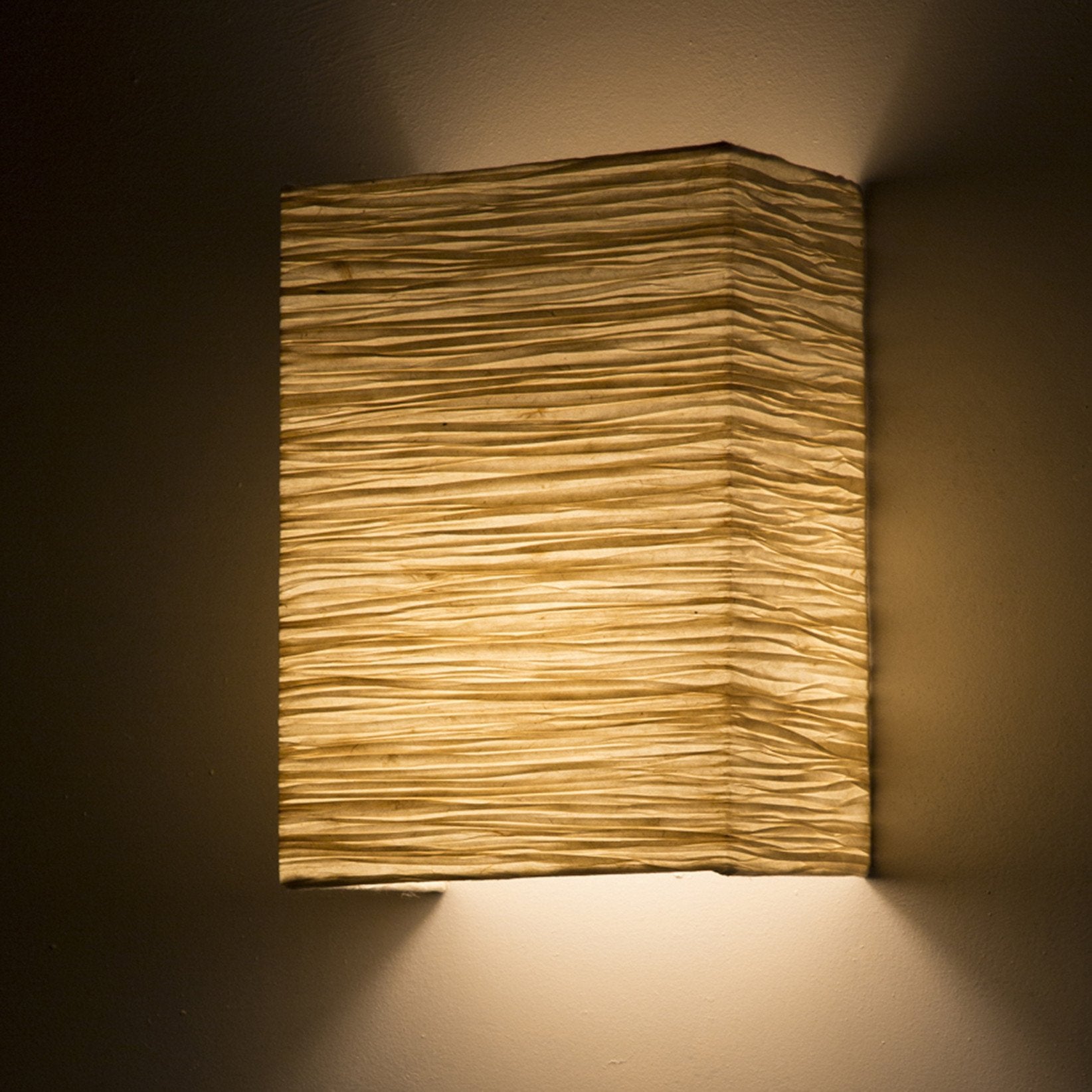
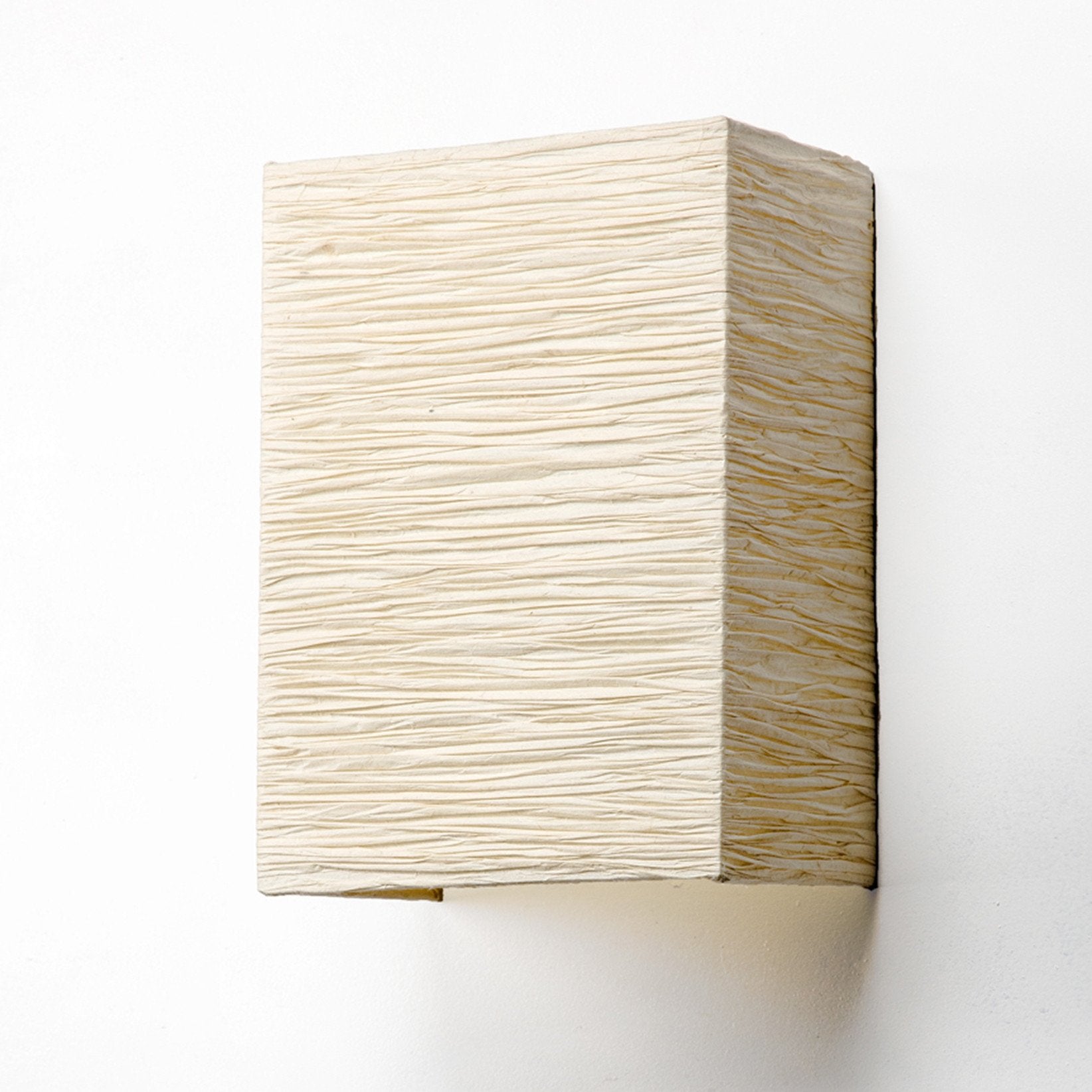
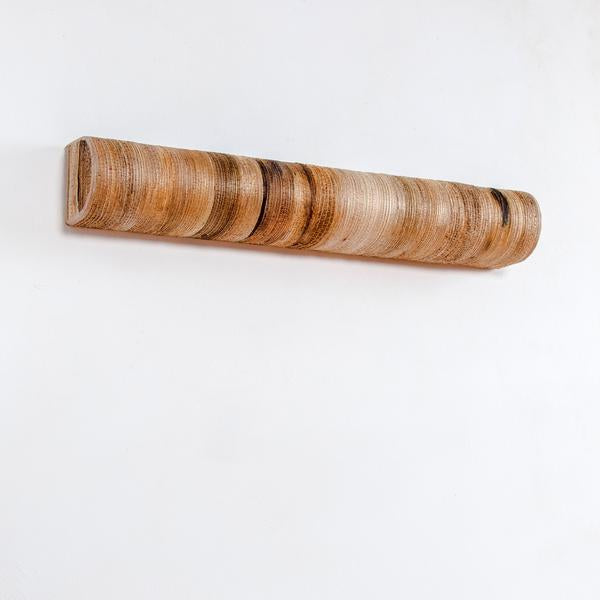
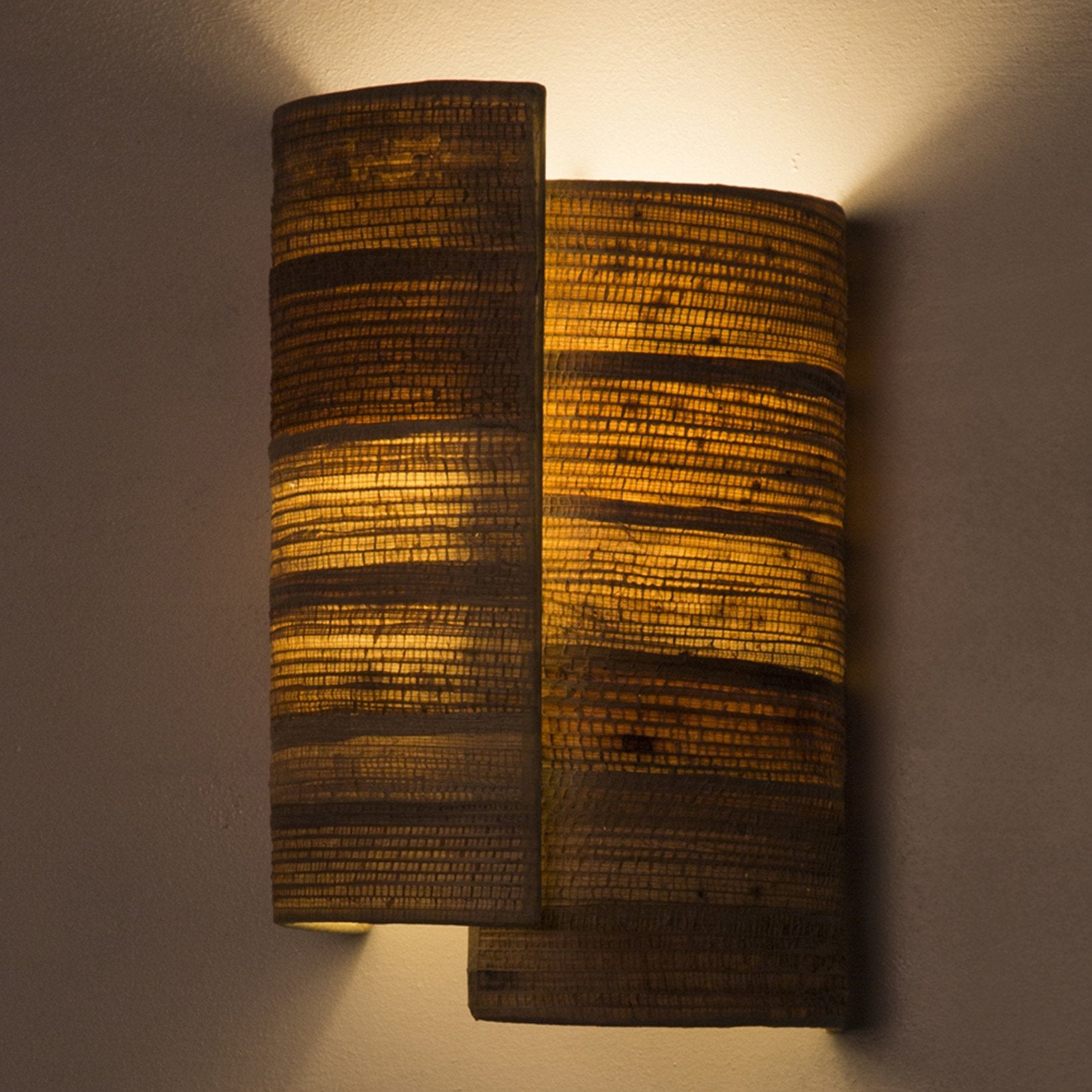
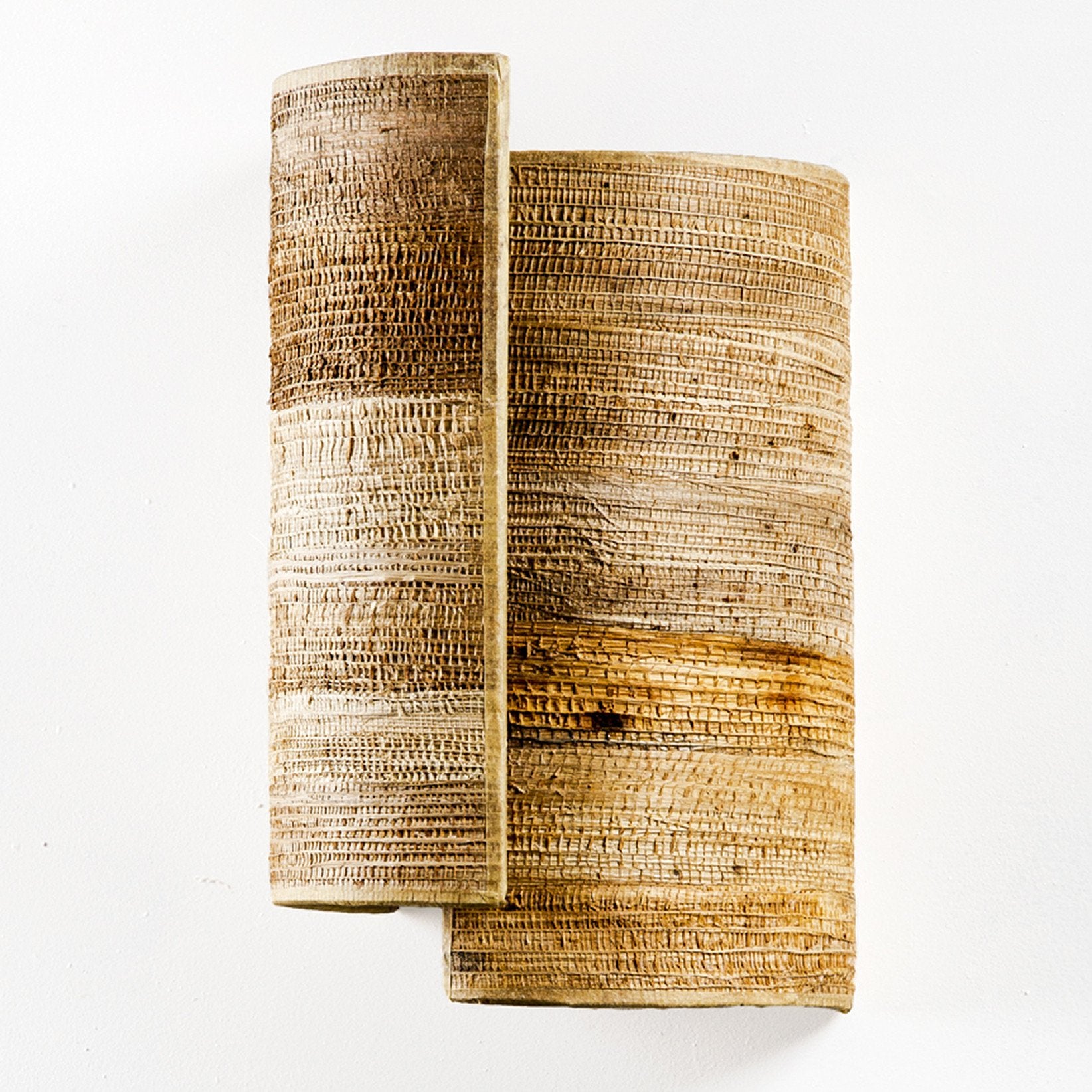
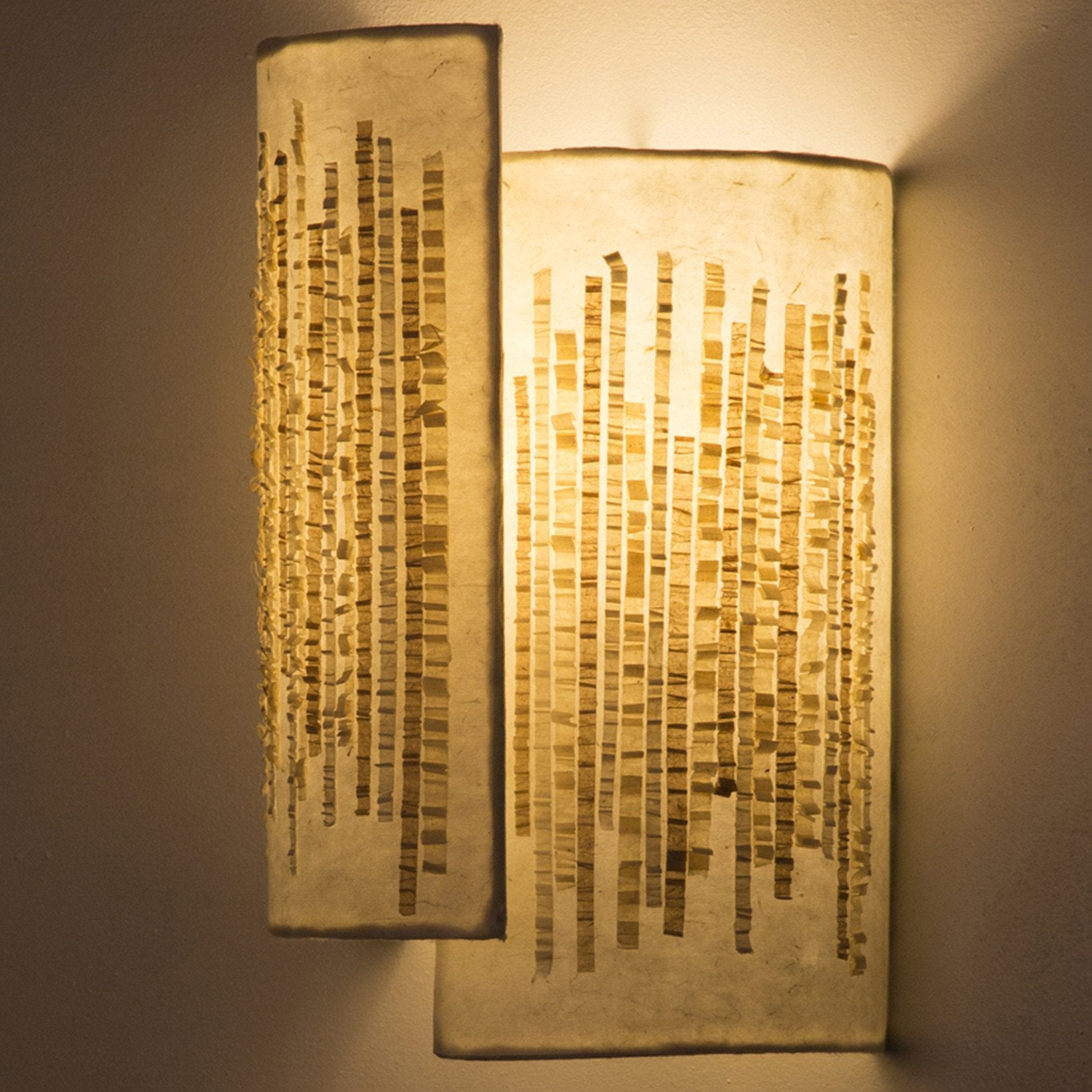
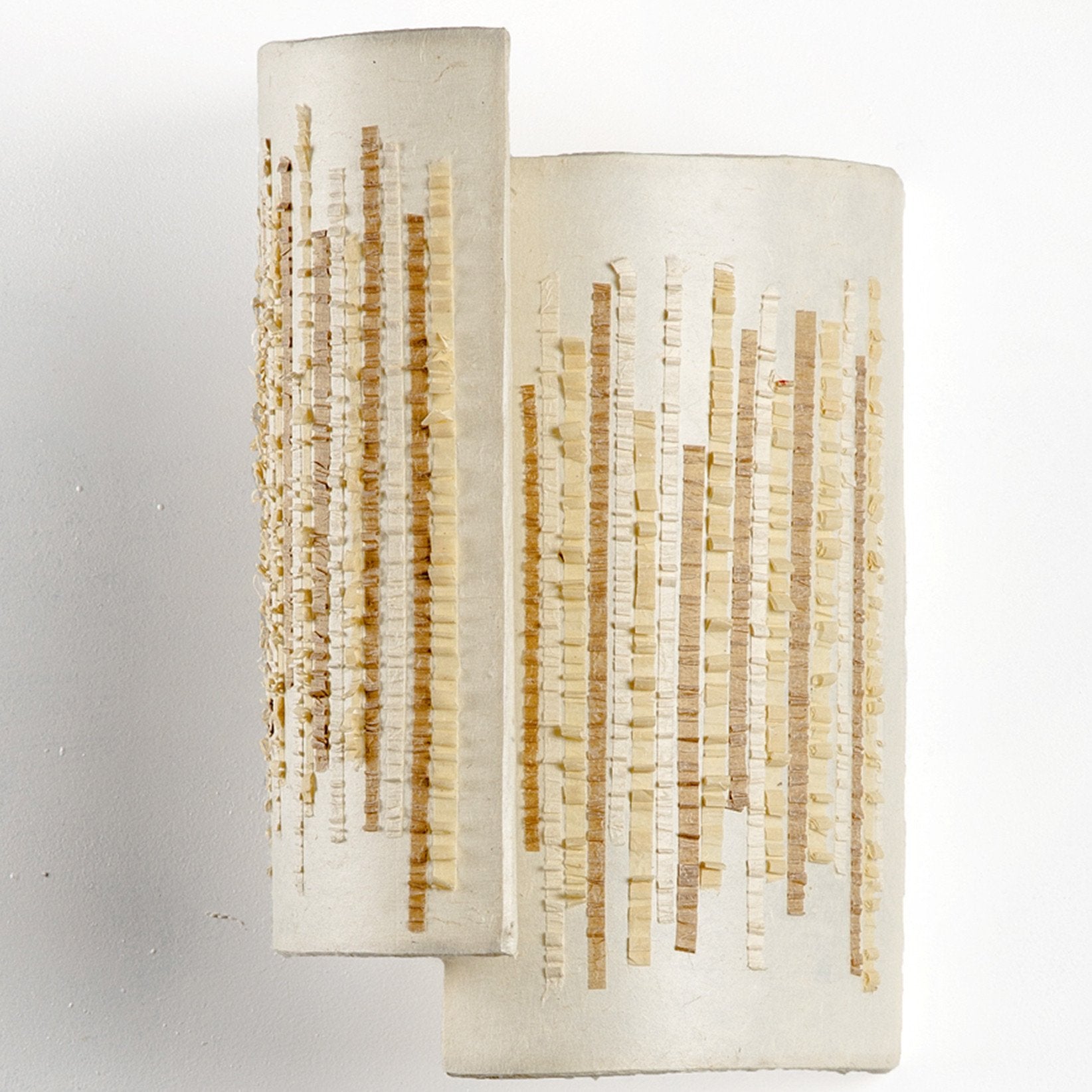
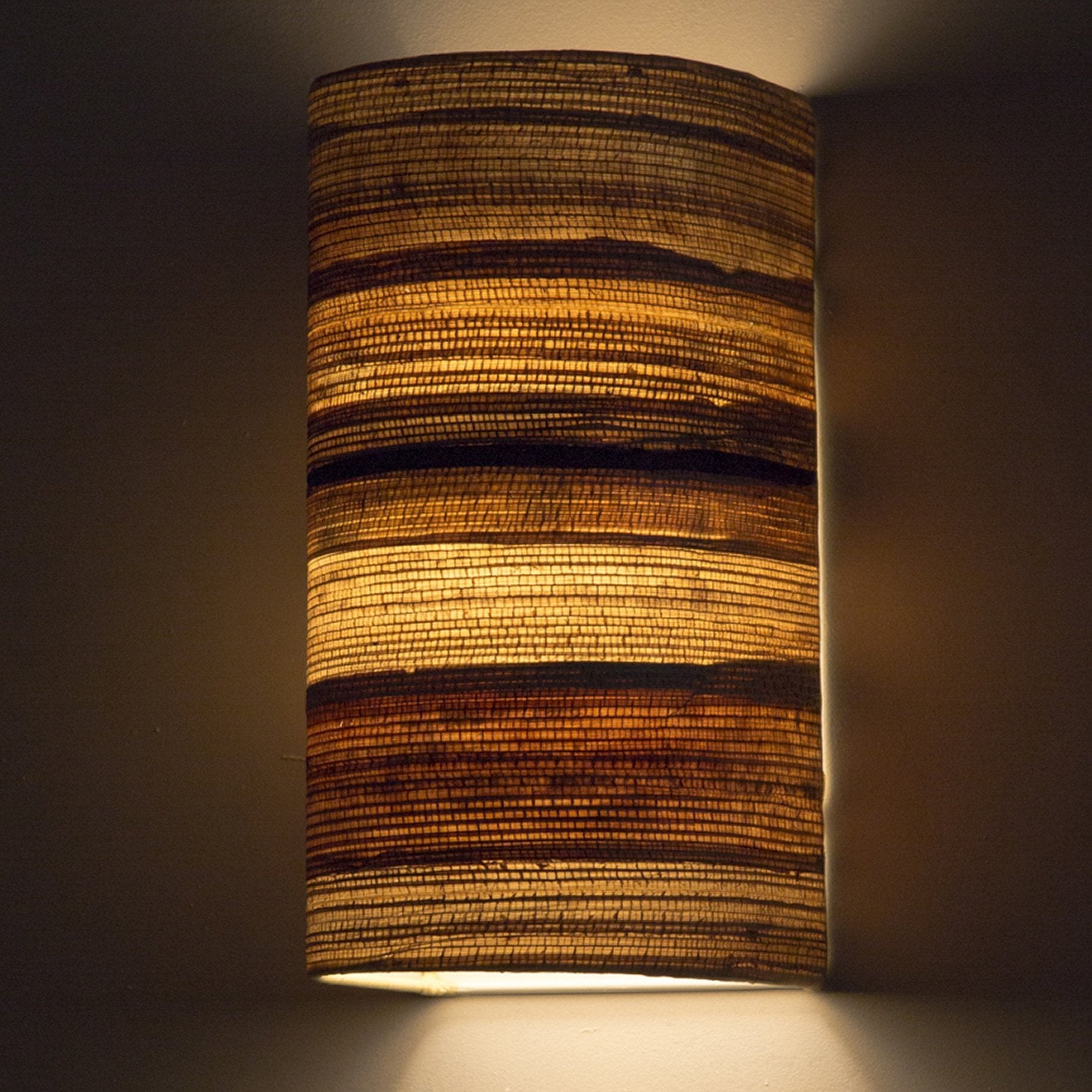
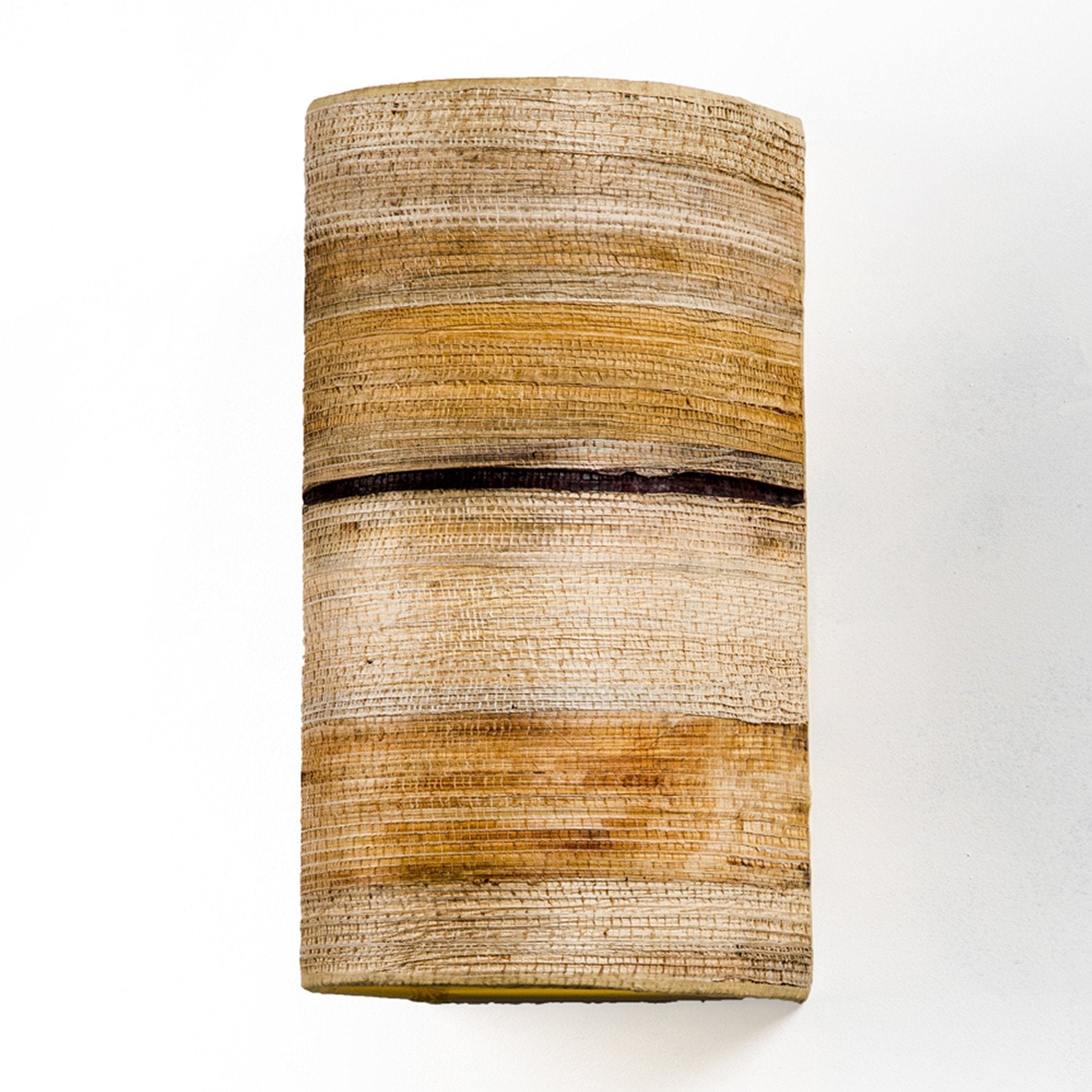
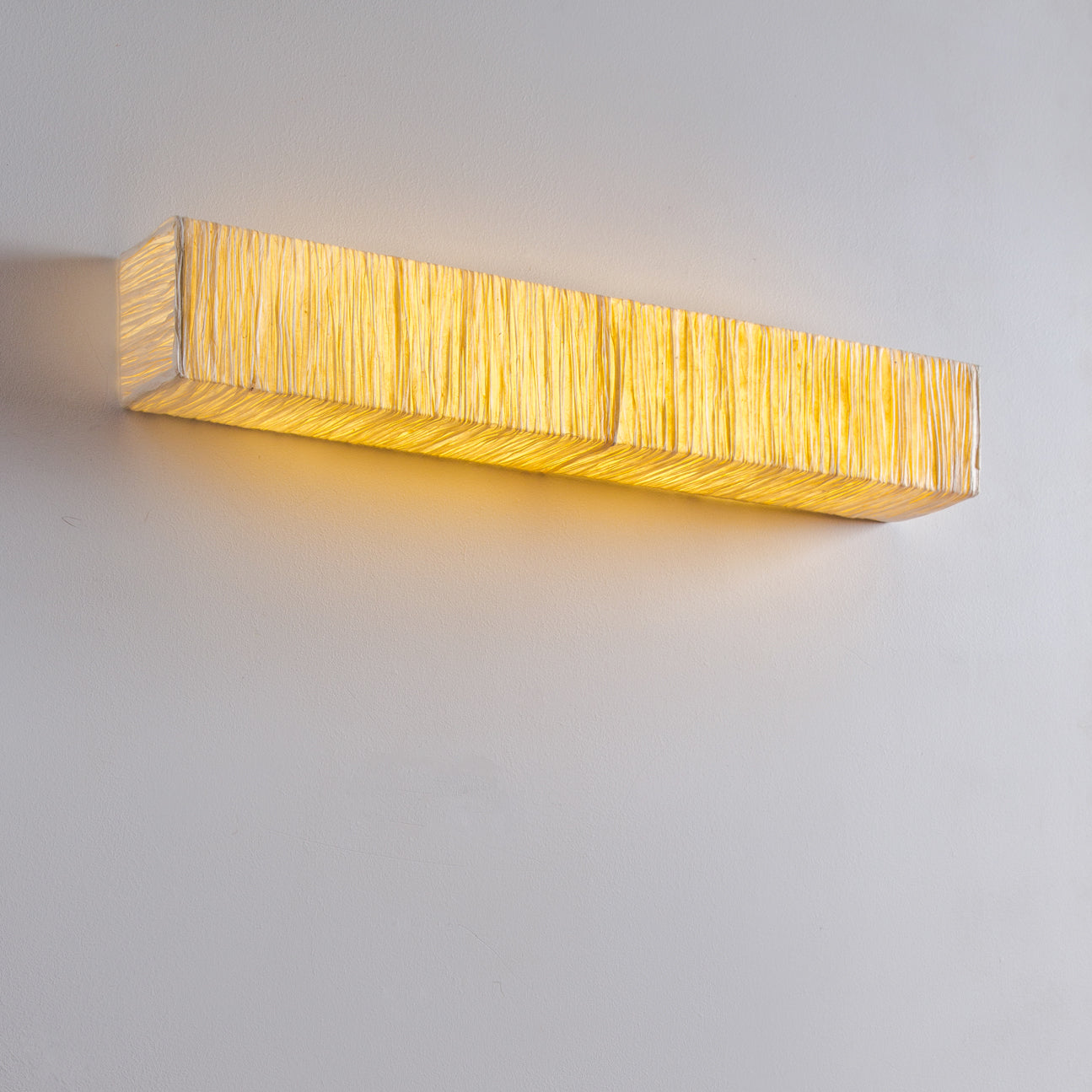
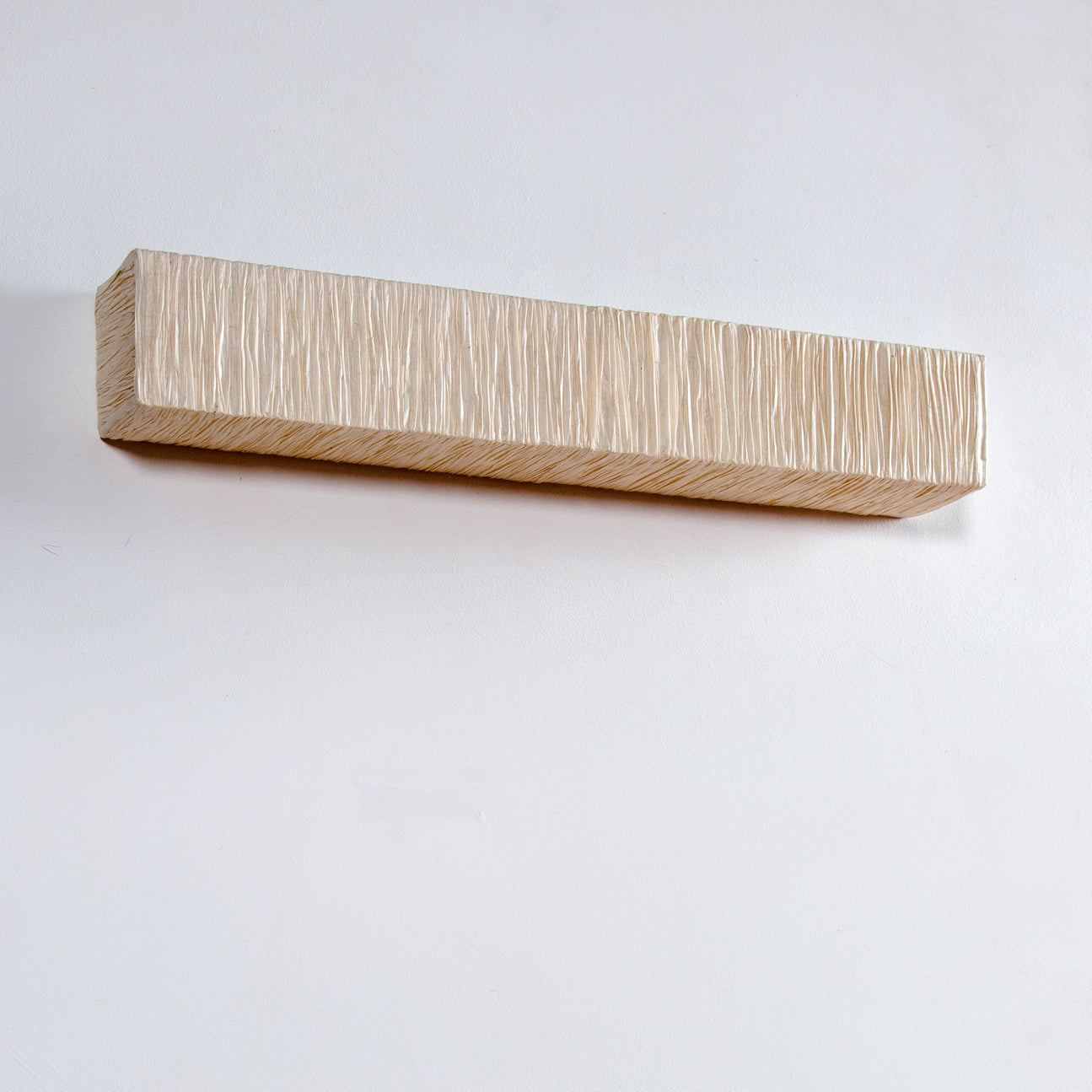
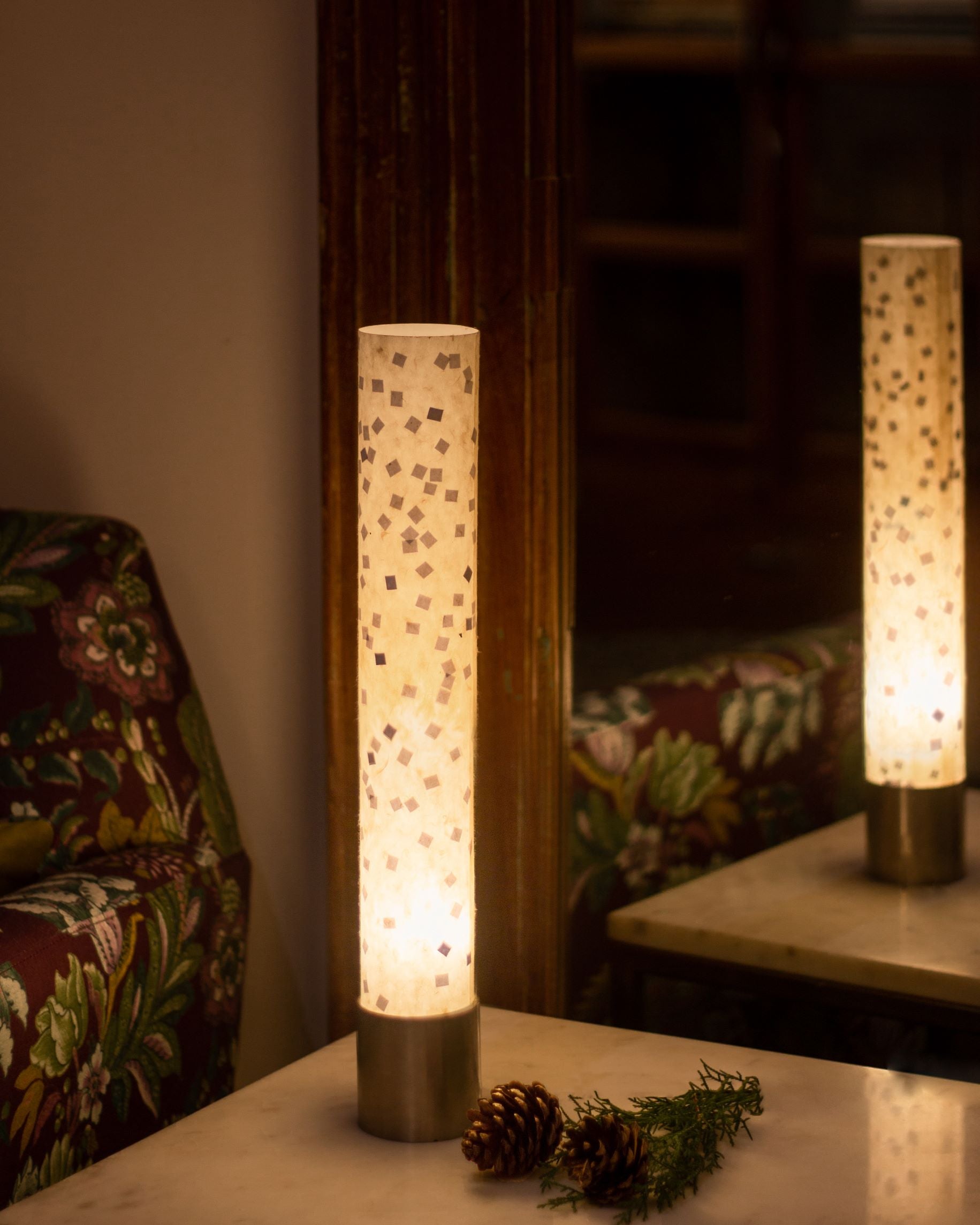
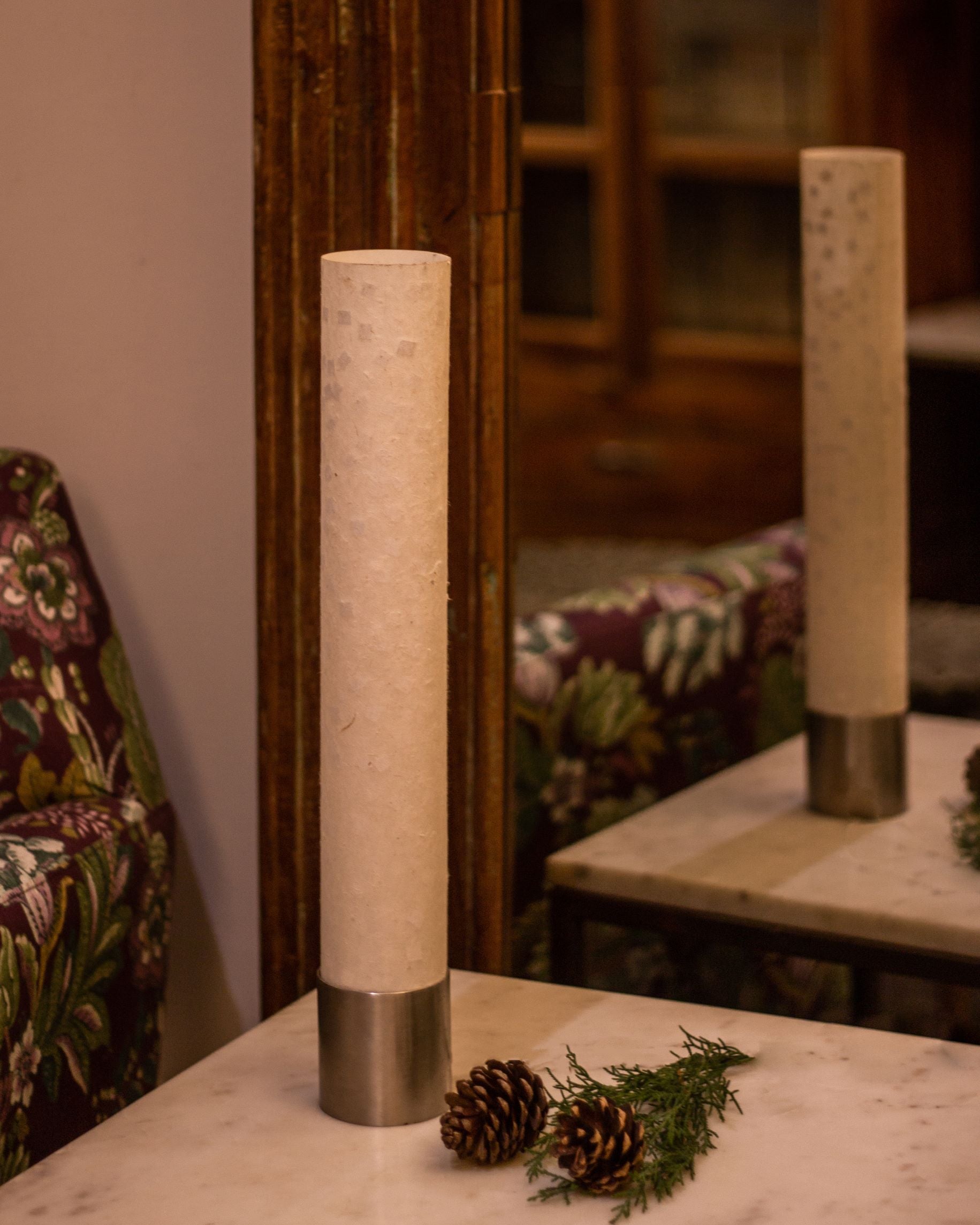
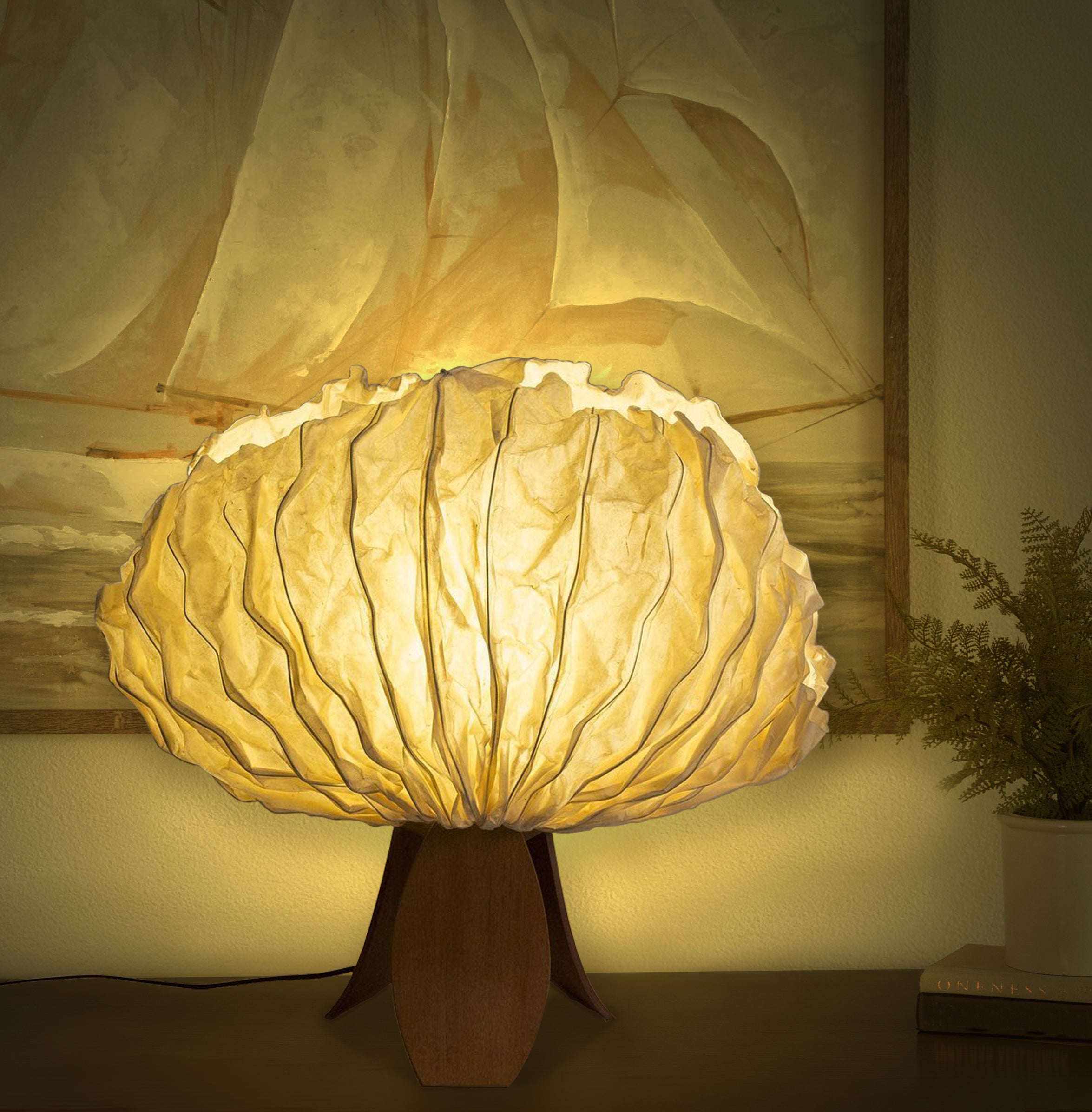
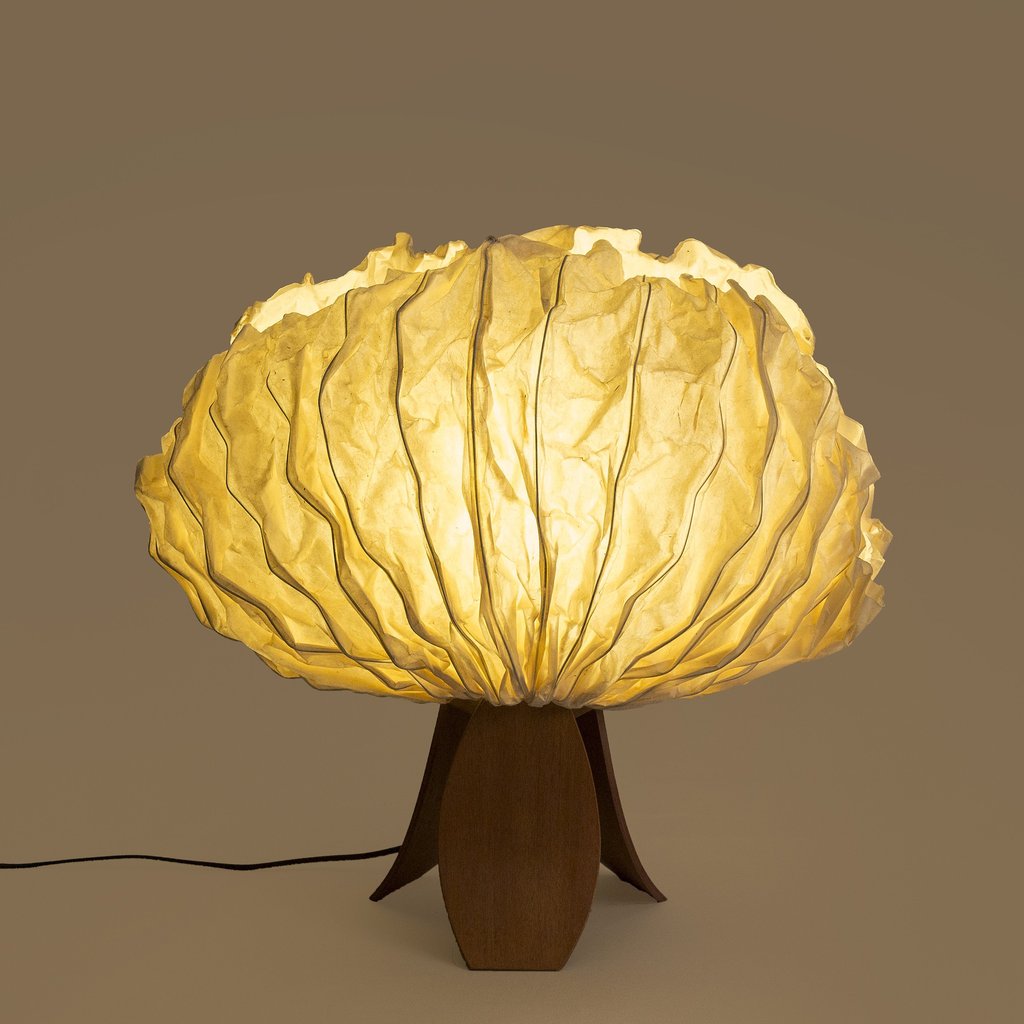
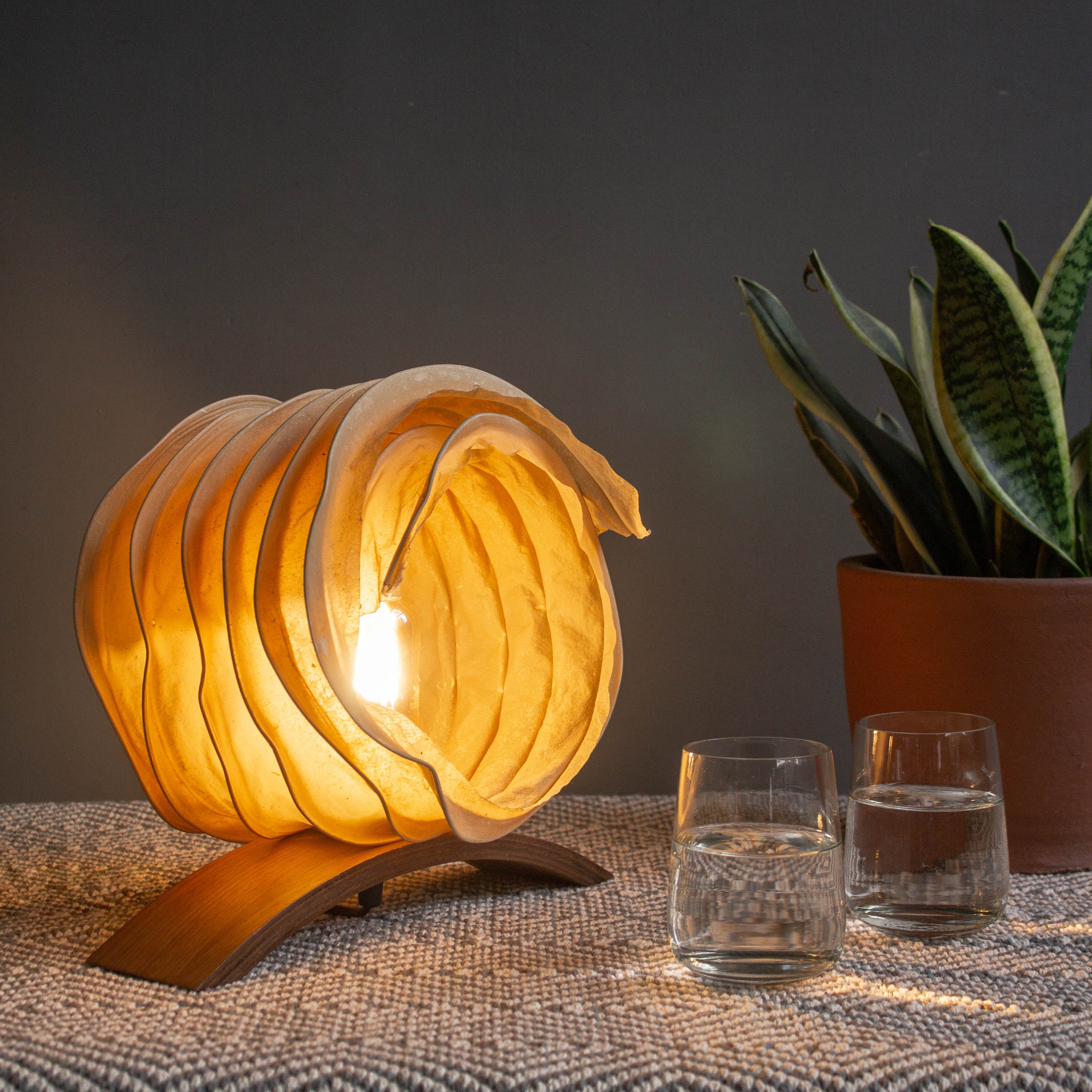
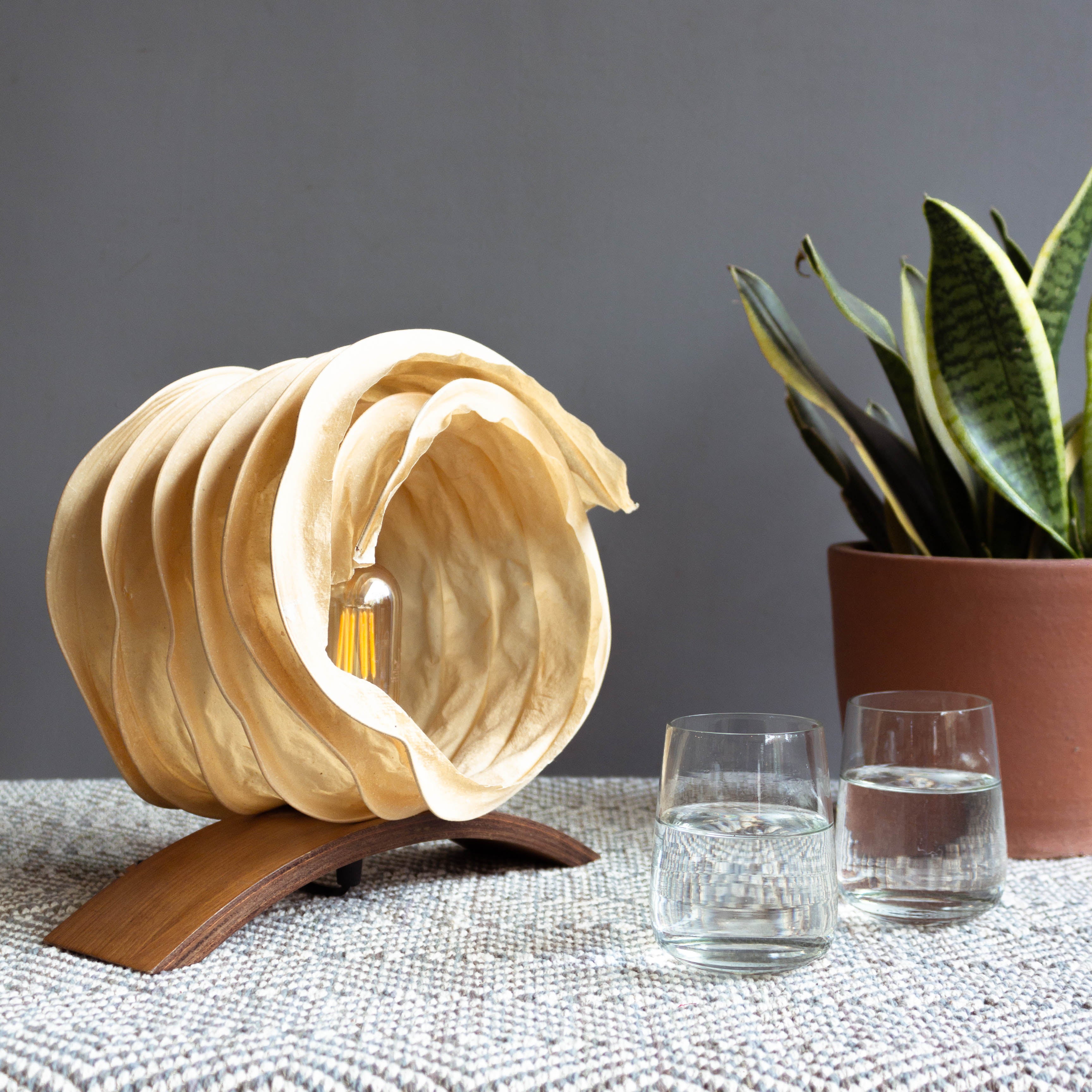
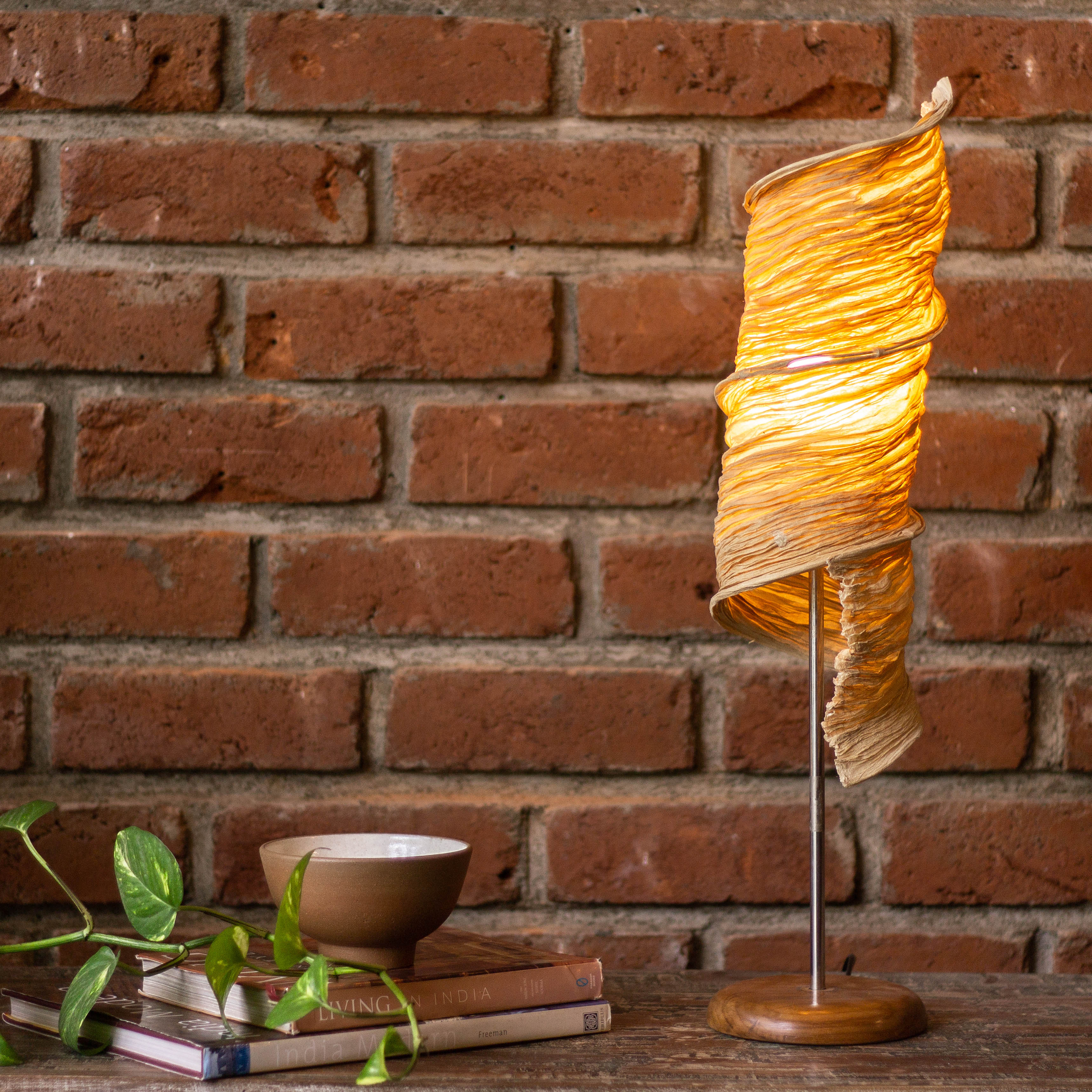
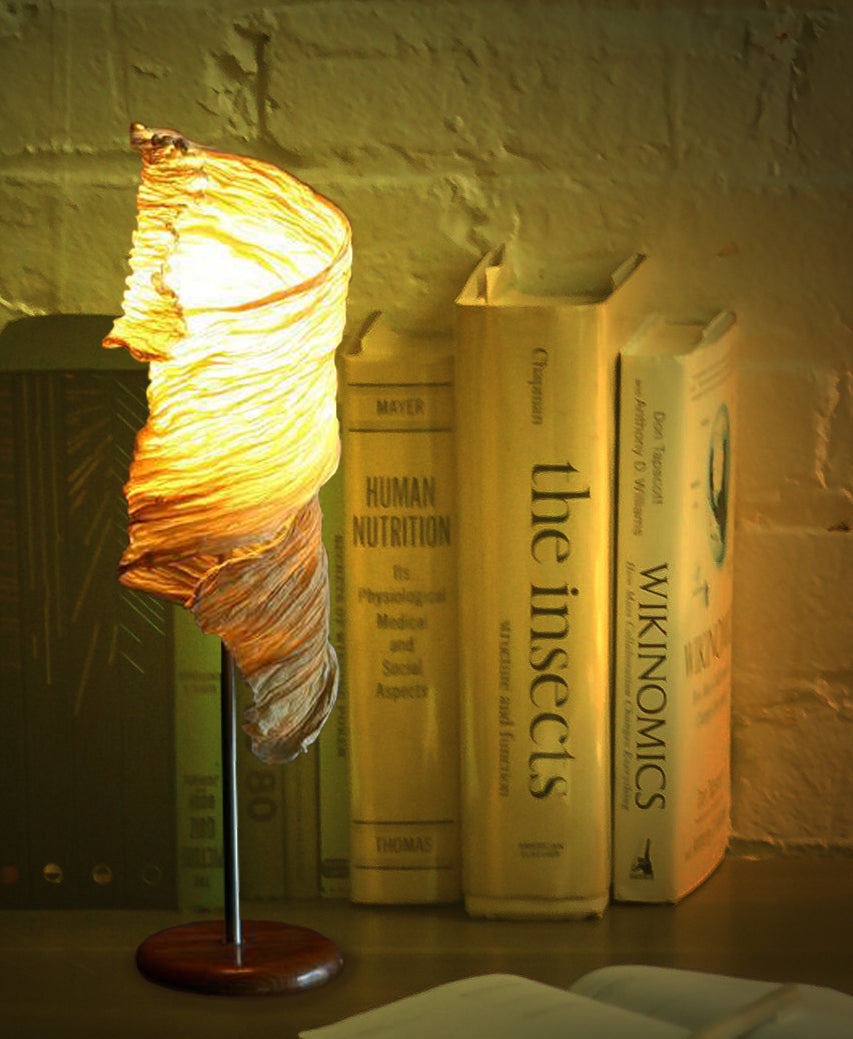
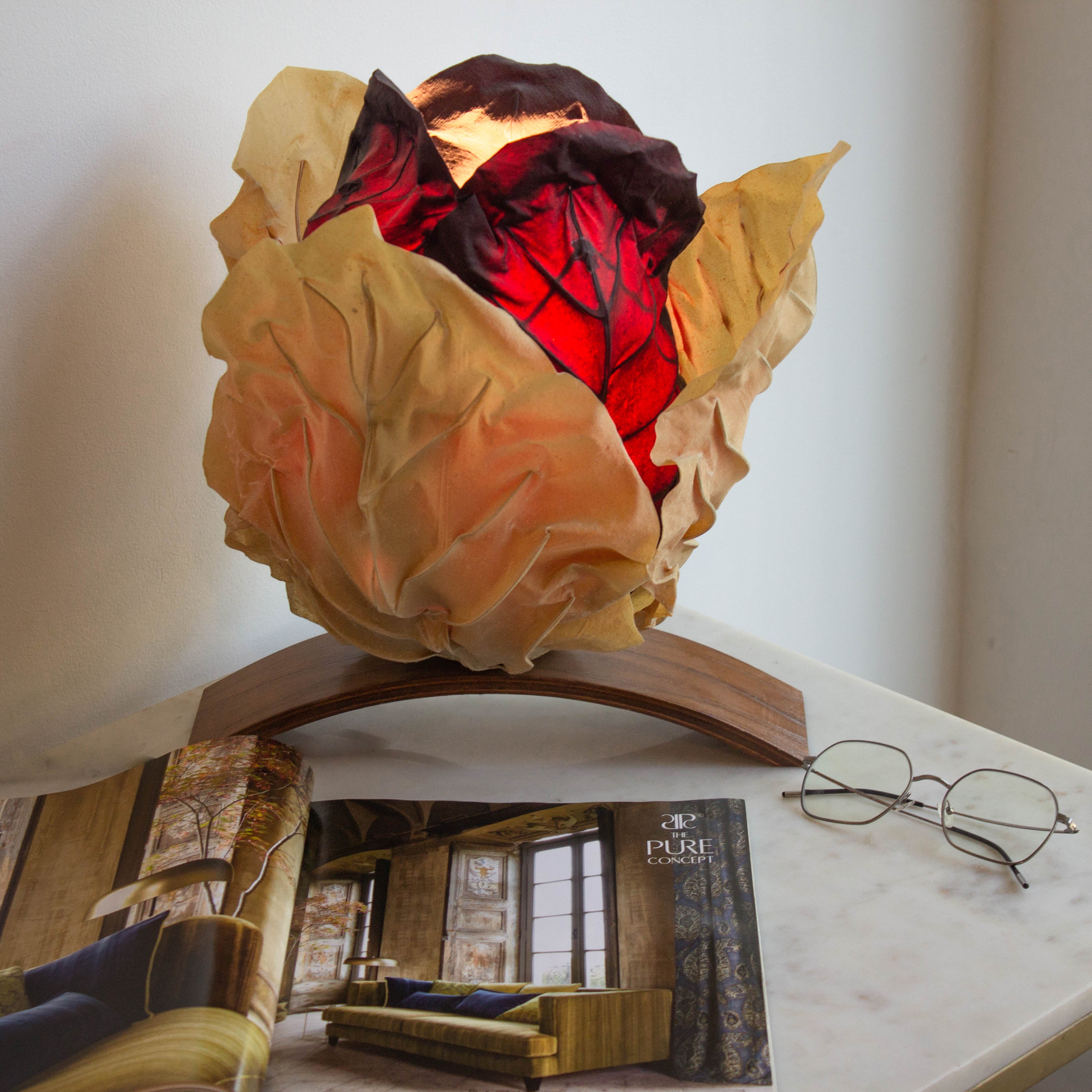
At Oorjaa, our handmade paper begins as waste — fibre drawn from the banana plant — and is transformed into a material of strength, texture, and quiet refinement. What emerges is more than a surface; it is a substance shaped by rhythm, repetition, and years of patient experimentation.
The paper holds its own structural logic: it is light yet resilient, sculptural yet porous, capable of soft diffusion and strong form. Over time, we’ve developed a nuanced material vocabulary — adjusting thickness, translucency, and texture to suit the needs of each design. Whether coaxed into fluid curves, pinched into folds, or layered to create depth, it responds intuitively to hand and method.
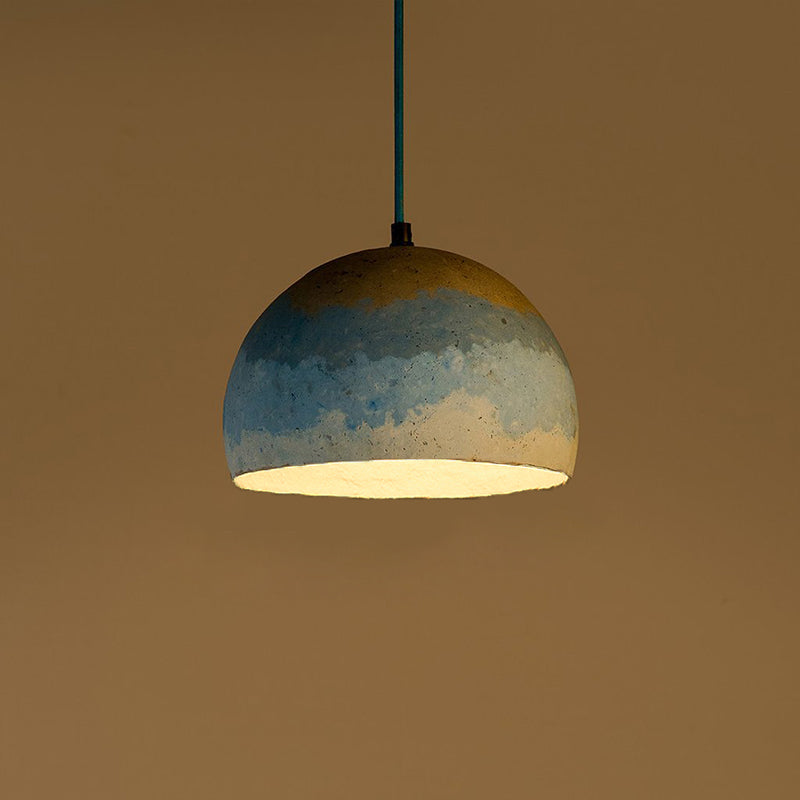
Some finishes — like our signature fishnet texture, stone-like surfaces, or sculpted banana fibre — are created through techniques refined entirely in-house, each adding distinction and character. No two sheets are exactly alike, and each carries subtle marks of its making: the grain of the fibre, the tension in its layers, the small irregularities that make it human.

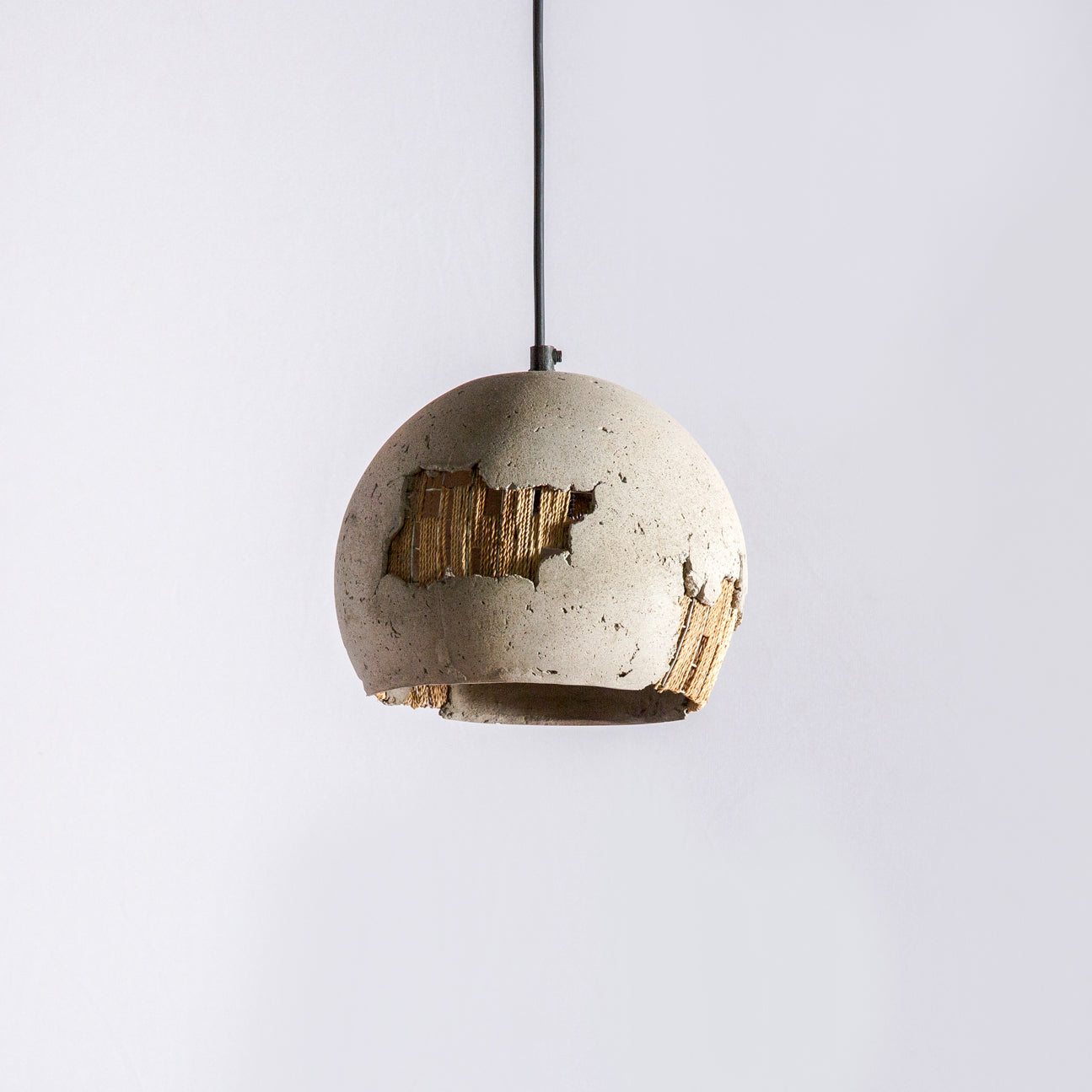
Faux Concrete
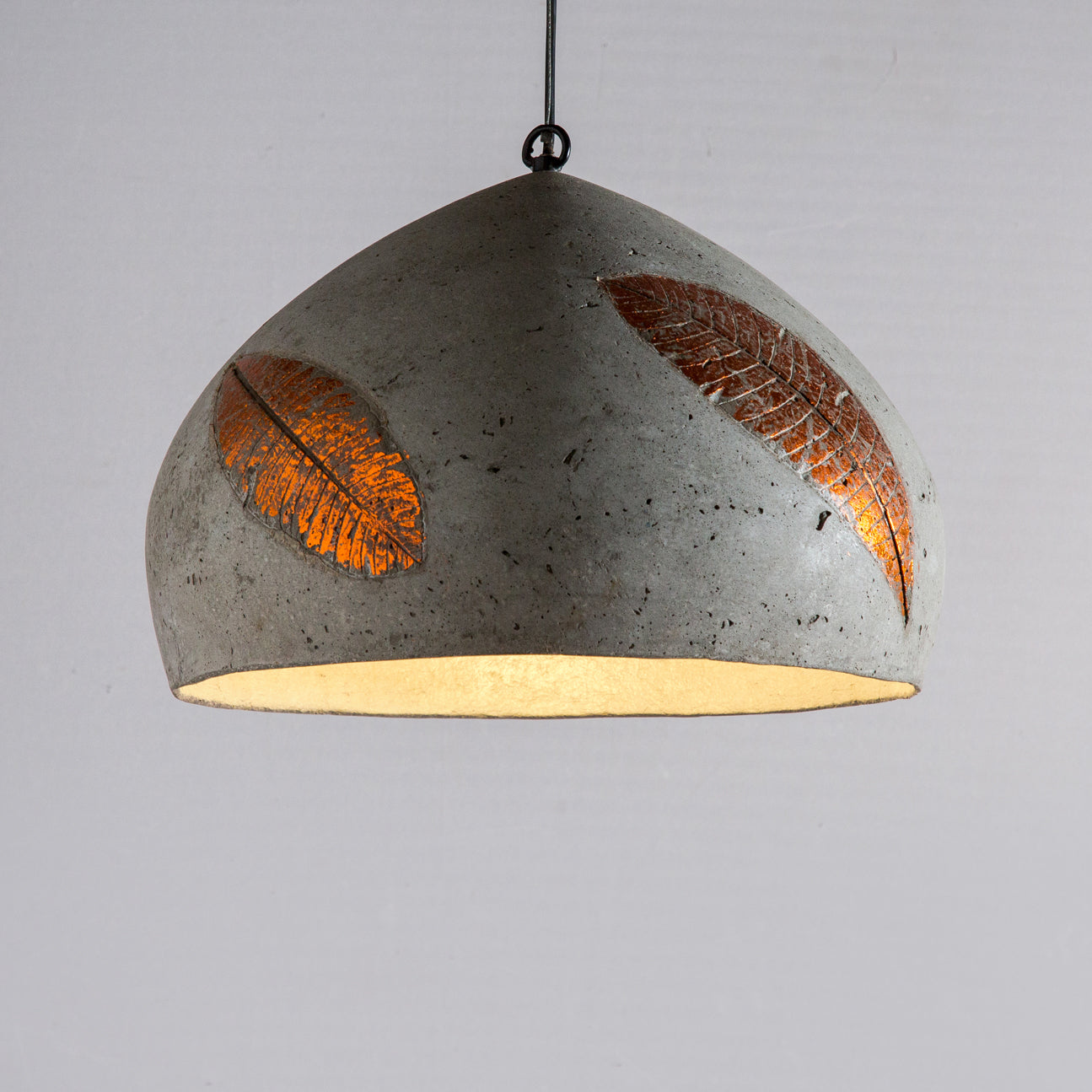
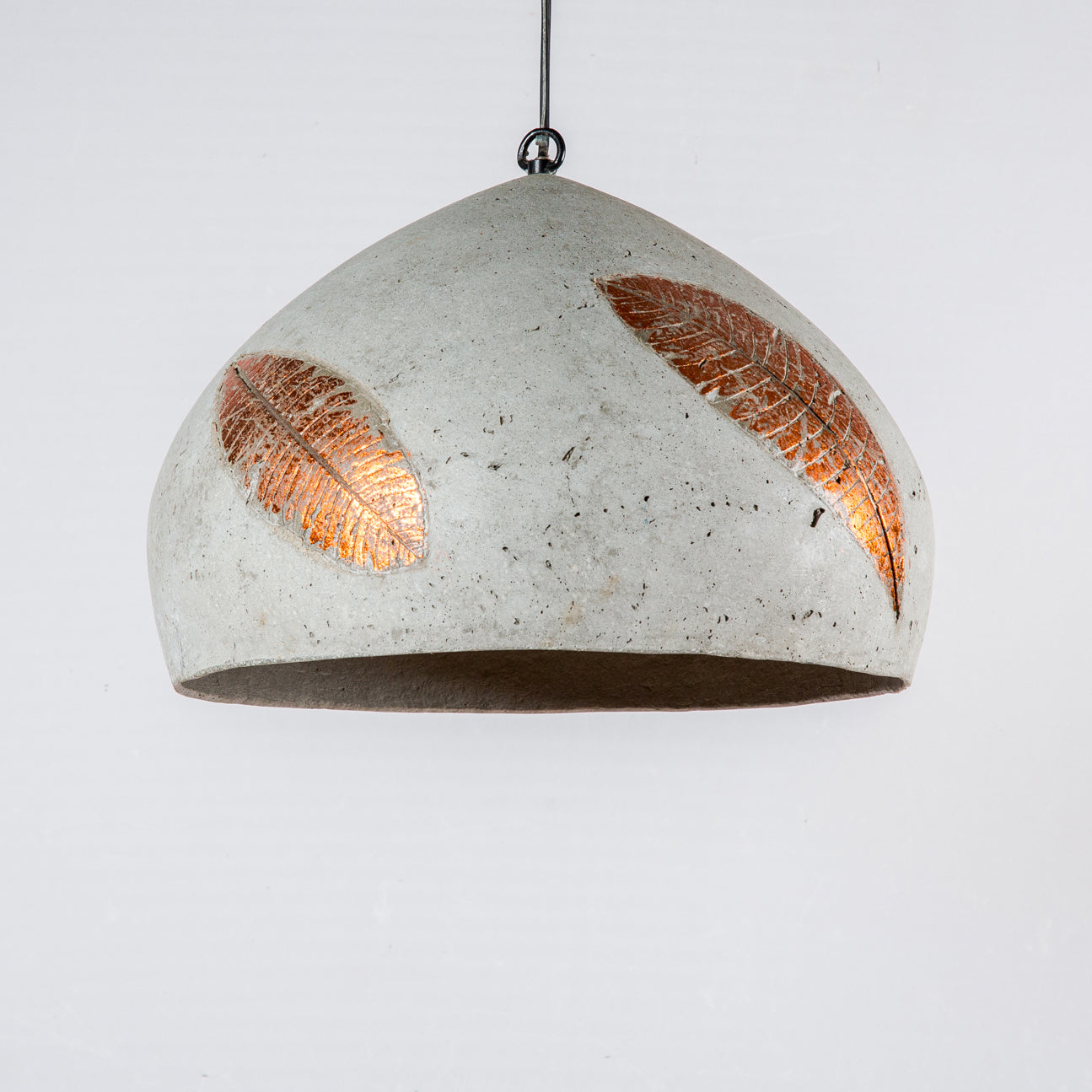
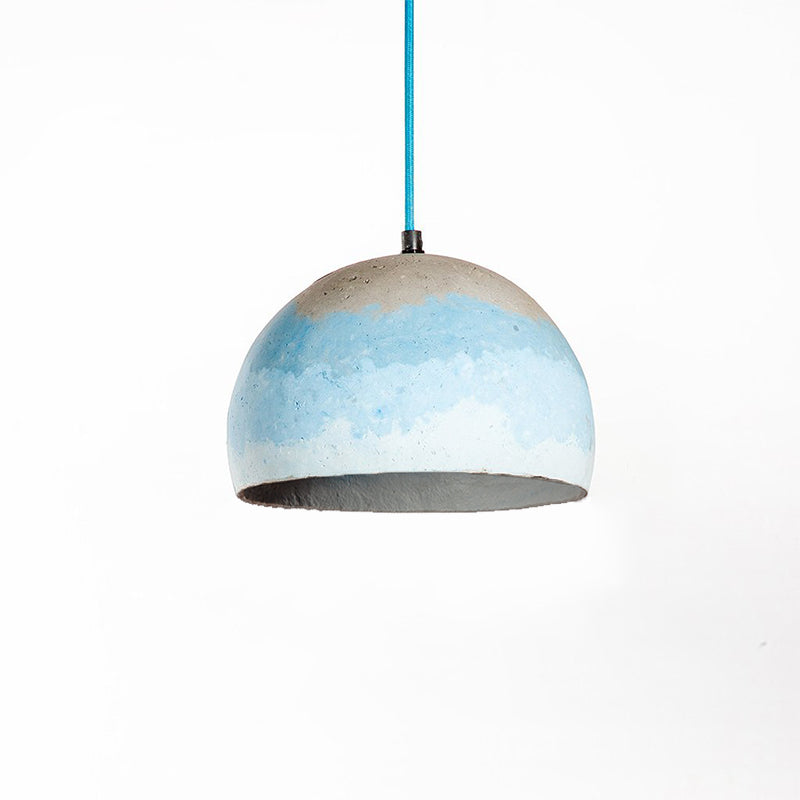
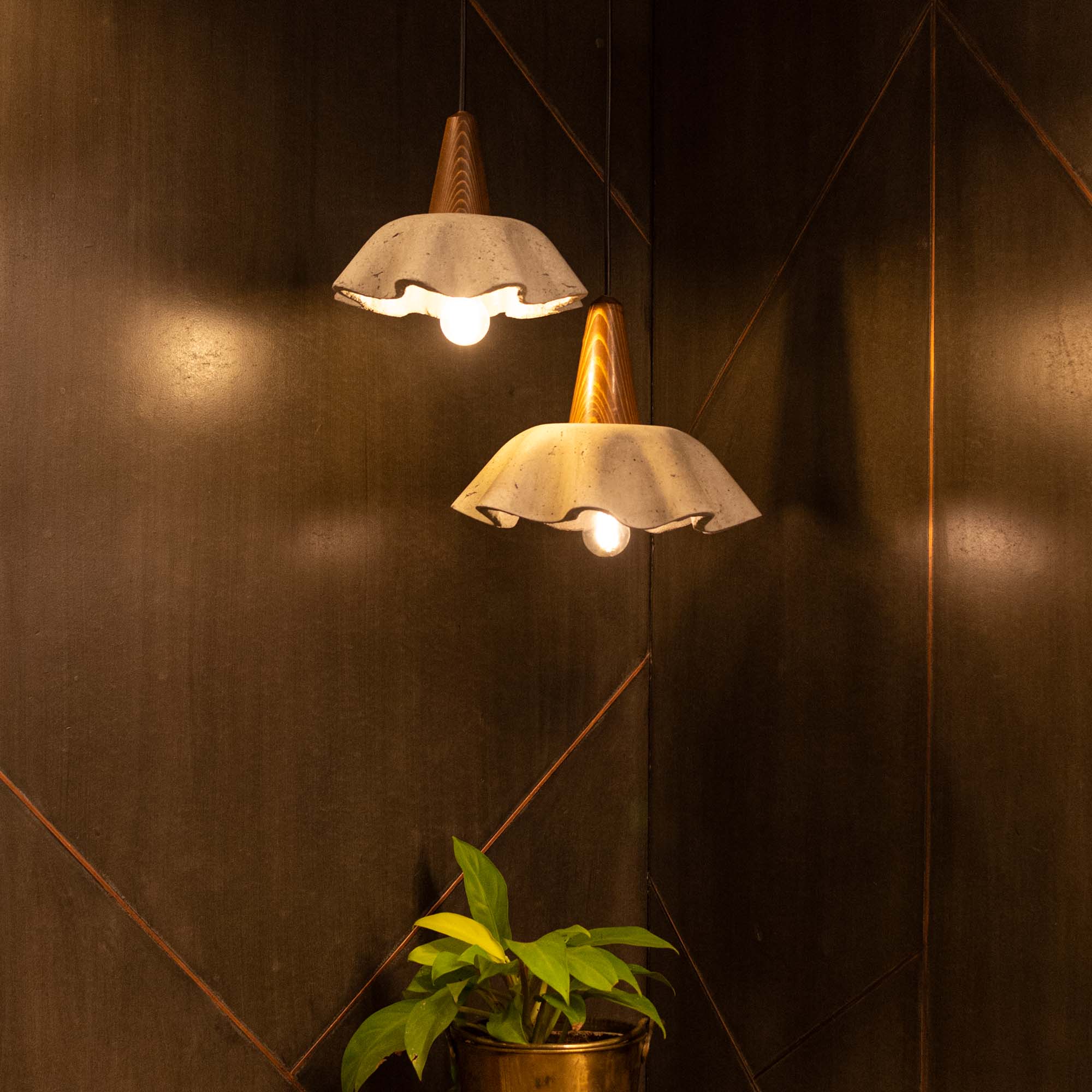
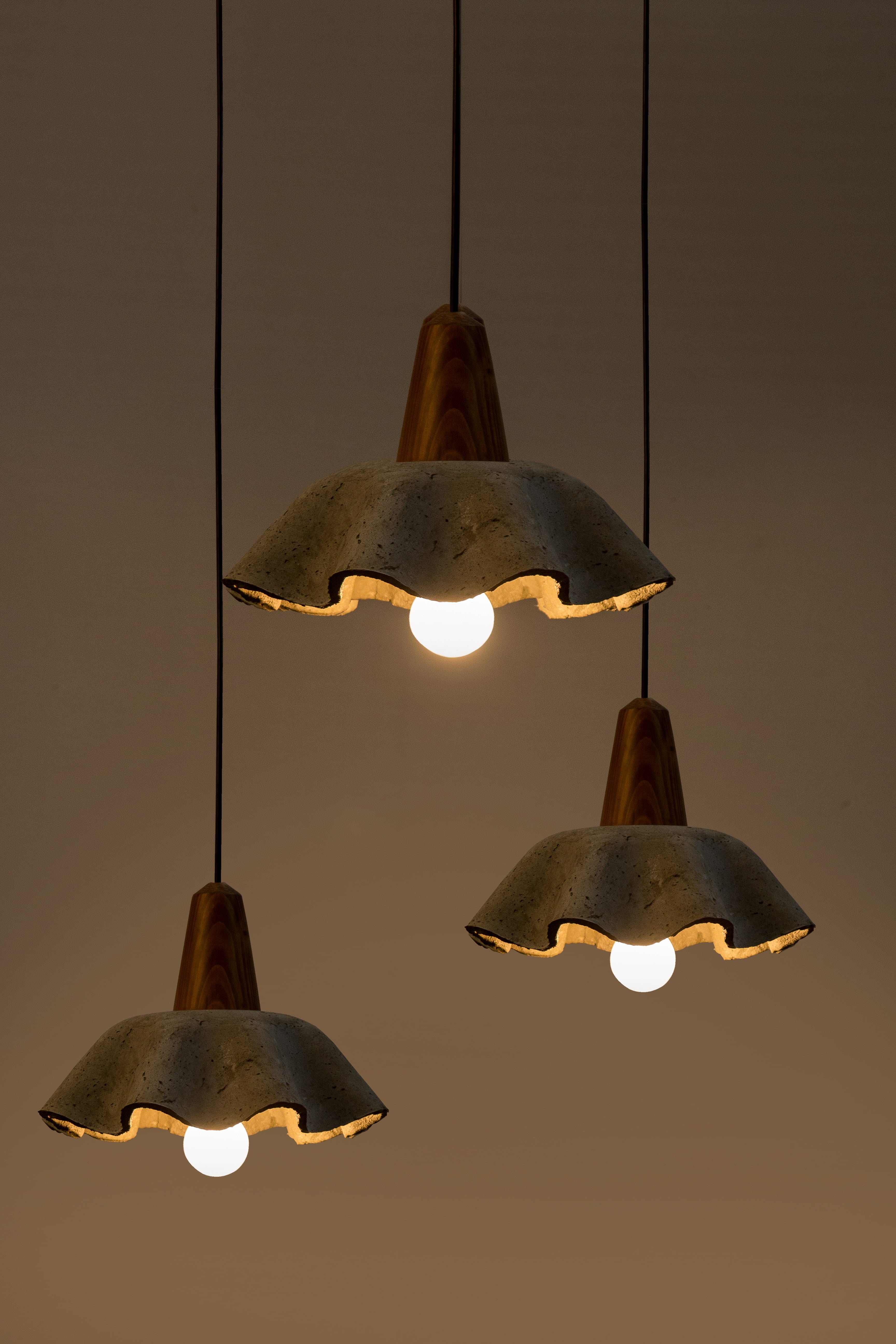
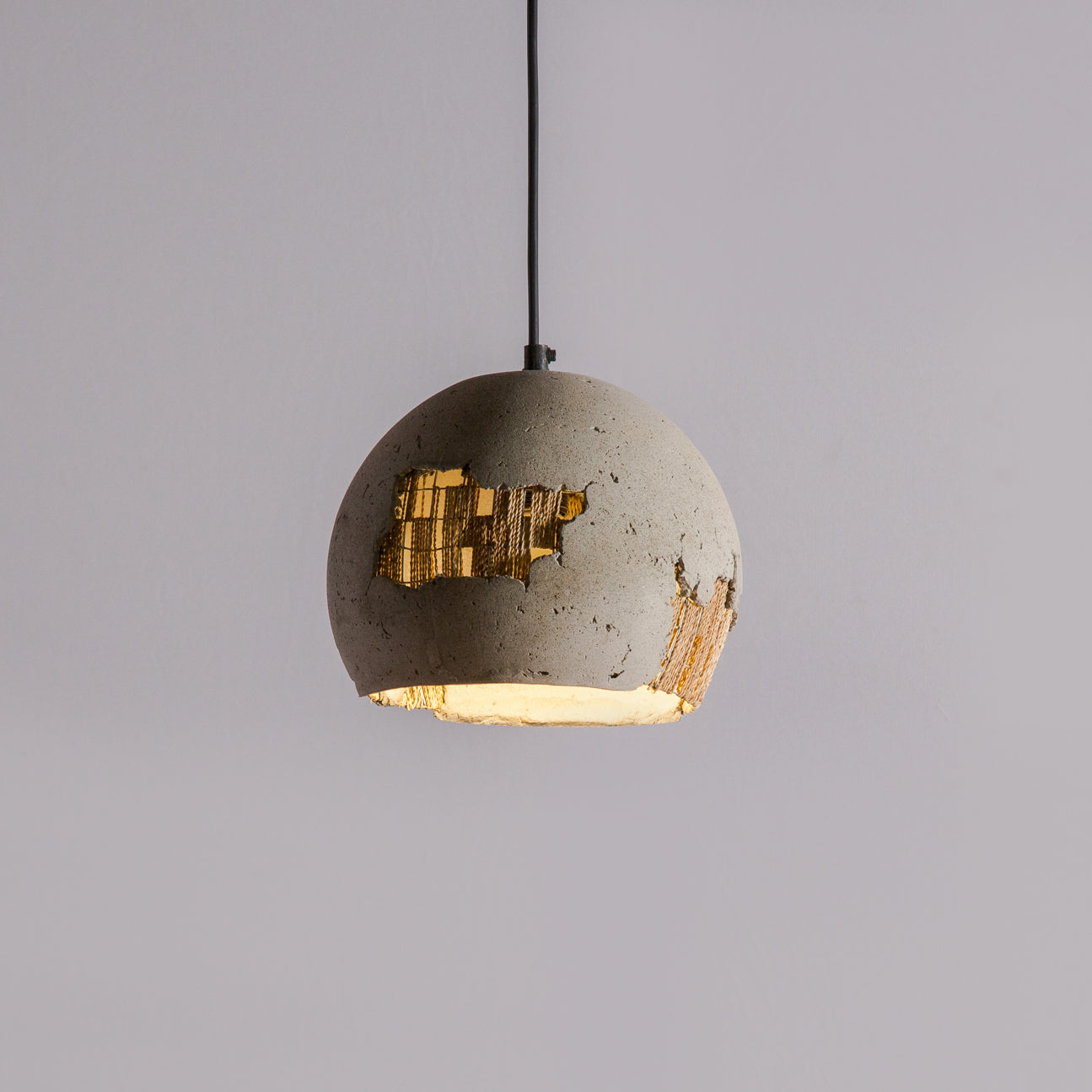
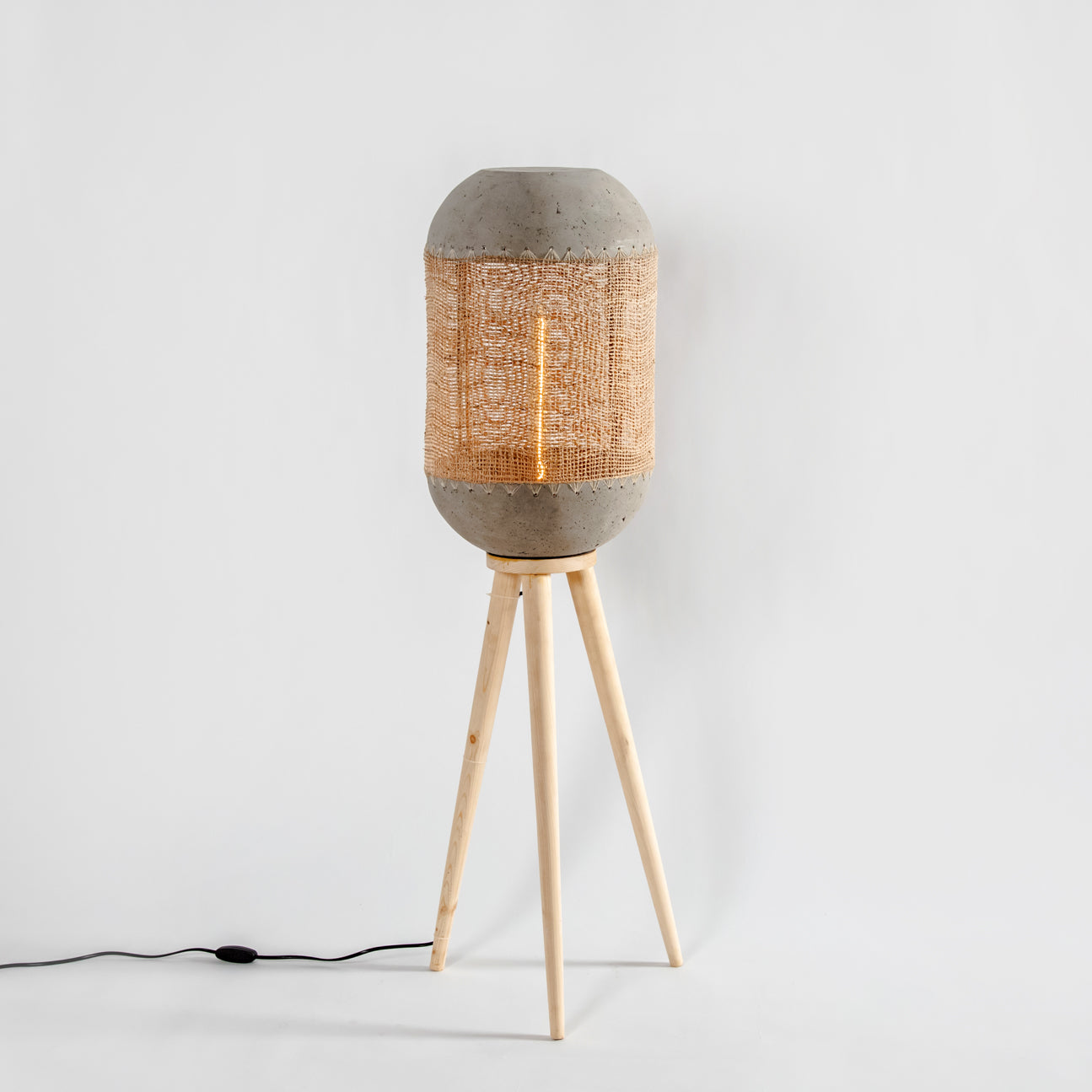
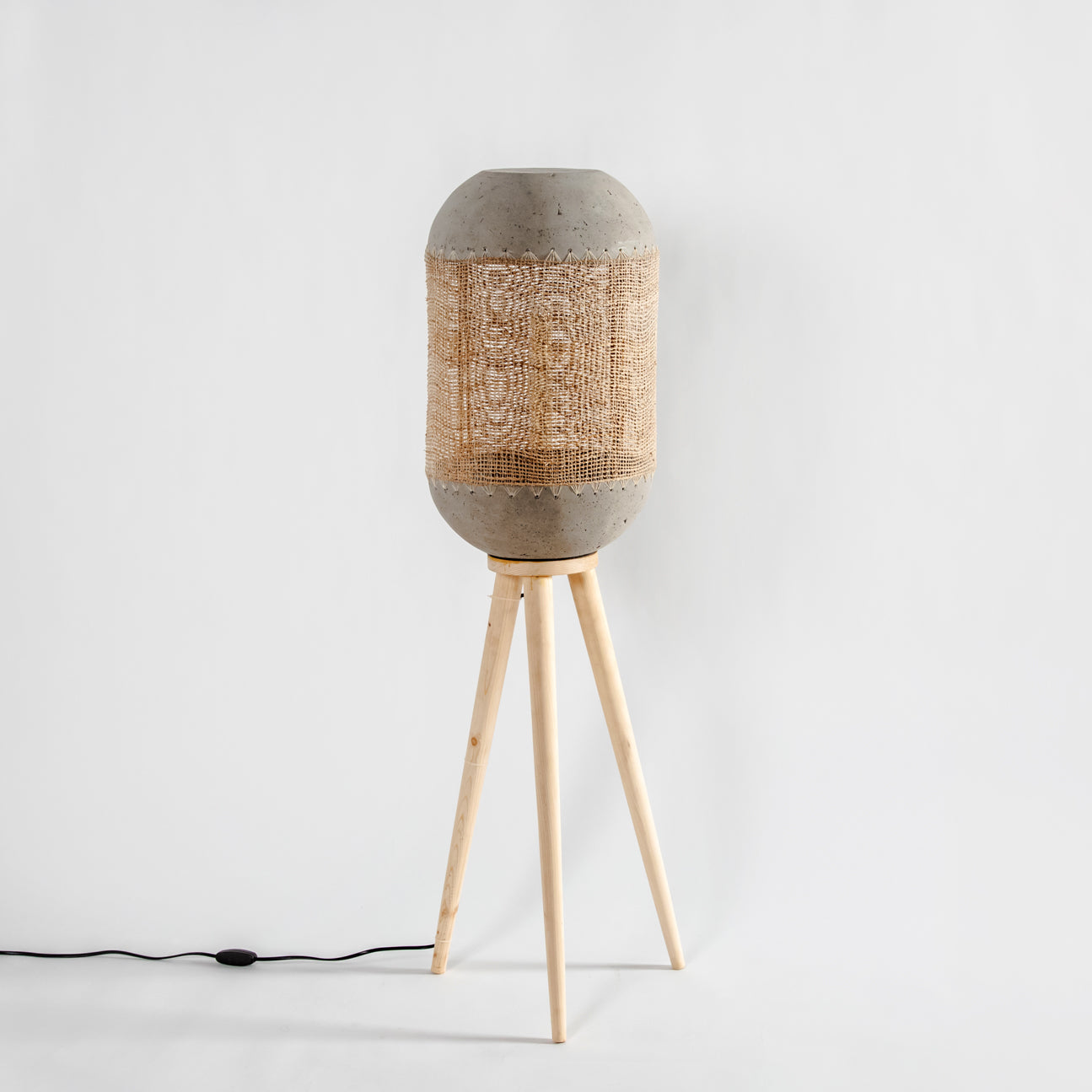
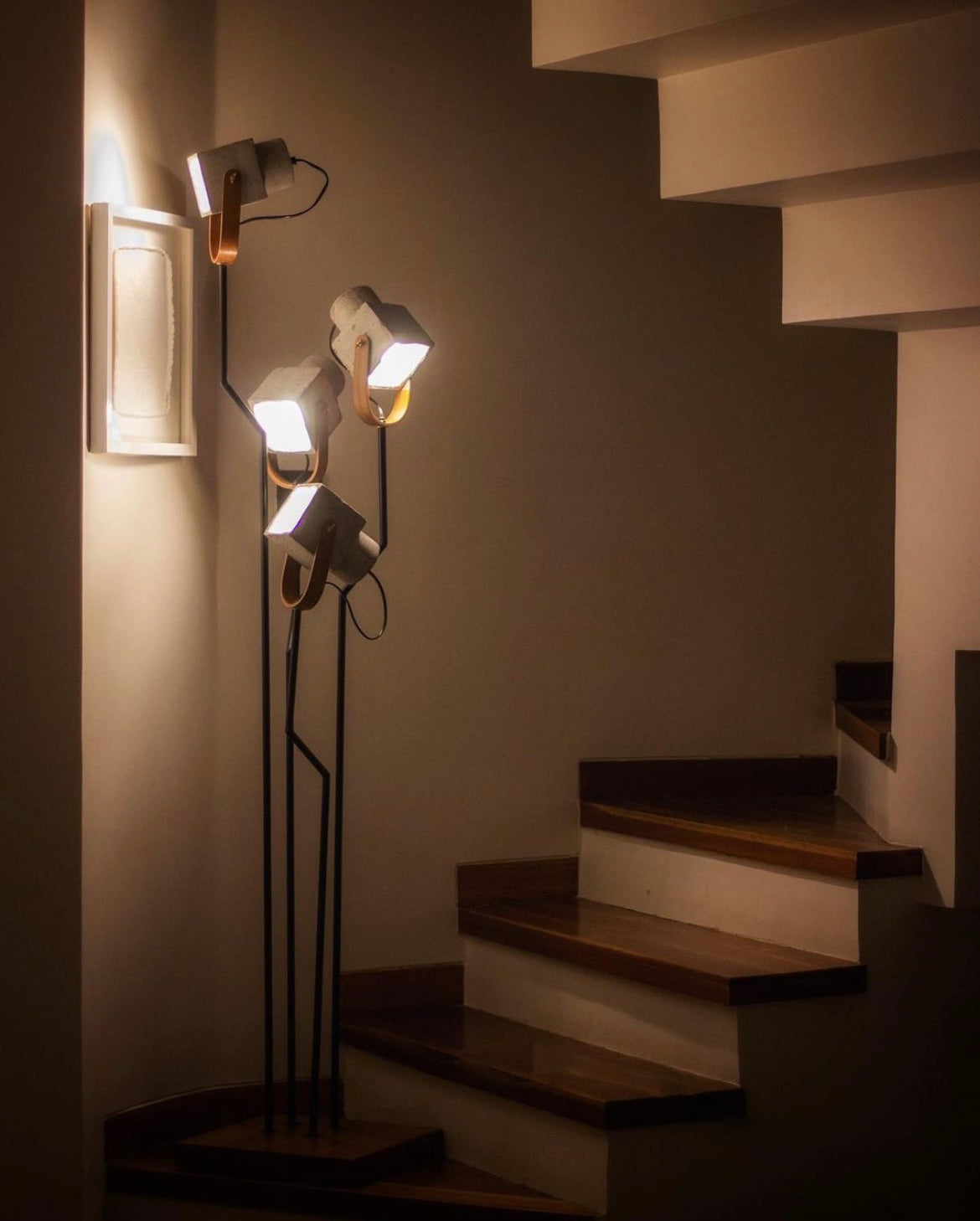
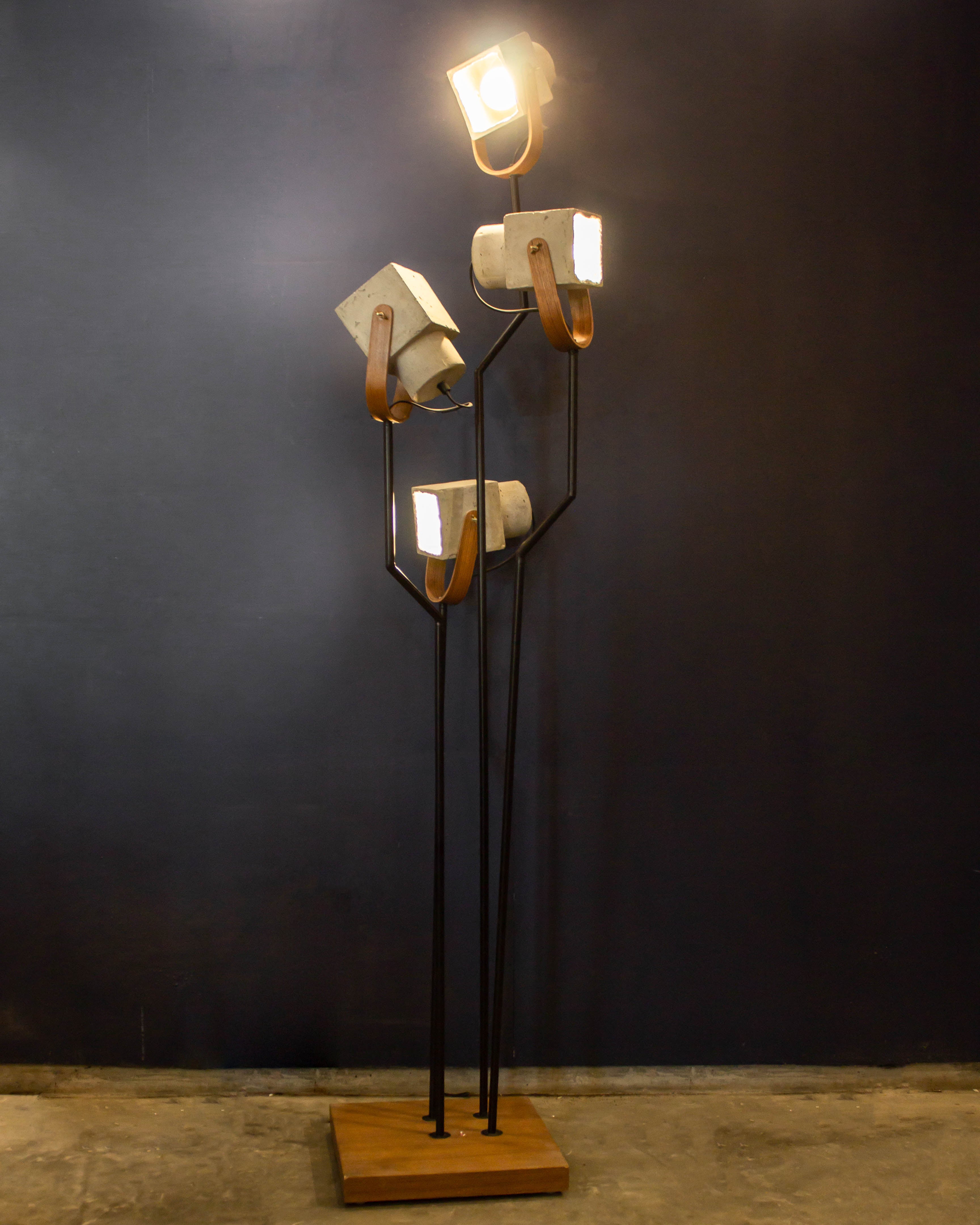
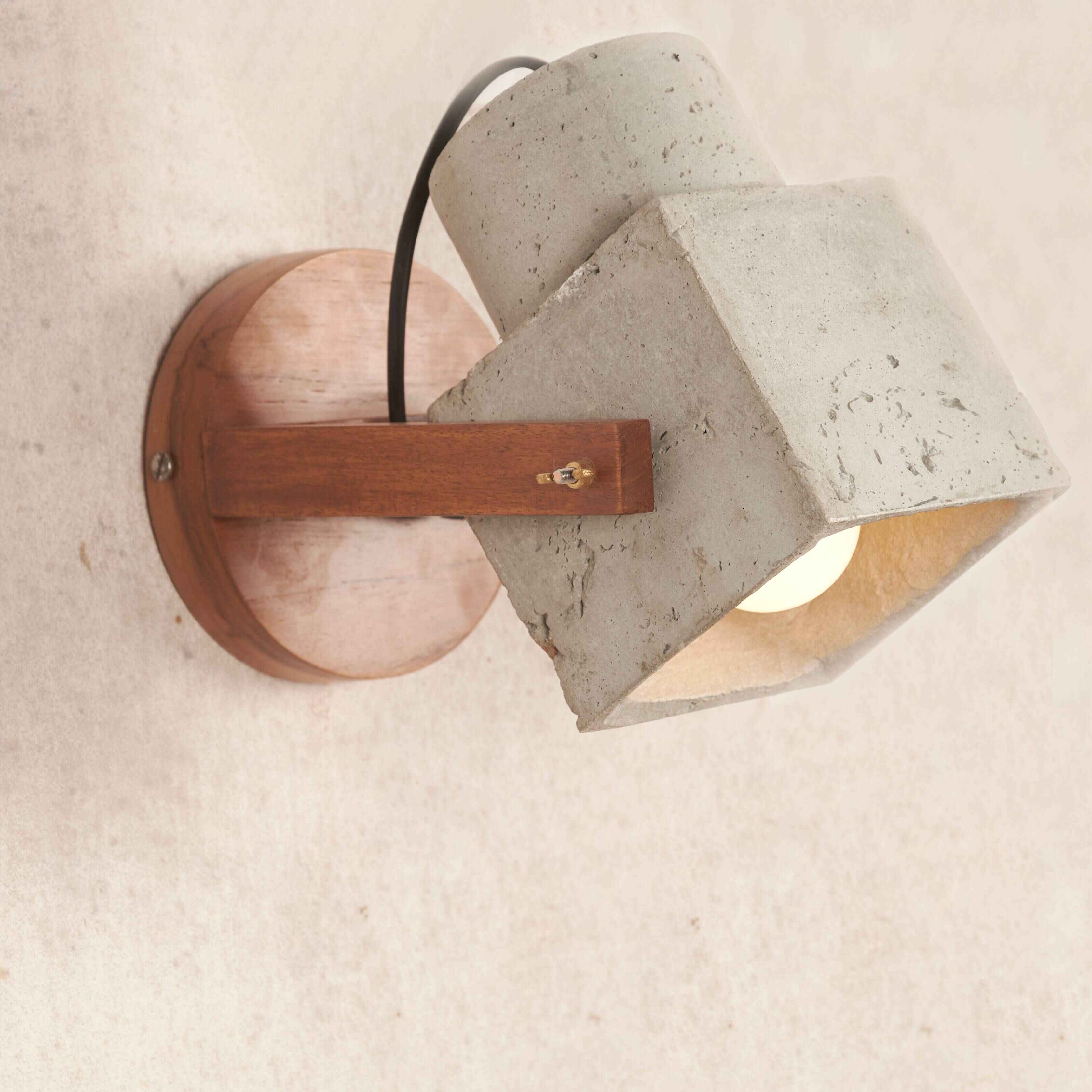
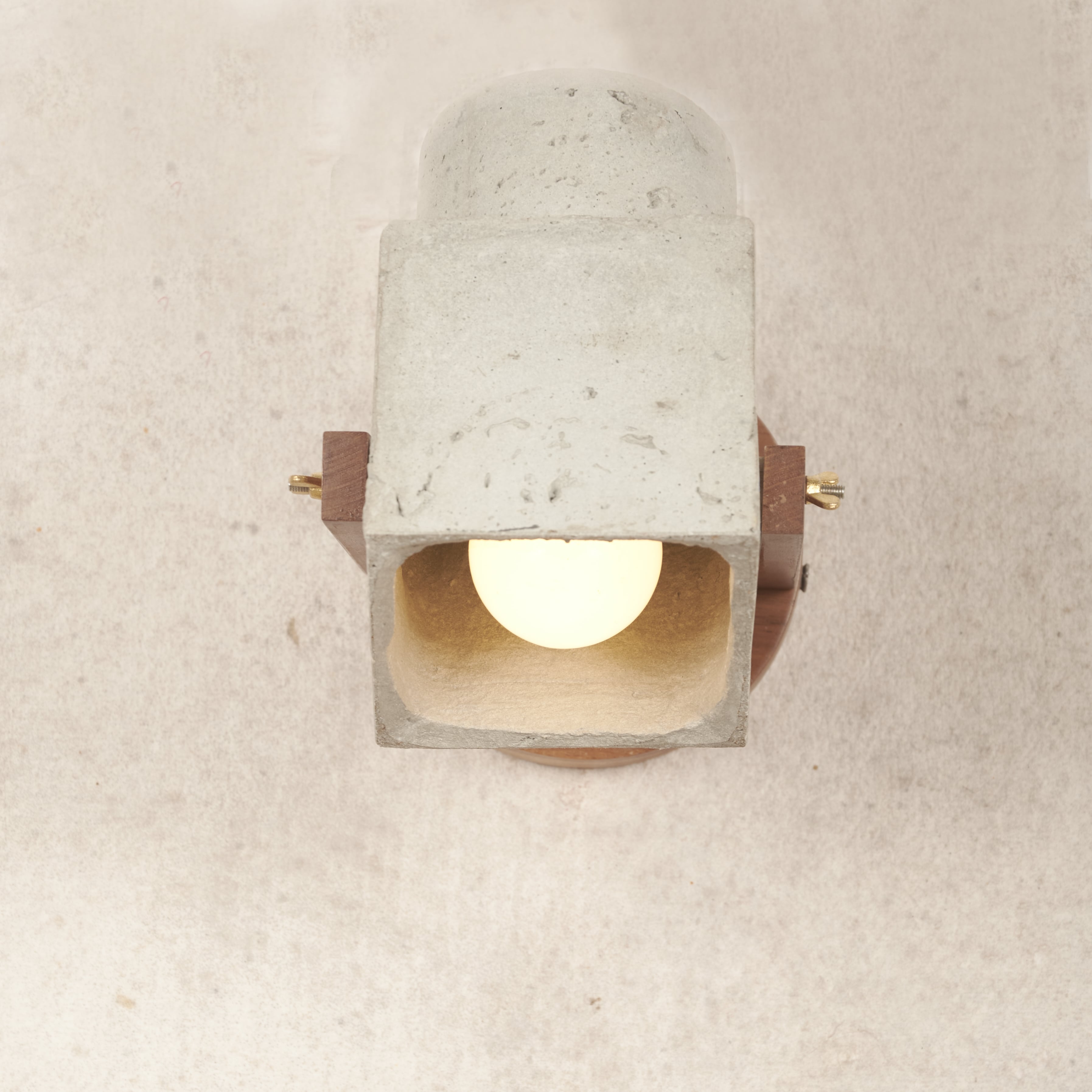
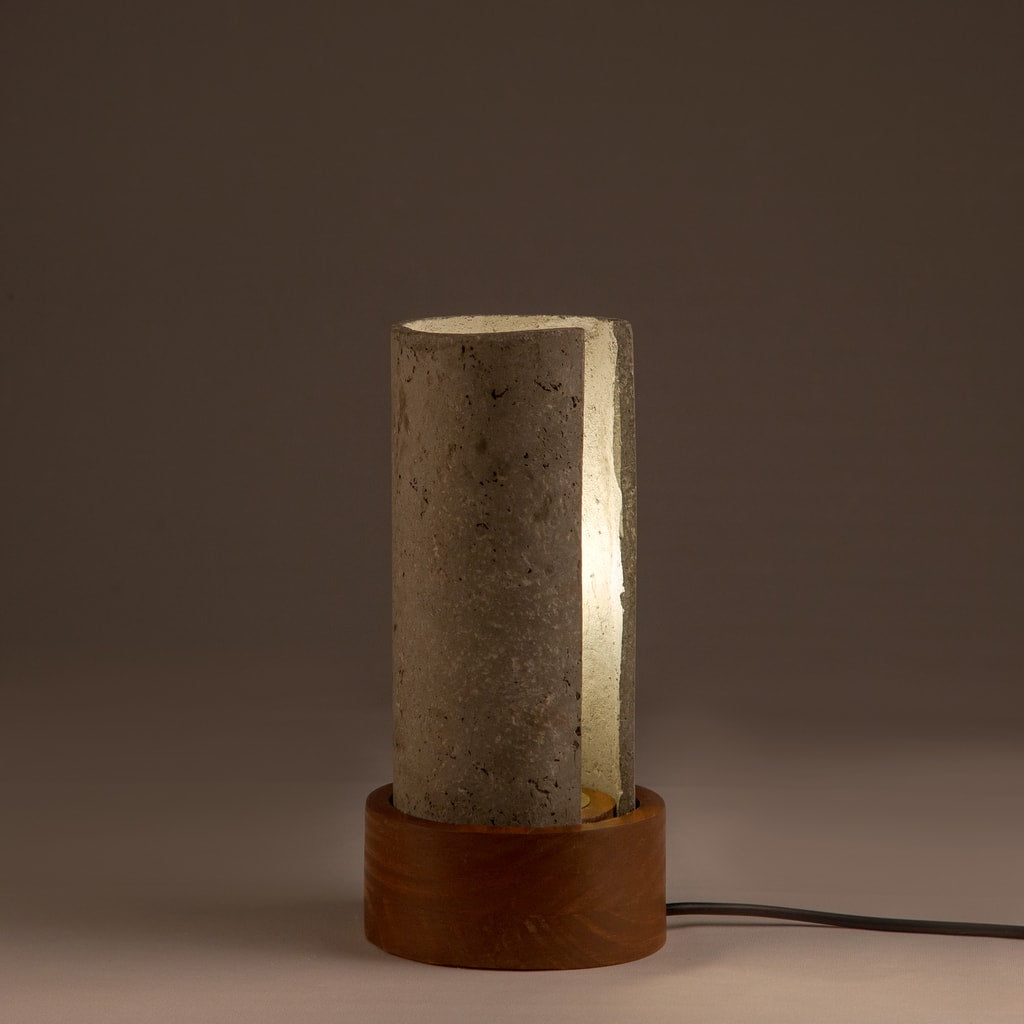
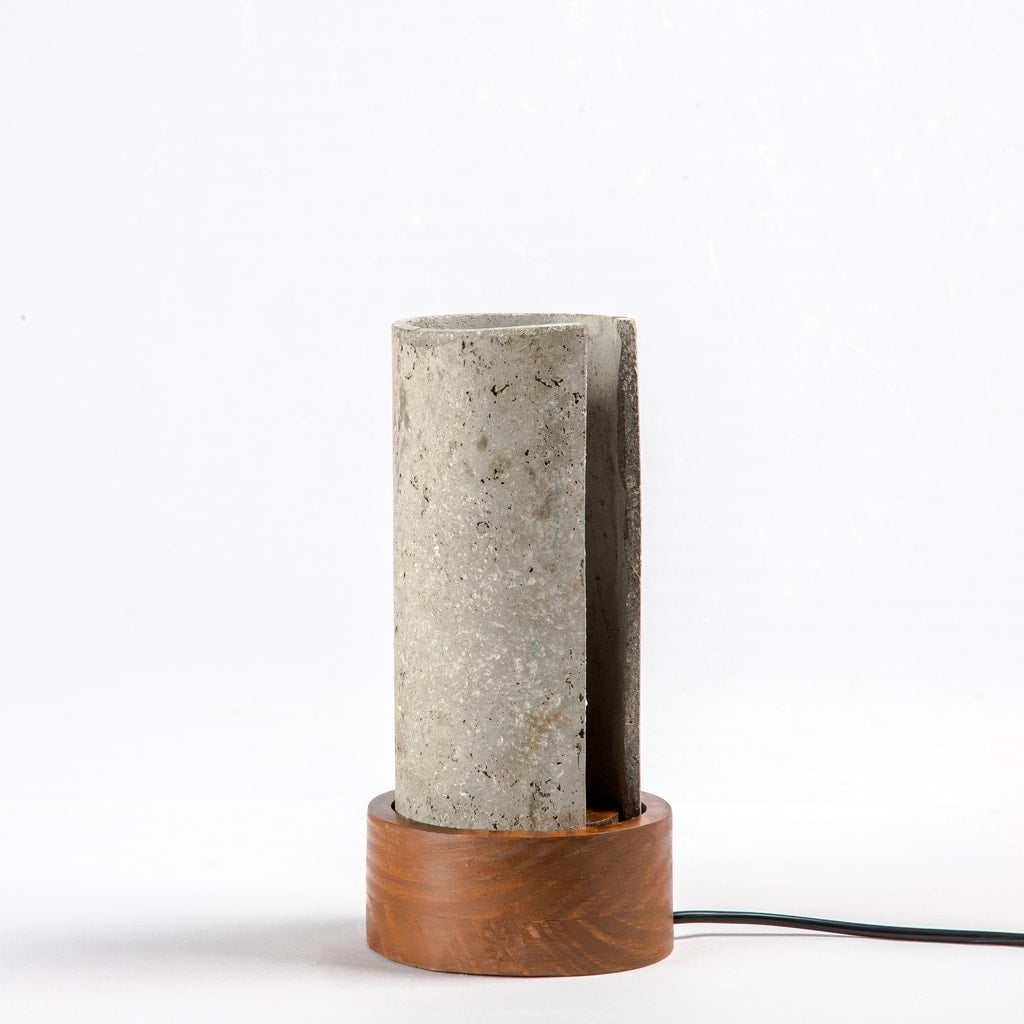
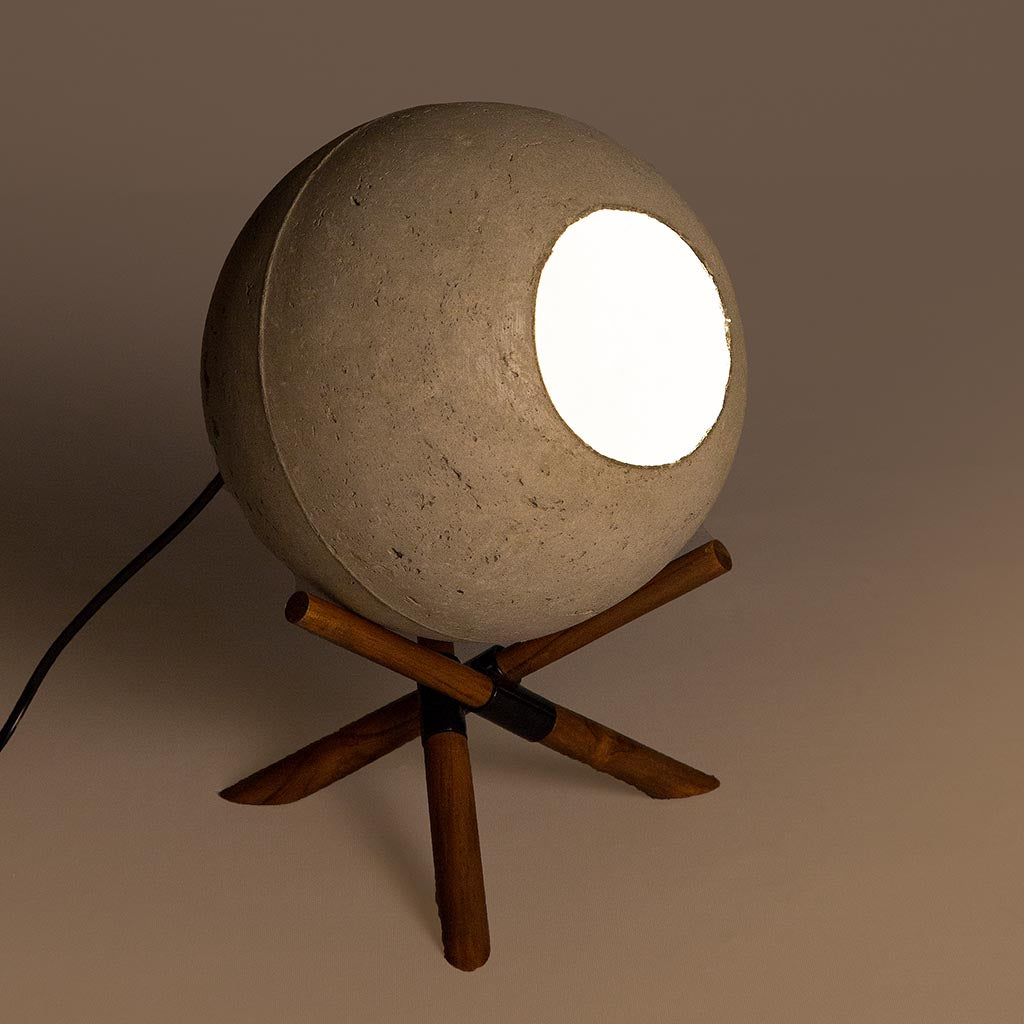
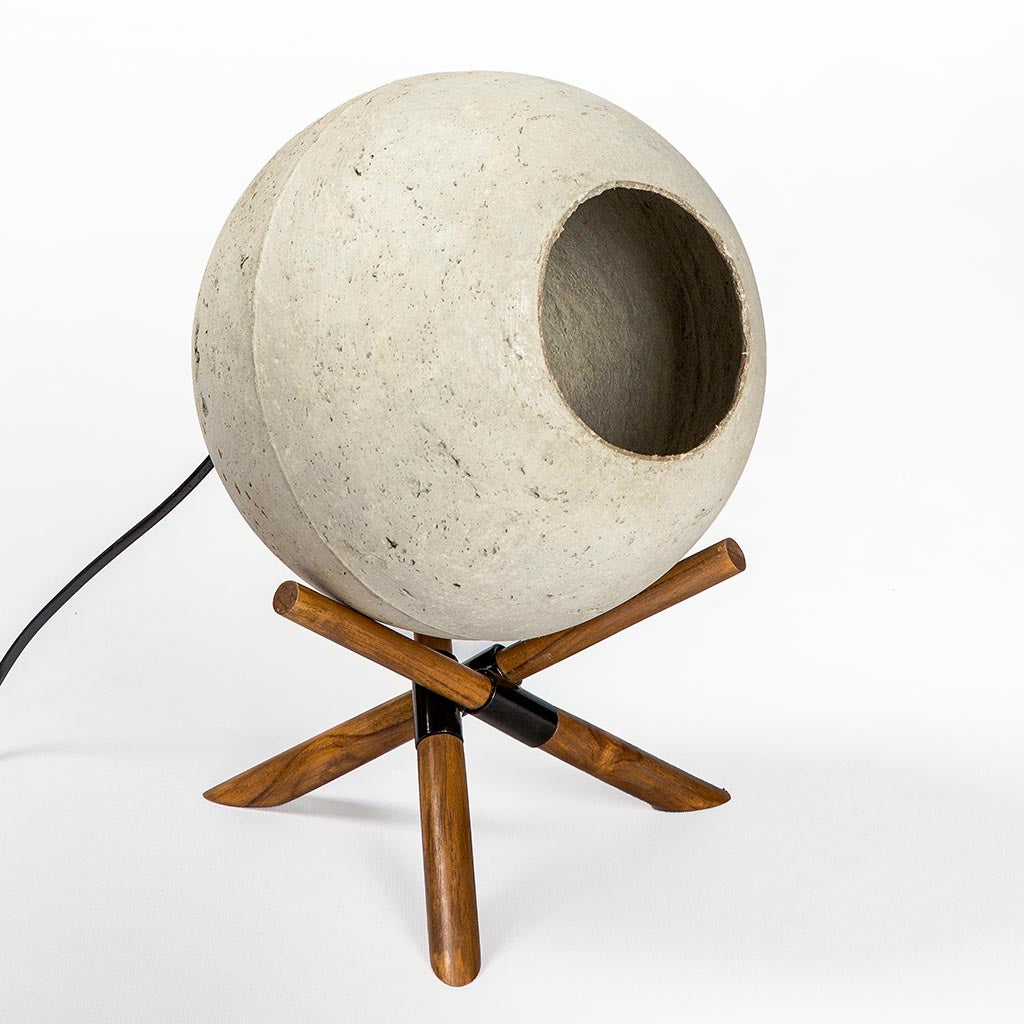
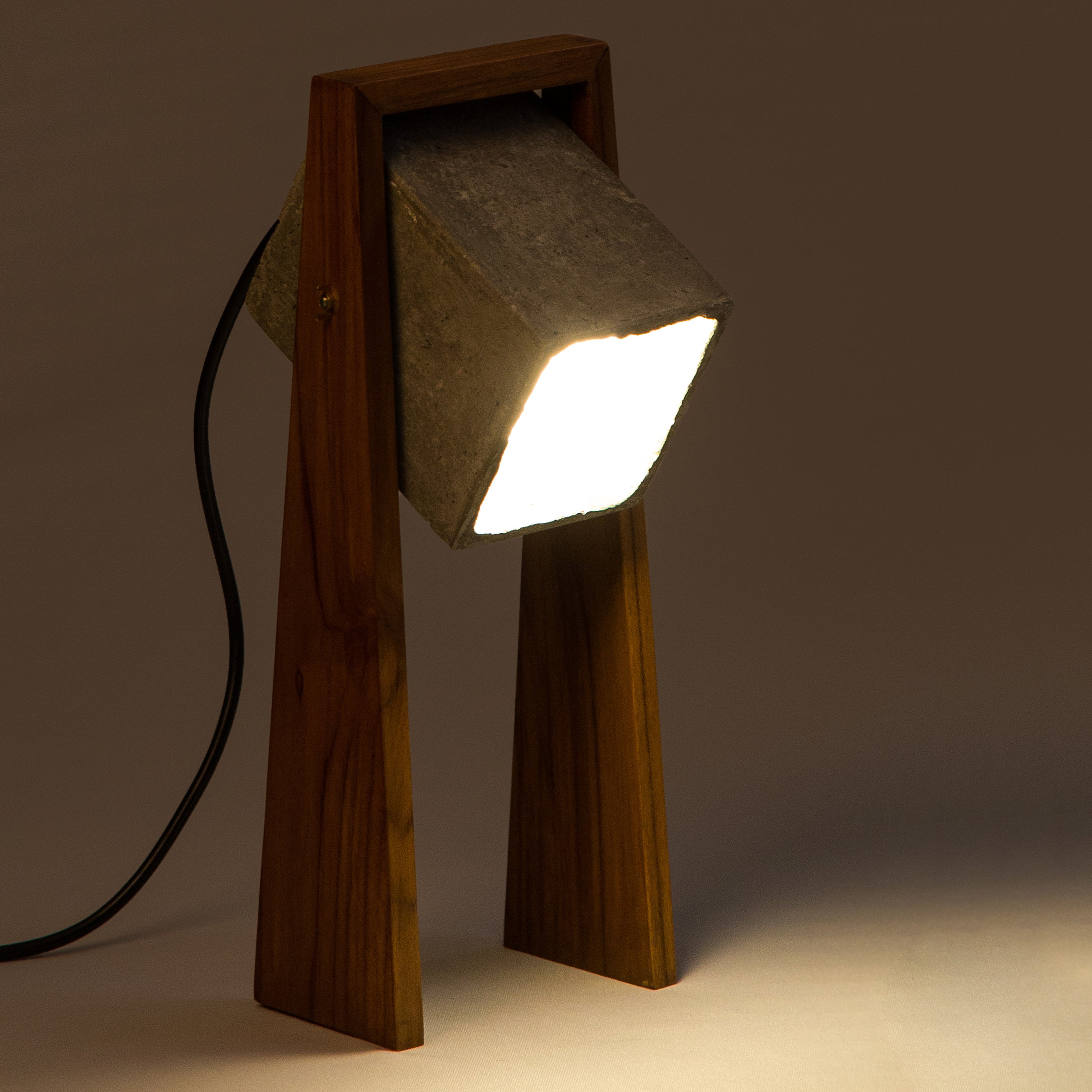
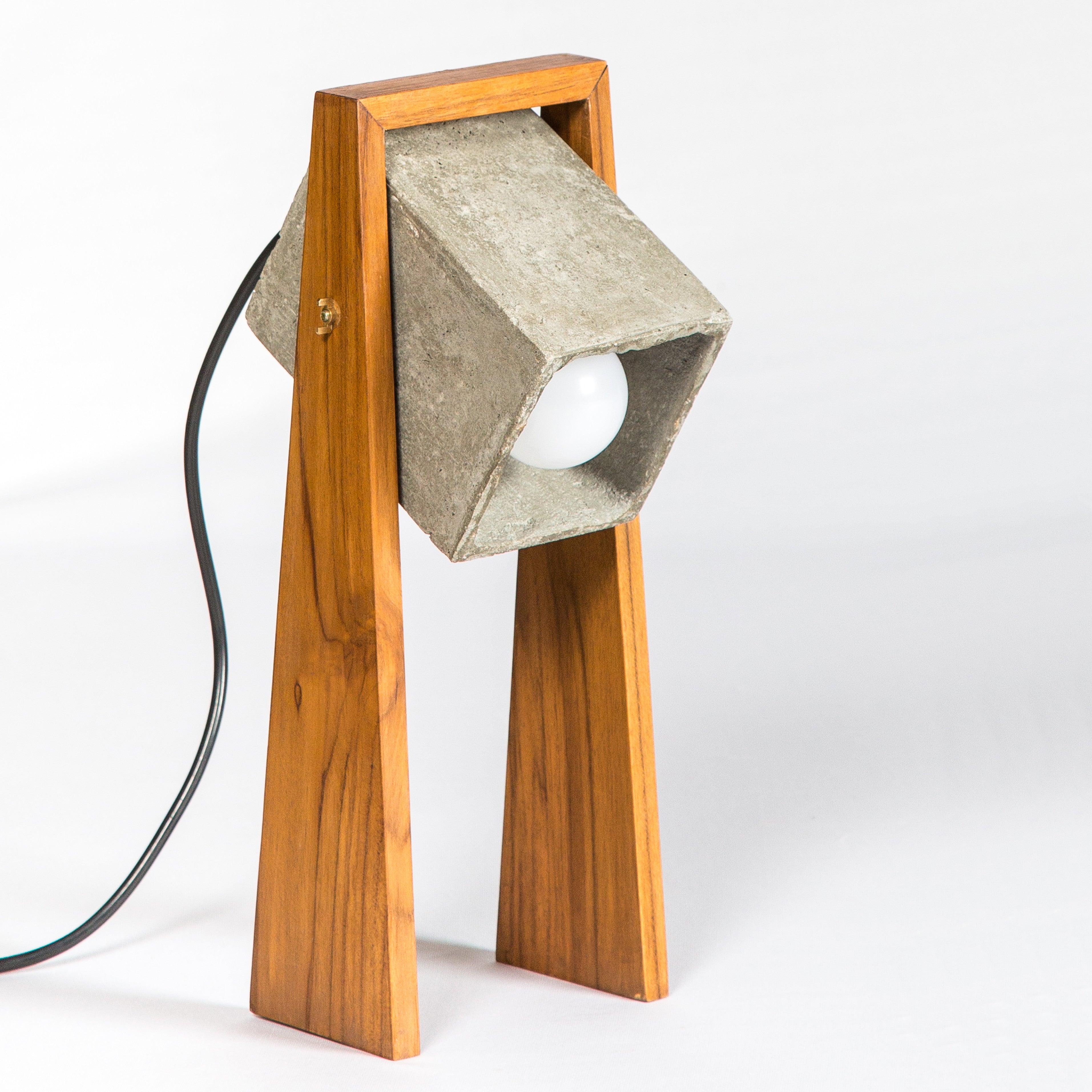
Developed from waste, Faux Concrete is a material created for its austere aestheticism and surprising lightness. Made using reclaimed paper pulp and quarry dust, it offers the visual and textural weight of concrete without the heaviness.
Its surface carries subtle irregularities — weathered textures, softened edges, tonal shifts — evoking the quiet beauty of natural erosion. Though solid in appearance, it is light, workable, and sustainable. Faux Concrete reflects Oorjaa’s material philosophy: low-impact, process-driven, and always rooted in the poetry of imperfection.

lantana
Lantana Camara is among the world’s most invasive plant species — a fast-growing shrub introduced to India in the early 1800s. Today, it spreads unchecked across over 154,000 km², threatening native flora and disrupting the habitats of elephants, tigers, and countless other species.
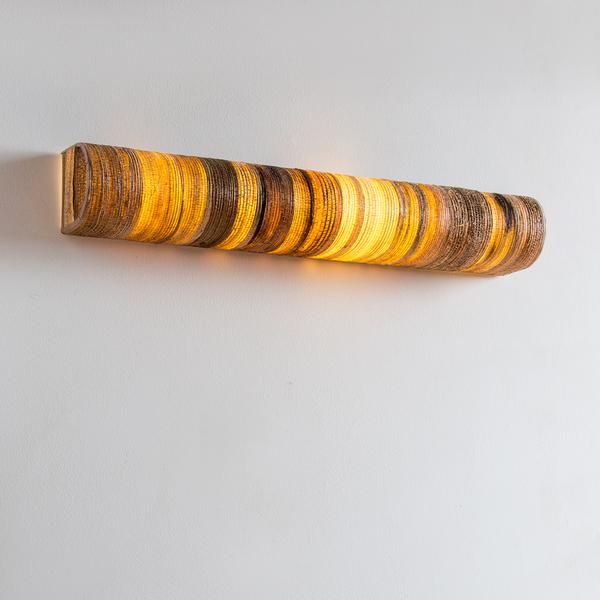
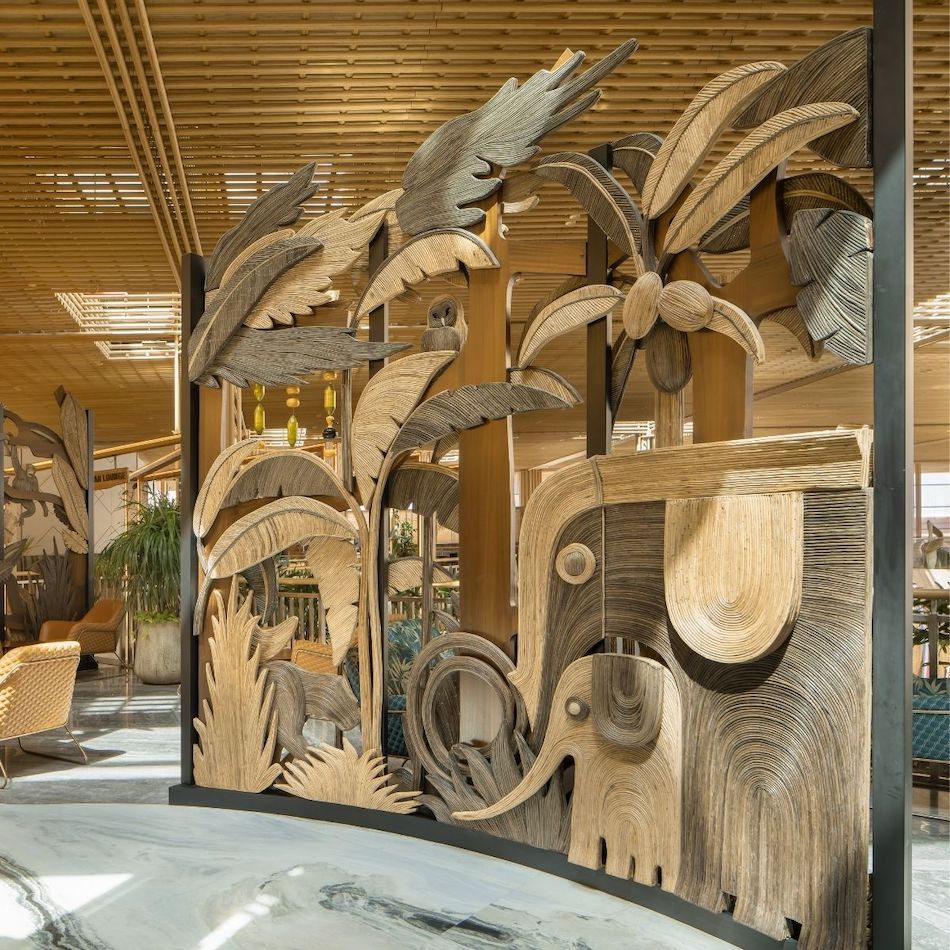
At Oorjaa, we reclaim this problematic plant and turn it into purpose-driven design. Under the collection Wild by Design, including Gaia, Kabini Partition, and other lighting pieces, Lantana is paired with banana fibre paper to create objects that are both sculptural and responsible.
The journey begins in the forests of Karnataka and Tamil Nadu, where harvested Lantana is stripped, de-thorned, and boiled to soften its form — making way for new possibilities from a material once dismissed.

Cork
Harvested from the bark of cork oak trees — which naturally regenerates every nine years — Uncork brings this sustainable material into the light. Traditionally used in industrial settings, cork is lightweight, fire-resistant, and naturally textured, yet often overlooked in design applications.
Uncork reimagines cork in contemporary forms. Its warm tones, tactile surface, and ecological intelligence make it both functional and expressive. By working with this regenerative material, we honour a rhythm of growth that continues without harm — where nature gives, and continues to give.
Oorjaa
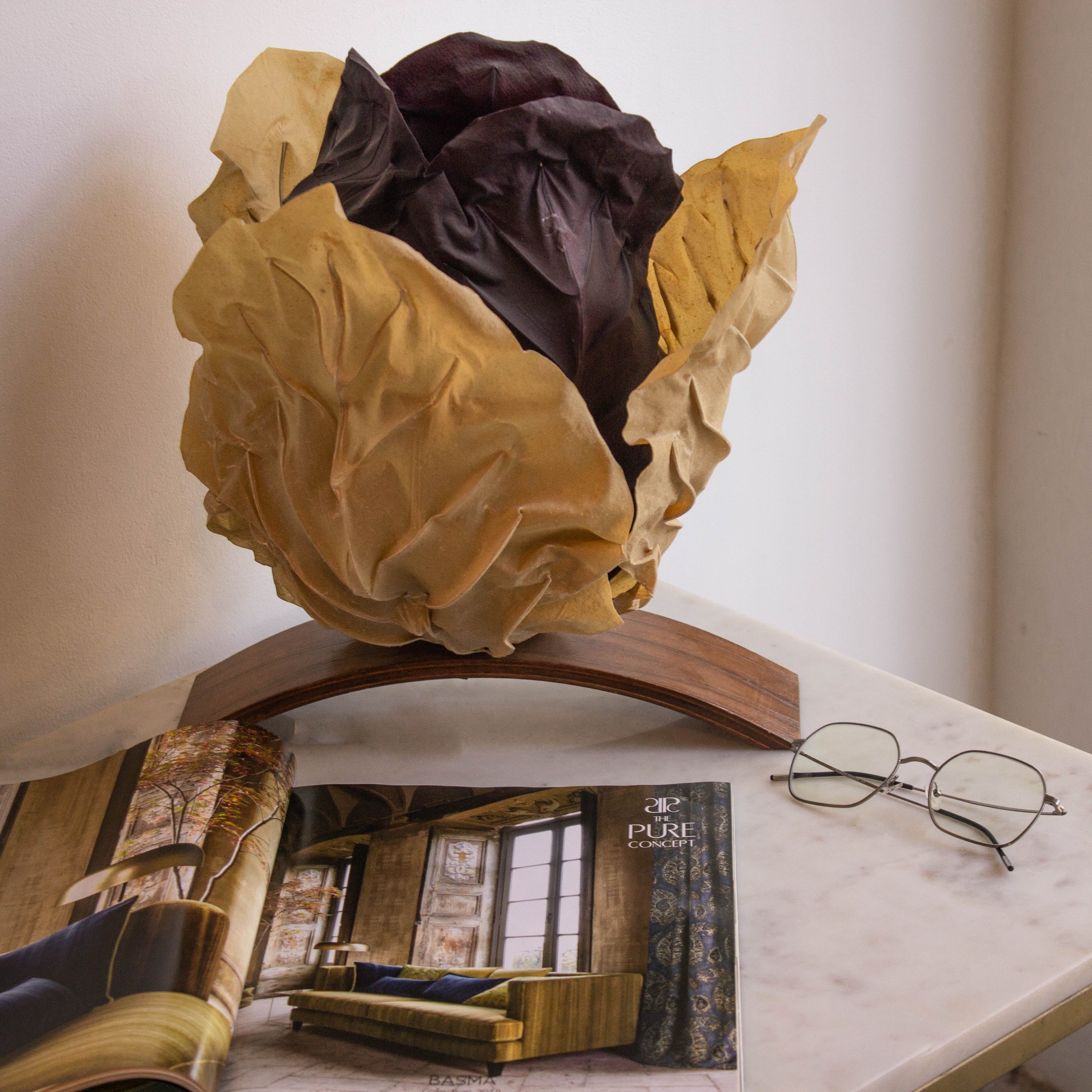
Oorjaa Custom Project
Bangalore international Airport T2
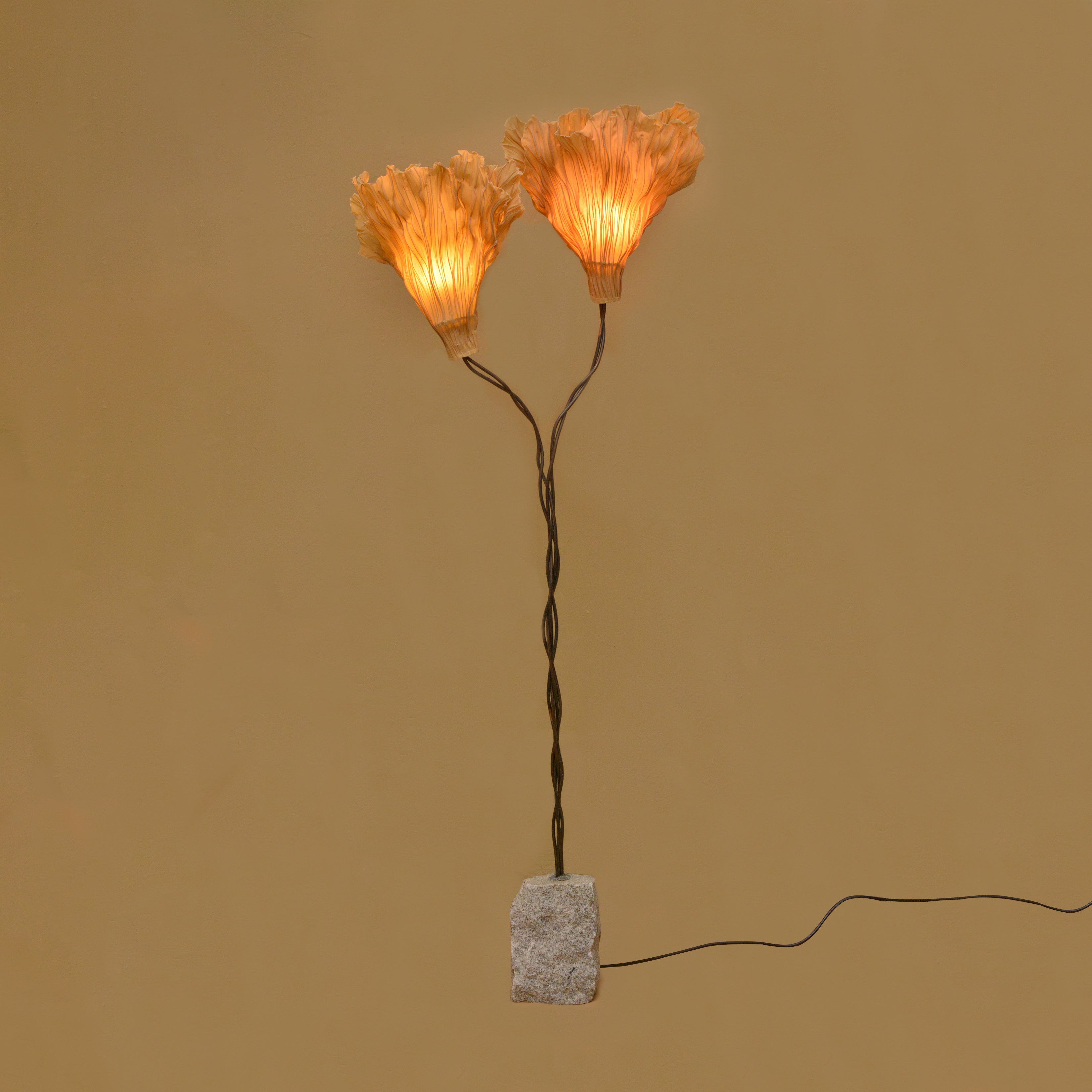
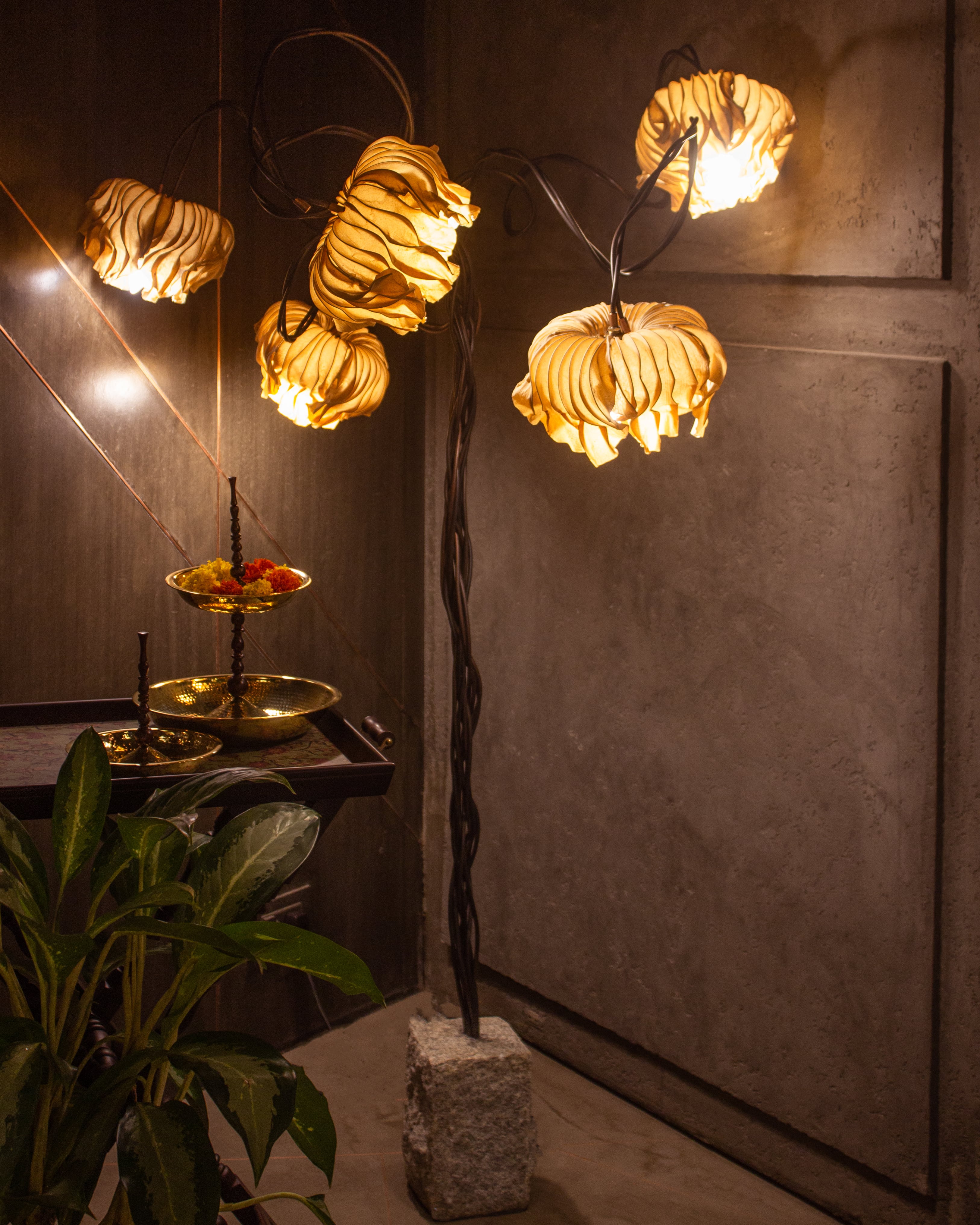
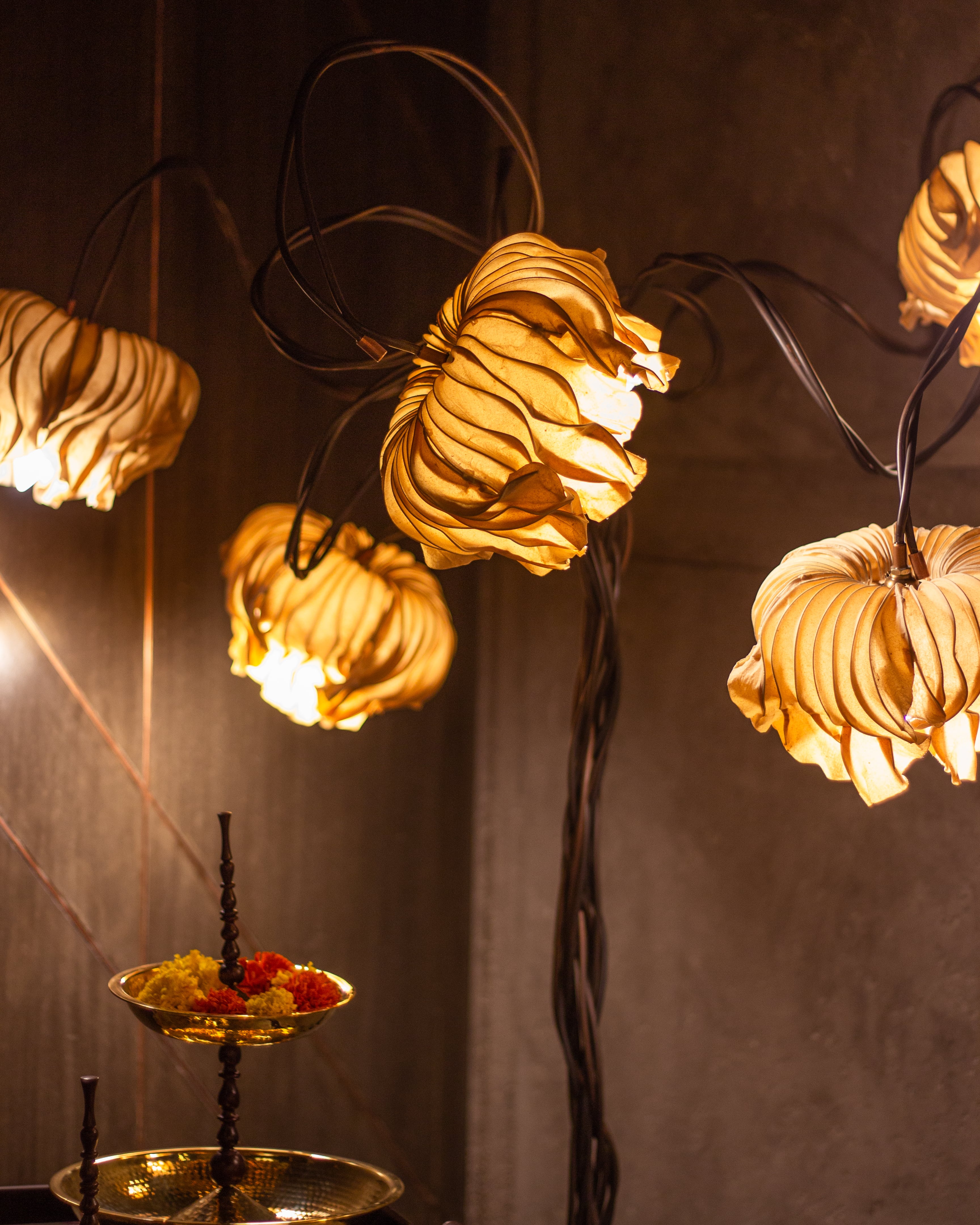
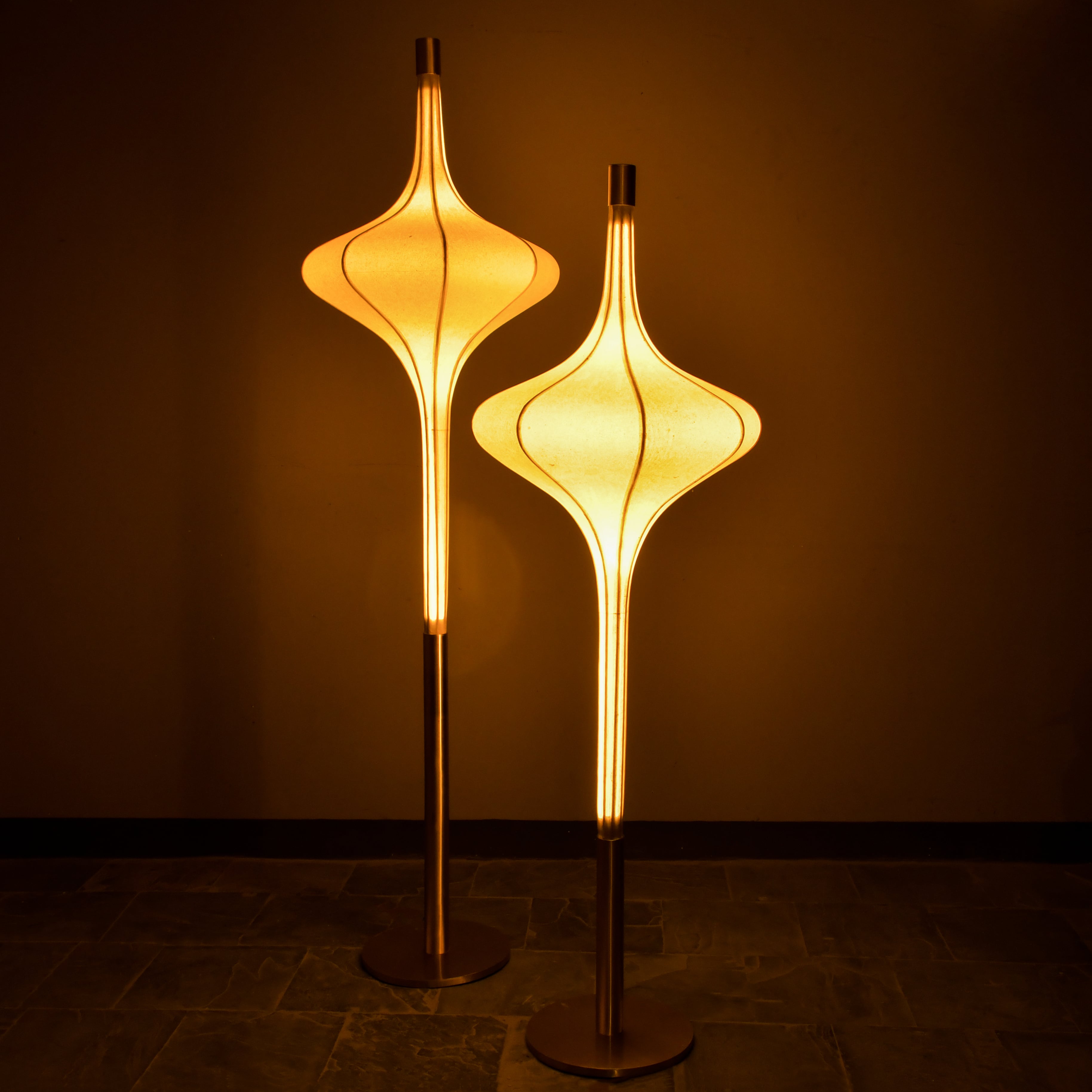
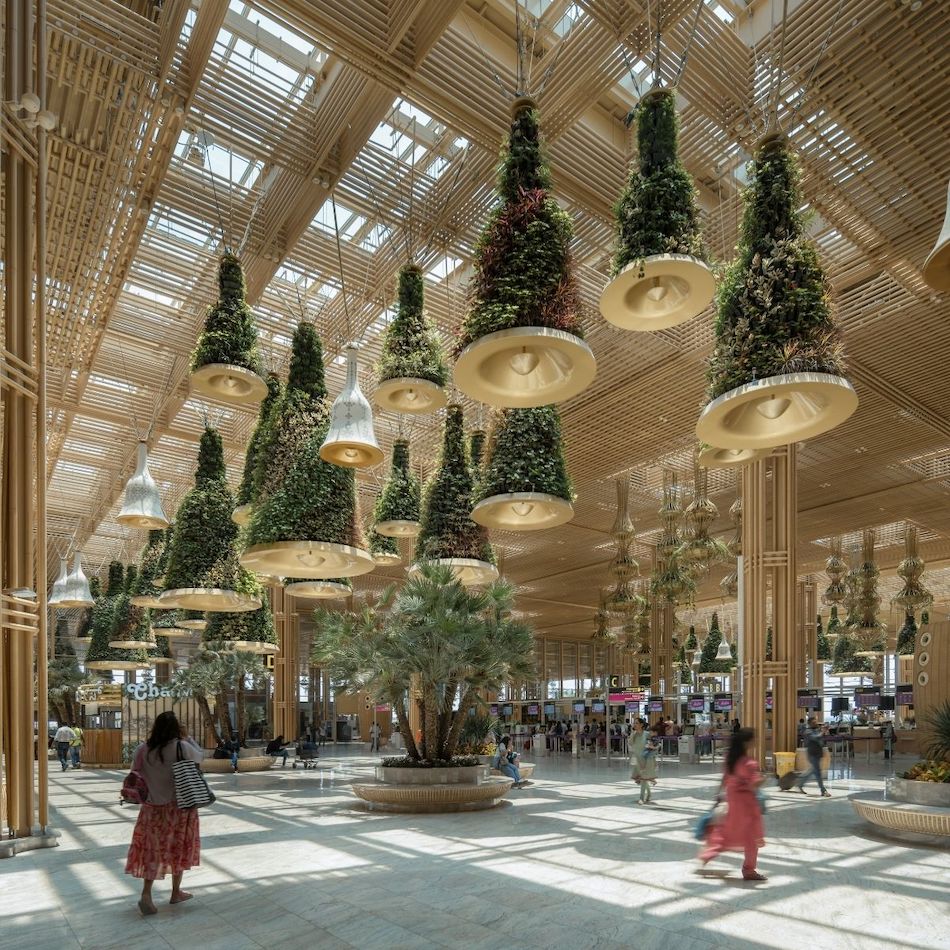
At Kempegowda International Airport’s Terminal 2—imagined as a “terminal in a garden”—Oorjaa brings light, craft, and sustainability into public space. Through installations across lounges and cafés, the Bengaluru-based studio transforms transit zones into moments of reflection.
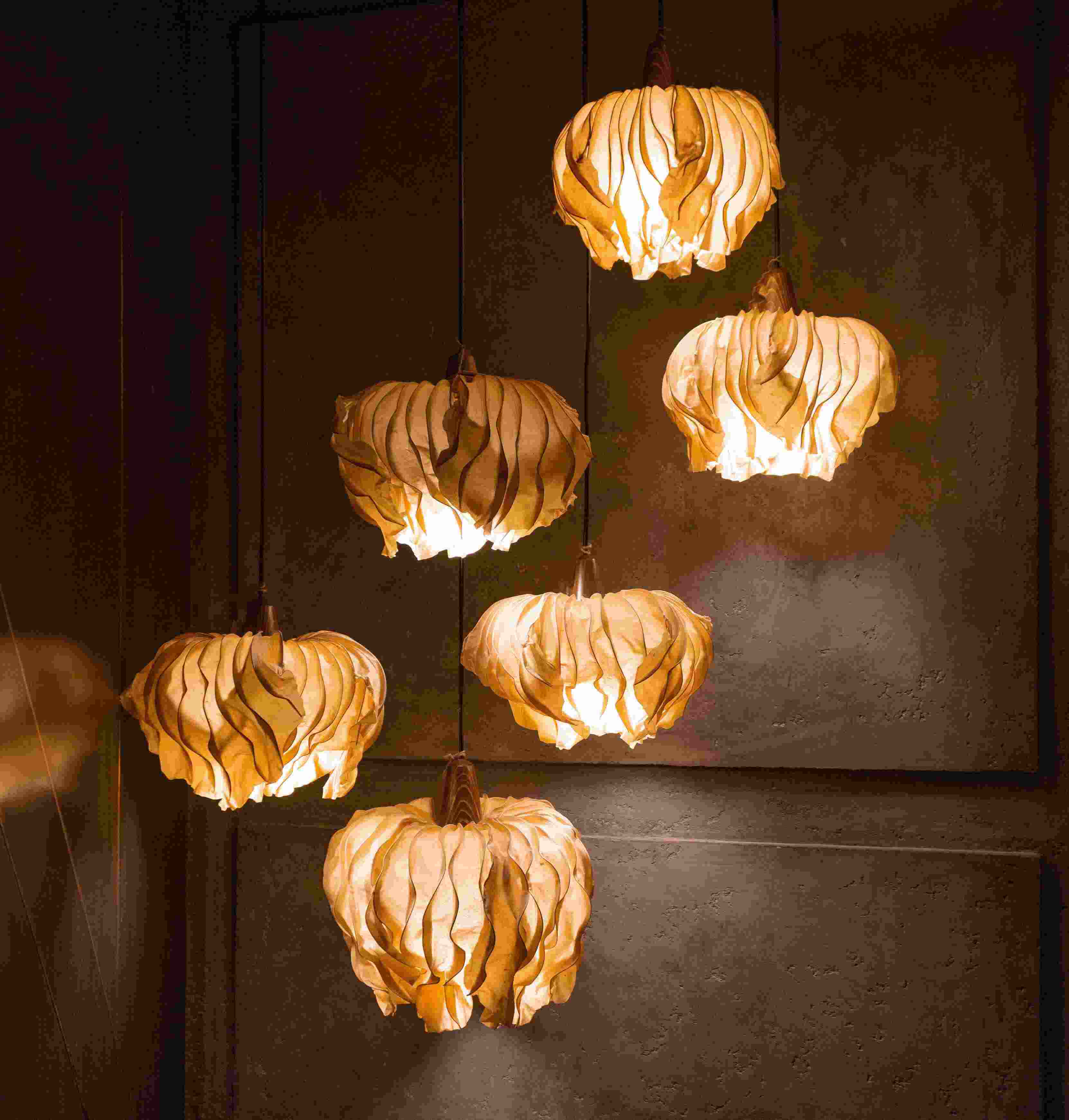
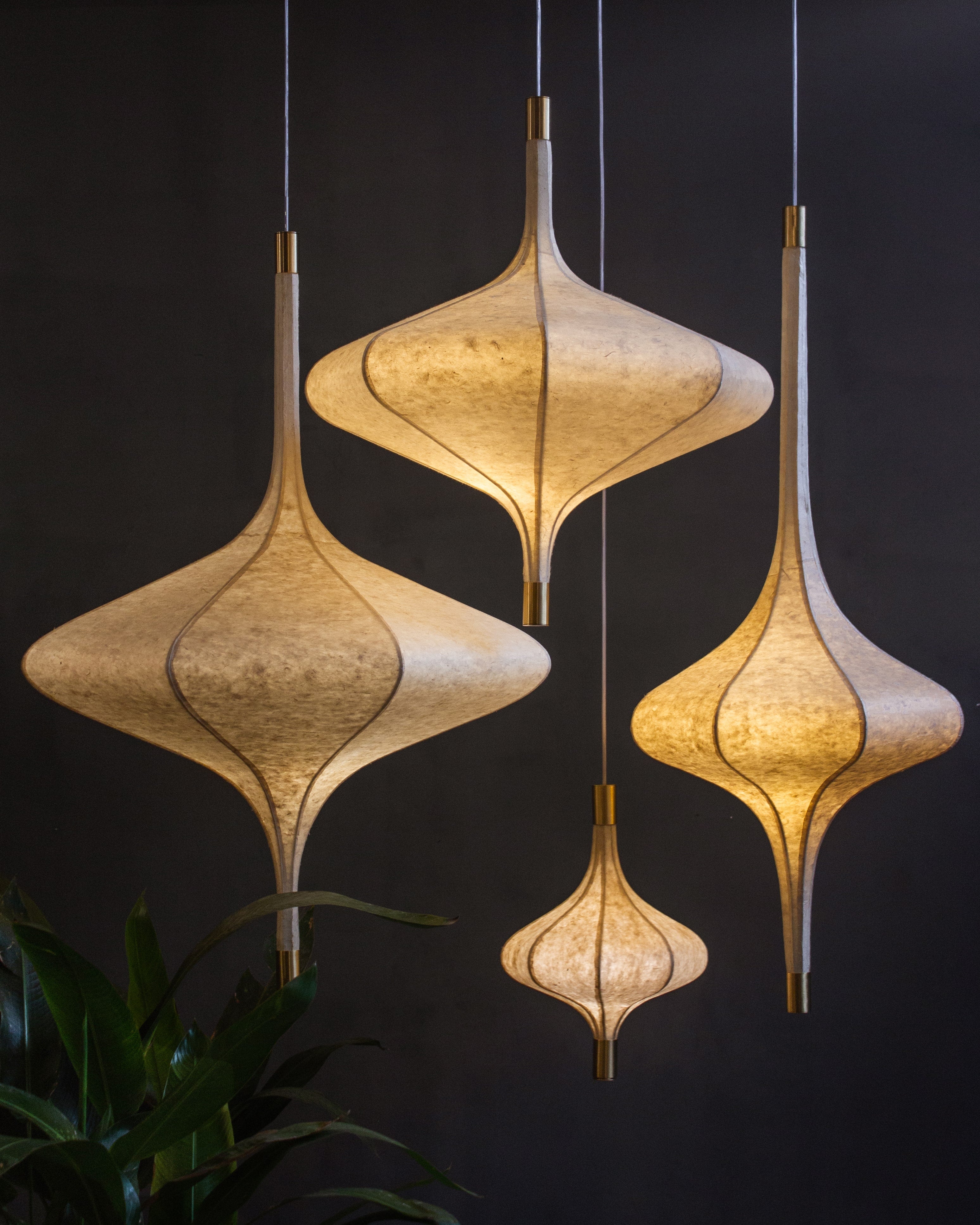
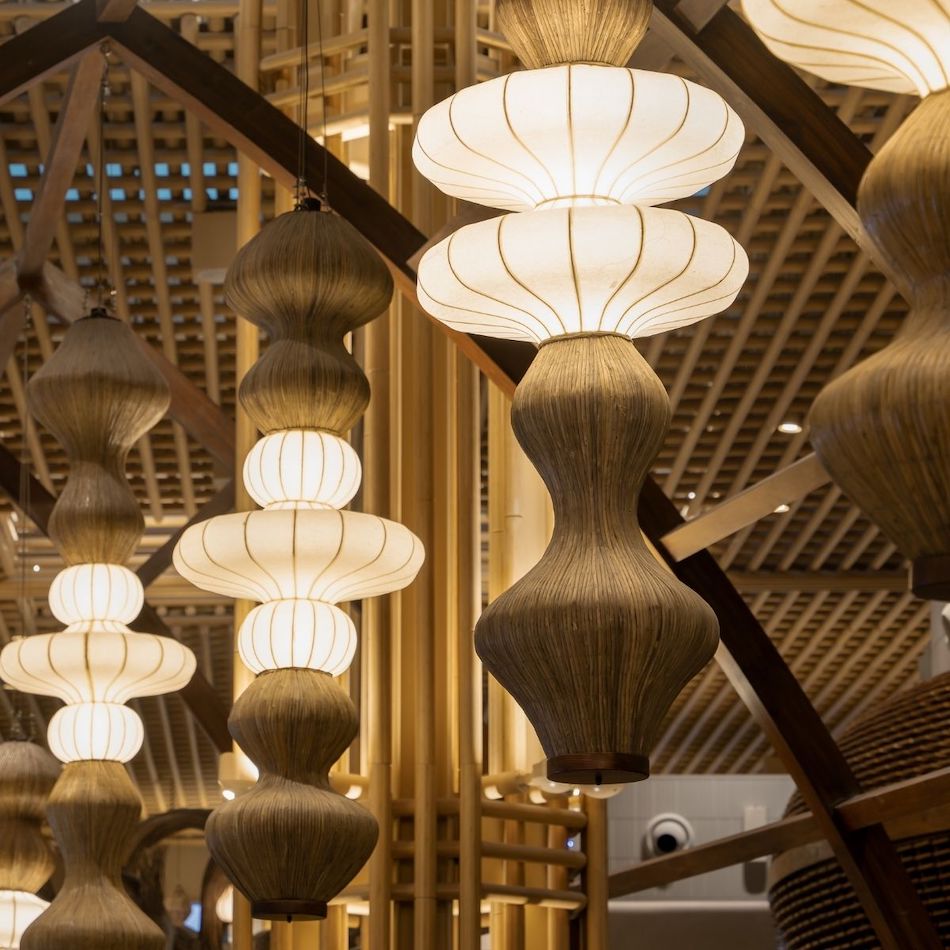
Made from banana fibre paper, faux concrete, and Lantana (an invasive weed), the works honour Karnataka’s biodiversity and traditional craftsmanship. Gaia Pillars glow softly at Kodagu Café; Bell lights inspired by kasuti prints and temple chimes line the baggage area. In collaboration with Adivasi artisans and TREC, life-size elephants and marine forms sculpted from Lantana speak of forest and coastal ecologies.




Follow us on Instagram